Armenia will hold parliamentary elections on 7 June 2026, a vote that will shape the country’s political direction for the next five years. Understanding how the electoral system converts votes into parliamentary power is key to following the outcome and its wider regional implications.
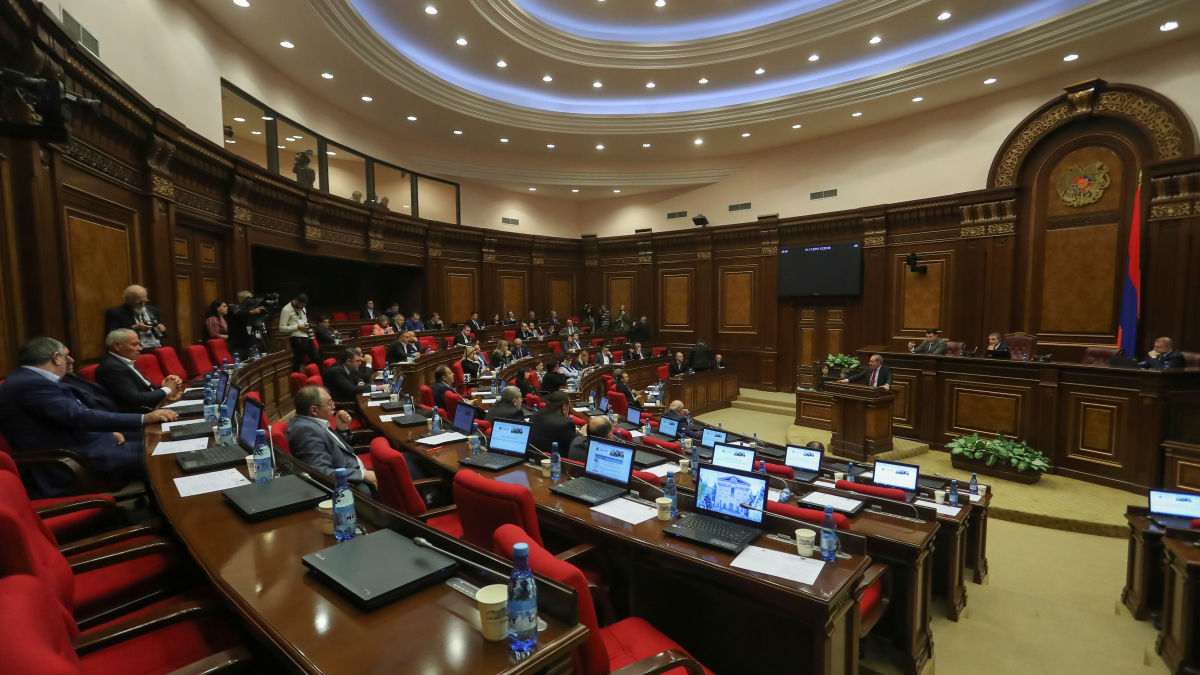
The National Assembly is elected through a proportional representation system that combines national party lists with regional candidate selection, a structure designed to balance party strength with geographic representation.
At the core of the system is a two-tier structure.
Voters cast their ballots for a political party at the national level while also selecting an individual candidate from that party’s regional list.
This means each vote serves both a national and a district function: it contributes to a party’s overall seat share while also helping determine which candidates from that party secure seats in specific constituencies.
Election day
Citizens of Armenia who are aged 18 or older on election day are eligible to vote in parliamentary elections, provided they have the legal right to vote and are registered in an electoral district. Voting is not compulsory.
In general, eligibility is based on citizenship and inclusion in the national voter register.
Those who are under 18, do not hold Armenian citizenship, or are otherwise legally disenfranchised under Armenian law are not permitted to participate.
On election day, voters receive ballots corresponding to all participating parties and blocs. Each voter selects one party ballot, which determines their national vote.
They then use the same party’s district list to choose a single preferred candidate.
The remaining ballots are discarded in the privacy of the voting booth, ensuring that only one party is supported per voter while still allowing a candidate-level choice.
How seats are allocated
Seats in the 101-member National Assembly are allocated proportionally using the D’Hondt method, a formula that converts votes into parliamentary mandates.
Half of the seats are filled from national lists, while the other half are allocated through district results.
To enter parliament, parties must pass a 5% threshold, while blocs must reach 7%. The system also reserves four seats for national minorities, including Assyrians, Kurds, Russians and Yezidis.
Rules and limits
The electoral framework includes additional mechanisms intended to ensure stability.
If a party wins a majority of votes but falls short of the 54% seat threshold required for a stable governing majority, it may be awarded additional seats to reach that level.
At the same time, no party can control more than two-thirds of parliament.
If a party’s result would exceed that limit, excess seats are redistributed among other qualifying parties.
Districts and candidate lists
Armenia is divided into 13 electoral districts, including nine regional marzes, a combined district for Vayots Dzor and Syunik, and four districts in Yerevan.
Parties submit both a national list and district-level lists of up to 15 candidates per district, although candidates are not required to reside in the areas they contest.
Forming a government
Once votes are counted, government formation depends on whether any party secures an outright majority.
A party winning more than 50% of the vote, plus one seat, can form a government on its own.
If no party achieves this, coalition negotiations are held, with up to three political forces able to form a governing alliance. If those talks fail, a second-round run-off between the two leading parties is held to determine the governing majority.
The system is designed to combine proportional representation with mechanisms intended to avoid prolonged political deadlock, while still ensuring broad representation across Armenia’s political spectrum and regions.
Read more:













What is your opinion on this topic?
Leave the first comment