Armenia’s parliamentary election comes at a defining moment for the South Caucasus, a region reshaped by the Garabagh conflict and broader shifts in Russia-West relations. The outcome is increasingly seen as a signal of Armenia’s future foreign policy direction and the regional balance of power.
As traditional security structures weaken and new diplomatic formats emerge, the vote is being closely watched across the region and beyond.
Against this backdrop, Matin Mammadli, head of department at the Centre of Analysis of International Relations (AIR Centre), argues that domestic political outcomes in Yerevan will have direct consequences for regional peace, connectivity and geopolitical alignment.
Azerbaijan: Can the peace process move forward?
For Azerbaijan, the central question is whether Armenia’s next government will sustain negotiations on a comprehensive peace treaty and continue progress on border delimitation.
As Mammadli emphasised, “Of course, the peace process can move forward… depending on the outcome of the elections held in Armenia, progress in the peace process is possible, and it is even possible for the peace process to be concluded on a political and diplomatic level in an institutional sense.”
He noted that a framework for normalisation has already taken shape. “Since the Washington Summit held on 8 August of last year," he said, "a serious positive dynamic has been observed in the peace process.” This includes advances in logistics, emerging trade flows and the operationalisation of regional connectivity routes.
Azerbaijan is also prioritising the opening of regional transport corridors, which it views as essential to post-conflict normalisation and long-term economic integration across the South Caucasus. In this context, political continuity in Yerevan is closely tied to the durability of the current stabilisation phase.
Mammadli stressed that “with the signing of a peace agreement, this process could, to some extent, be institutionally finalised,” but warned that outcomes remain highly contingent on electoral developments. He added that if “revanchist forces…come to power…this would deal a serious blow to the peace process between the two countries”.
He also highlighted a key unresolved issue: “Our primary expectation from Armenia is that a referendum should be held there and a new constitution adopted, one that does not include territorial claims against Azerbaijan.”
Türkiye: Armenia normalisation as a pathway to regional connectivity
Türkiye views Armenia’s political trajectory through the broader lens of regional normalisation and connectivity. Ankara believes sustained détente between Yerevan and Baku would remove one of the main obstacles to fully normalising Armenia-Türkiye relations.
Armenia-Türkiye normalisation is therefore seen as structurally linked to the Azerbaijan track. As Mammadli explained, “alongside the normalisation process with Azerbaijan, a normalisation process is also underway between Türkiye and Armenia,” and while progress has been made, “it would not be correct to completely separate these two processes from one another.”
He added that “the positive dynamics observed in the normalisation process between Azerbaijan and Armenia are also positively influencing the normalisation process between Armenia and Türkiye.”
Türkiye and Azerbaijan, he noted, act in coordination across these parallel processes, with Ankara taking Baku’s position into account when shaping its approach. From this perspective, deeper Armenia-Azerbaijan progress would unlock further steps in Armenia-Türkiye normalisation.
This includes the potential reopening of borders and the restoration of diplomatic and economic ties, which would in turn support broader regional connectivity linking the South Caucasus to Eurasian trade networks.
Europe: Deepening political and institutional engagement
European actors increasingly view Armenia as a rare entry point for deeper engagement in the South Caucasus at a time of reduced Russian influence.
For Brussels and leading European capitals, the election outcome will help determine whether Armenia continues moving towards closer cooperation with European institutions, governance reform and a more diversified foreign policy orientation. Stability in Armenia is also seen as essential to preventing renewed regional escalation.
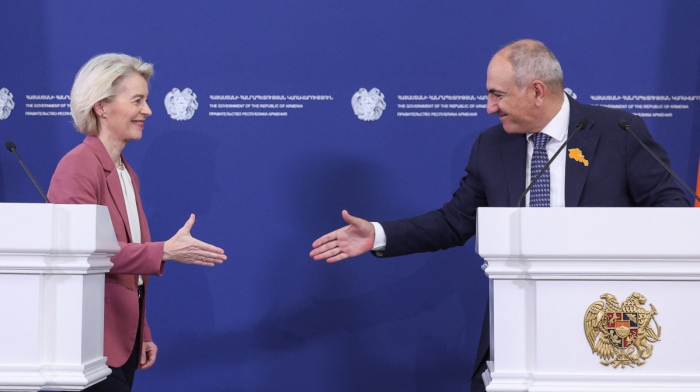
Mammadli noted that “the European Union and leading European countries are, in a general sense, supporting the current government - that is, they are supporting the Pashinyan government,” a dynamic visible at the European Political Community summit in Yerevan.
He added that if the current leadership remains in power, “relations between Armenia and the European Union…will deepen further in an institutional sense.”
This reflects broader trends since the Second Garabagh War, during which Armenia has expanded engagement with European partners across political, economic and security domains. Cooperation with states such as France has also intensified, including “political, economic, and even military” dimensions.
In this context, a continued Pashinyan administration would likely consolidate a “pro-European direction”, reflecting what Mammadli described as a gradual strategic shift “away from Russia and… toward Europe and the West”.
Russia: Preserving influence in a shrinking South Caucasus role
For Russia, Armenia’s election is primarily about retaining residual leverage in a region where its position has weakened significantly since the Russia-Ukraine war.
Moscow’s historical role in the South Caucasus has relied heavily on its close partnership with Armenia, long described by analysts as Russia’s “forward post” in the region. However, this alignment is now under strain as Yerevan pursues a more diversified foreign policy.
Mammadli noted that Armenia’s leadership is “gradually pursuing a strategic course of distancing itself from Russia and moving closer to the West.”
In response, Russia is seeking to preserve influence through political, economic and security instruments, drawing on Armenia’s longstanding dependencies. As he put it, Moscow continues to rely on “political, economic and security-related leverage” to maintain its position.
He therefore characterised the election as “extremely decisive for Russia as well,” with expectations that Moscow will seek to support “revanchist forces…aligned with or sympathetic to Russia” in order to preserve its regional role amid intensifying Western and regional competition.
Armenia election set for 7 June
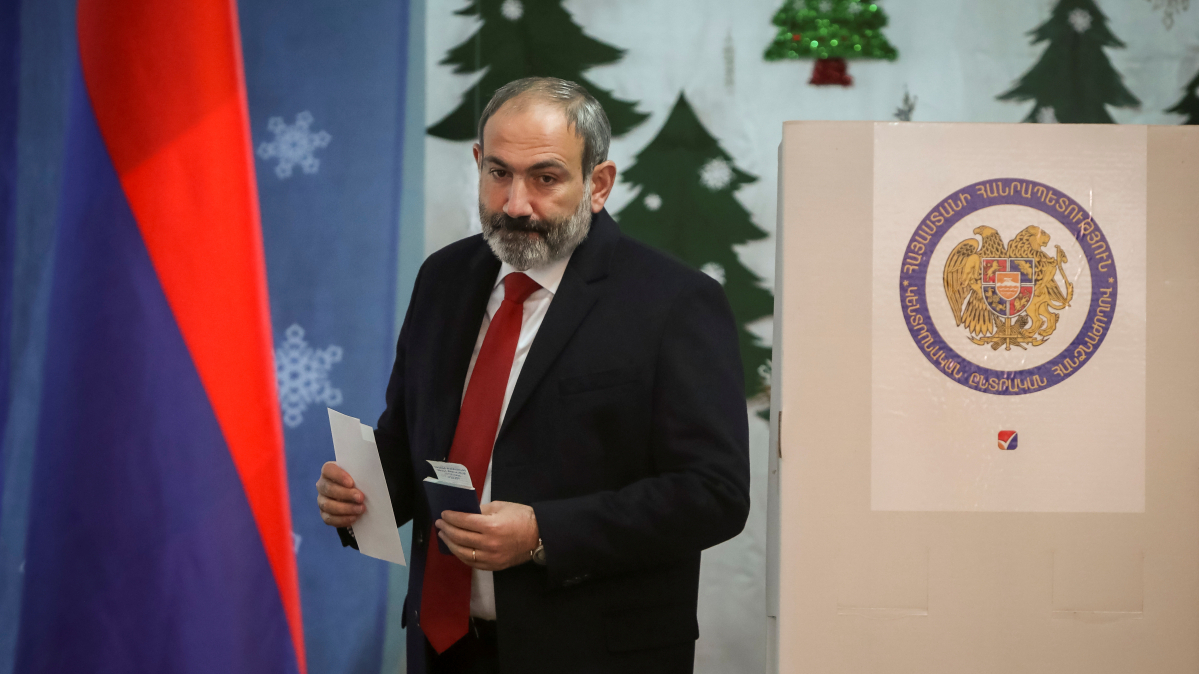
Armenia is set to hold a parliamentary election on 7 June. Opinion polls and political analysts suggest that Civil Contract, led by Prime Minister Nikol Pashinyan, is likely to remain the largest political force following the vote.
However, it is also widely assessed that the party may fall short of the two-thirds parliamentary majority required to introduce constitutional amendments independently, a factor that could significantly shape the post-election political and reform agenda.











What is your opinion on this topic?
Leave the first comment