The AnewZ Opinion section provides a platform for independent voices to share expert perspectives on global and regional issues. The views expressed are solely those of the authors and do not represent the official position of AnewZ
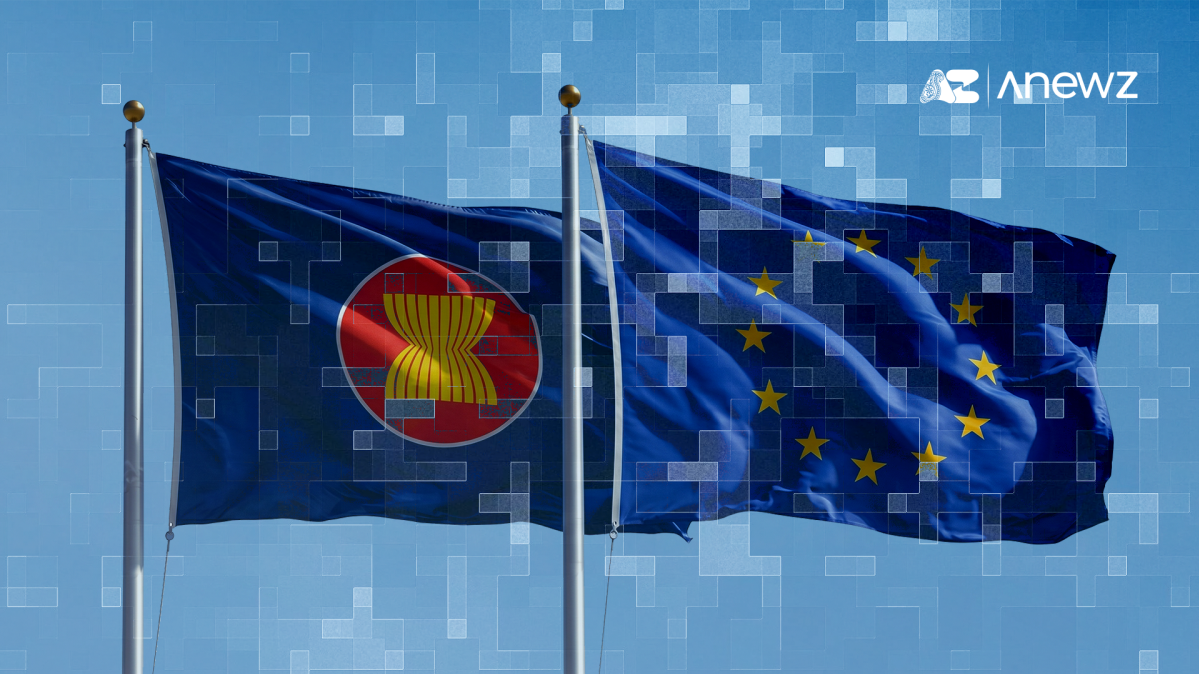
ASEAN and European Union (EU) officials gathered in Bandar Seri Begawan, Brunei Darussalam to attend the 25th ASEAN-European Union Ministerial Meeting (AEMM) from 27 to 28 April.
The meeting set the stage for the 50th anniversary of ASEAN–EU relations in 2027, while reinforcing cooperation aligned with the ASEAN Community Vision 2045. Held amid shifting geopolitics, it highlighted a more focused and strategic partnership.
The EU became ASEAN’s Dialogue Partner in 1977. In 2020, both sides agreed to elevate ties to a strategic partnership, underscoring the growing importance of cooperation across political, economic and socio-cultural spheres.
The EU has recognised ASEAN’s centrality within its Indo-Pacific strategy. Economic ties remain strong, with two-way merchandise trade reaching $292.8 billion in 2024, reflecting the depth of interregional engagement.
Geopolitical pressures drive closer ties
In 2026, ongoing geopolitical developments - including the Russia–Ukraine war, conflicts in West Asia, South China Sea disputes, strained transatlantic relations and intensifying major power rivalry - have pushed ASEAN and the EU to strengthen cooperation.
From ASEAN’s perspective, maintaining its central role amid great power competition remains essential. The bloc continues to prioritise consensus-building and non-interference, known as ‘The ASEAN Way’.
Moving beyond rhetoric
As outlined in the Joint Ministerial Statement of the 25th ASEAN–EU Ministerial Meeting, the EU explicitly linked the ASEAN Outlook on the Indo-Pacific with its own Indo-Pacific strategy. This commitment signals a shift from rhetoric to practical cooperation on shared priorities.
The statement also reflects a growing recognition within the EU of the need for deeper engagement in Southeast Asia. The region’s importance to global shipping routes, production networks and supply chains makes it strategically indispensable. Disruptions caused by conflicts in Ukraine and West Asia - including supply chain shocks and rising energy costs - have reinforced this reality.
ASEAN’s balancing act
ASEAN member states continue to face a strategic dilemma: whether to align more closely with the U.S. or China. The State of Southeast Asia: 2026 Survey Report by ISEAS found that 51.7% of respondents expressed concern over economic tensions between major powers.
The survey identified the top geopolitical concerns as U.S. leadership under President Donald Trump, global scam operations and assertive behaviour in the South China Sea. Notably, the EU ranked second among trusted partners at 55.9%, behind Japan at 65.6%, providing a solid foundation for deeper cooperation.
Opportunities for cooperation
A consistent and visible EU presence in Southeast Asia could offer ASEAN a credible alternative partner, reducing reliance on either China or the U.S. Expanded cooperation in digitalisation, trade and supply chains could accelerate ASEAN’s development.
The EU also has the potential to support ASEAN’s digital transformation, particularly in addressing emerging cybercrime threats. ASEAN can benefit from the EU’s regulatory experience, including frameworks such as the General Data Protection Regulation and the EU Cybersecurity Act.
Security and stability concerns
Ensuring regional stability remains a shared priority. Ongoing issues - including the political crisis in Myanmar and disputes in the South China Sea - risk destabilising Southeast Asia if left unresolved.
As a perceived champion of the rules-based international order, the EU has committed to resolving disputes through diplomatic means and in accordance with international law, particularly the United Nations Convention on the Law of the Sea. This stance also reinforces support for ASEAN centrality.
Structural differences pose challenges
Despite the potential, challenges remain. ASEAN’s consensus-based approach can slow decision-making and conflict resolution. The ongoing civil war in Myanmar and last year’s border tensions between Thailand and Cambodia highlight these limitations.
The ceasefire between Thailand and Cambodia, brokered by the U.S., also underscores continued reliance on external powers and lingering doubts about ASEAN’s internal mechanisms. Meanwhile, the EU’s highly institutionalised and rules-based system may struggle to adapt to these dynamics - marking a key difference between the two blocs.
Today’s geopolitical landscape has reinforced the need for stronger ASEAN-EU cooperation. The 25th ASEAN–EU Ministerial Meeting reaffirmed what both sides already recognise: the partnership is strategically necessary.
The more pressing question is whether ASEAN’s consensus-driven approach and the EU’s institutional framework can find sufficient common ground to translate that necessity into concrete outcomes before the geopolitical window narrows further.














What is your opinion on this topic?
Leave the first comment