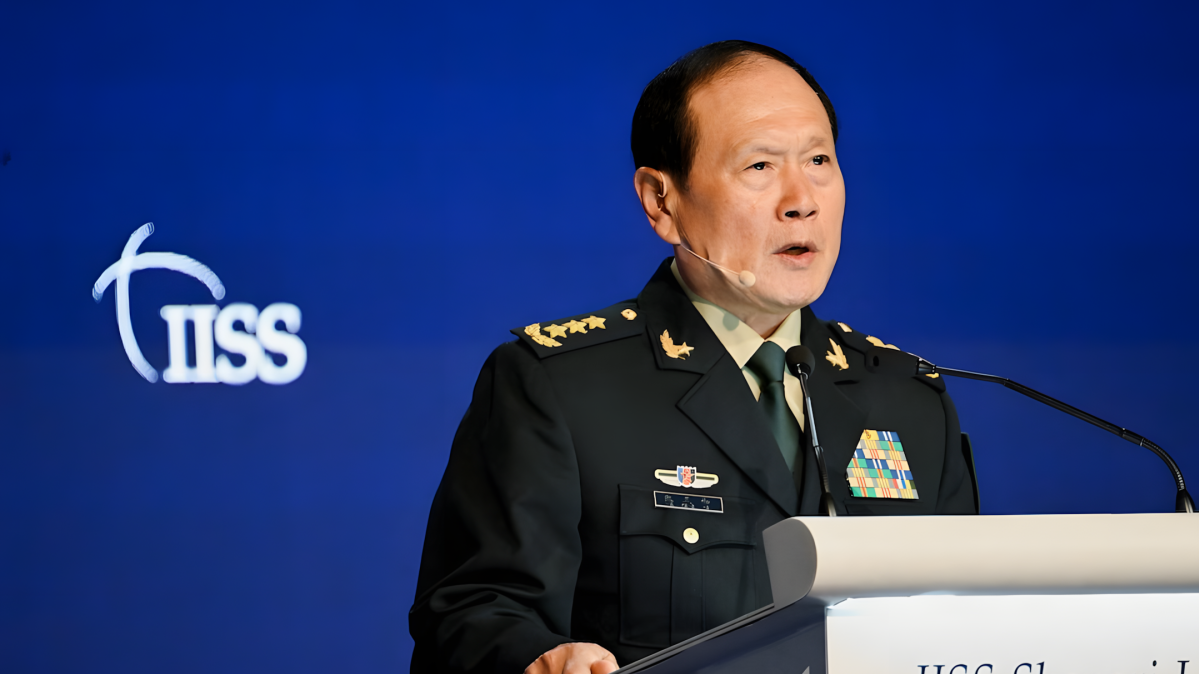
Former Chinese defence ministers Wei Fenghe and Li Shangfu have been sentenced to death with a two-year reprieve for corruption, state news agency Xinhua reported on Thursday. The cases highlight the scale of President Xi Jinping’s anti-corruption purge within China’s military.
The armed forces have been a major focus of Xi’s anti-corruption campaign since he came to power in 2012. In recent years, the crackdown has intensified. In 2023, the campaign swept through the elite Rocket Force, the secretive branch responsible for China’s nuclear arsenal and conventional ballistic missiles.
Earlier this year, the purge escalated further with the removal of top People’s Liberation Army (PLA) general Zhang Youxia. The move drew attention because Zhang, a Politburo member, had long been viewed as a close ally of Xi.
Bribery and abuse of power
The charges against the two former ministers point to deep-rooted corruption within the military.
Previous reports from Xinhua said Li Shangfu was suspected of accepting “huge sums of money” in bribes and bribing others to secure promotions. Investigators concluded that he “did not fulfil political responsibilities” and “sought personal benefits for himself and others”, undermining the integrity of military procurement.
An investigation into Wei Fenghe, launched in 2023, reached similar conclusions. Xinhua reported in 2024 that Wei accepted “a huge amount of money and valuables” in bribes. He was also accused of helping others gain “improper benefits in personnel arrangements”, effectively selling promotions within the military. The agency said his actions were “extremely serious in nature, with a highly detrimental impact and tremendous harm” to the PLA.
Under China’s legal system, a death sentence with a two-year reprieve is usually commuted to life imprisonment if no further crimes are committed during the suspension period. Xinhua said both men will serve life sentences without the possibility of parole or further sentence reductions.
Such commutations are not unprecedented in China. Former justice minister Fu Zhenghua received a suspended death sentence in 2022 that was later commuted to life imprisonment. Former railways minister Liu Zhijun received a similar sentence after his conviction in a major corruption scandal in 2013.
Military loyalty warning
China’s military leadership has used the cases to reinforce demands for loyalty to the Communist Party.
In a commentary published on Friday, the PLA Daily called on party members and military officers to learn from the cases and warned against “divided loyalties towards the Party”.
“Party members and cadres in the military, particularly senior officers, must take corrupt officials such as Wei Fenghe and Li Shangfu, who have been investigated and punished, as cautionary examples,” the newspaper said.
The military leadership said the two former ministers had damaged the party’s cause, national defence and the reputation of senior military officials.
James Char, a Singapore-based China security scholar, said the punishments were historically severe. He noted that the suspended death sentences were the harshest penalties imposed on members of the Central Military Commission, the Communist Party’s top military body, in recent history.
“That Wei and Li have been ‘commuted to life imprisonment without parole or commutation’ underlines the severity of their offences given that such sentences are typically reserved for serious crimes,” said Char, an academic at the S. Rajaratnam School of International Studies.
Foreign diplomats, intelligence agencies and military analysts are closely monitoring the anti-corruption campaign. While the purge has strengthened Xi’s control over the armed forces, questions remain about its impact on military effectiveness.
The International Institute for Strategic Studies (IISS), a London-based security think tank, said earlier this year that the continuing removals were creating gaps in the military’s senior leadership structure. Analysts have warned that the climate of fear and the loss of experienced officers may have affected the combat readiness of China’s rapidly modernising armed forces.












What is your opinion on this topic?
Leave the first comment