China and Pakistan discuss Afghanistan security and Urumqi Process
China’s Special Envoy for Afghanistan, Yue Xiaoyong, has met Pakistan’s Special Representative for Afghanistan, Mohammad Sadiq, in Islamabad to di...
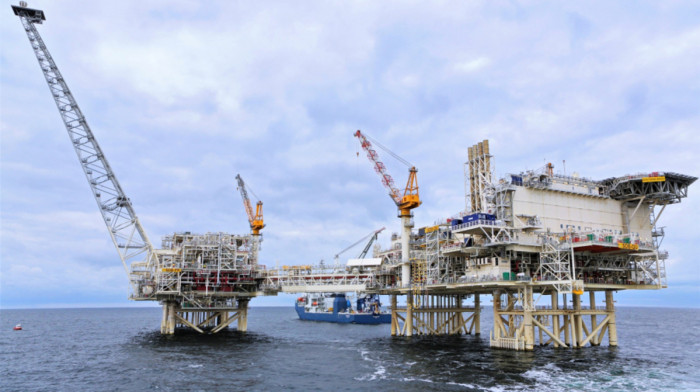
A new trilateral energy partnership involving Uzbekneftegaz, Azerbaijan’s state oil company SOCAR and BP has been announced during Uzbekistan Energy Week 2026 in Tashkent.
The agreement focuses on geological exploration and future hydrocarbon production in Uzbekistan’s Ustyurt region and marks BP’s entry into one of the country’s major energy projects.
The production-sharing agreement was signed by representatives of Uzbekistan’s Ministry of Energy, Uzbekneftegaz, SOCAR and BP on the sidelines of the Oil and Gas Uzbekistan conference.
According to the parties, the project covers geological exploration across six investment blocks in the Ustyurt region: Boyterak, Terengquduq, Birqori, Haroy, Qoraqalpoq and Qulboy.
The initiative aims to expand Uzbekistan’s hydrocarbon resource base through the attraction of international investment, advanced exploration technologies and global expertise.
Officials said BP’s participation reflects growing international confidence in Uzbekistan’s energy sector and the country’s ongoing economic reforms.
SOCAR President Rovshan Najaf stated that the combined experience of the participating companies would contribute to the successful implementation of the project and the further development of the region’s energy potential.
Meanwhile, BP representatives described Uzbekistan as a market with significant resource opportunities and highlighted the strategic importance of expanding cooperation in the country’s energy sector.
Alongside energy cooperation, SOCAR is also strengthening educational partnerships in Uzbekistan through the Baku Higher Oil School.
The institution has launched a dual-diploma master’s programme in Oil and Gas Technology together with Bukhara State Technical University and Tashkent Chemical-Technological Institute. Currently, 16 students from the Uzbek partner universities are studying on the programme and are expected to graduate in June 2026.
Experts say projects of this scale highlight Uzbekistan’s growing role as an energy and investment hub in Central Asia while strengthening cooperation between regional and international partners.
Read more:

Okinawa lost transport links and suffered widespread power outages on Monday (1 June) as Severe Tropical Storm Jangmi brought destructive winds and heavy rain to Japan's south-western islands.
Competing narratives continue to shape perceptions of the war in Ukraine, with Russian leadership suggesting a possible end phase while Ukrainian officials warn of renewed large-scale attacks and ongoing escalation risks.
U.S. Secretary of State Marco Rubio has held talks with Lebanese President and Israeli Prime Minister on efforts to ease tensions between Israel and Lebanon. According to a U.S. official, Washington has proposed a plan aimed at achieving a gradual de-escalation of hostilities.
Dutch police have launched an investigation into the use of force against a pregnant woman at an asylum seekers' centre in Zeist after videos of the incident circulated widely on social media.
When Armenians vote on 7 June, they will be voting in an election shaped by months of political change and a rapidly deepening relationship with the European Union. The result may not only determine who governs Armenia but also the future direction of the country's geopolitical alignment.
China’s Special Envoy for Afghanistan, Yue Xiaoyong, has met Pakistan’s Special Representative for Afghanistan, Mohammad Sadiq, in Islamabad to discuss the China-facilitated Urumqi Process and regional security concerns.
International organisations, investors, environmental experts and business representatives gathered in Samarkand for the opening of Eco Expo Central Asia 2026, one of the region's largest environmental events focused on green growth, climate resilience and sustainable development.
Armenian Prime Minister Nikol Pashinyan has said Yerevan remains committed to normalising relations with Azerbaijan and Türkiye, expressing confidence that decades of regional hostility will eventually give way to lasting stability.
Kazakhstan has restored oil production after an accident at the Tengiz oil field briefly disrupted output last week, while also signalling its readiness to increase crude shipments through the Baku–Tbilisi–Ceyhan (BTC) pipeline.
Baku has once again become a focal point for international energy diplomacy, investment and strategic cooperation, as Baku Energy Week brings together policymakers, industry leaders and investors from around the world.
You can download the AnewZ application from Play Store and the App Store.
What is your opinion on this topic?
Leave the first comment