President Donald Trump has ordered the U.S. Navy to abandon its next planned electromagnetic aircraft launch system and return to steam-powered catapults on a future aircraft carrier, while also authorising limited overseas ship construction to help address naval capacity shortfalls.
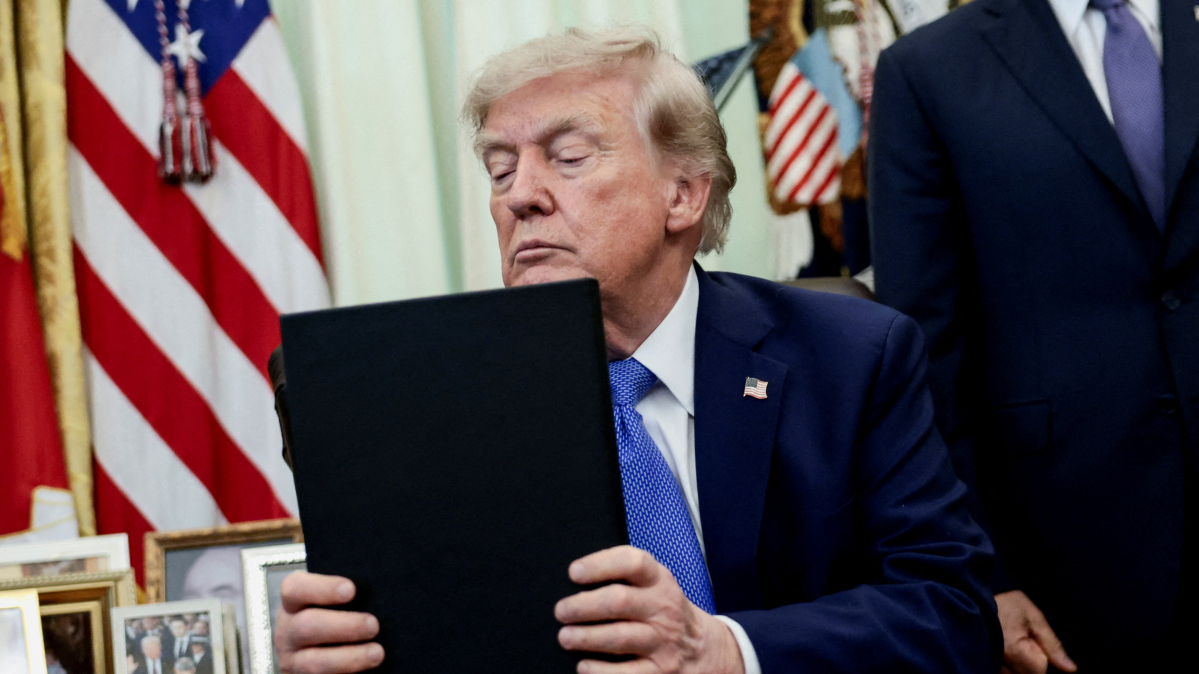
The changes were outlined in a national security memorandum signed on Thursday and represent a significant intervention in major Navy procurement and shipbuilding programmes.
Return to steam catapults
One of the most notable directives concerns the Navy's Ford-class aircraft carriers, which were designed around the Electromagnetic Aircraft Launch System (EMALS), a technology intended to replace traditional steam catapults.
Under Trump's order, the USS Doris Miller, the fourth carrier in the Ford-class programme, will no longer use the electromagnetic launch system employed on the first three ships. Instead, it will revert to steam-powered launch technology.
The decision comes despite years of Navy investment in EMALS, which was selected in 2009 with the aim of reducing maintenance requirements, lowering long-term operating costs and decreasing stress on aircraft during take-off. The technology is also being adopted by France for its future carrier programme.
Trump has repeatedly criticised the system, arguing that it is unnecessarily expensive and overly complex.
Speaking at a defence summit last month, he described the technology as costing billions of dollars more than traditional alternatives while failing to deliver sufficient advantages.
Cost and schedule concerns
The decision is likely to trigger debate within the defence industry and Congress because the Doris Miller is already well into the production process.
The carrier's keel is expected to be laid before the end of 2026, with delivery to the Navy currently scheduled for early 2034.
General Atomics, the company that manufactures EMALS, warned that changing course at this stage could create significant challenges.
The company said nearly half of the system's production work has already been completed and argued that redesigning the vessel could increase costs, create scheduling delays and introduce new integration risks.
Analysts also note that the lead ship of the class, USS Gerald R. Ford, has conducted tens of thousands of electromagnetic launches since entering service, suggesting the technology has matured considerably after early operational difficulties.
Opening the door to overseas shipbuilding
The memorandum also marks a major shift in shipbuilding policy by allowing foreign shipyards to contribute directly to U.S. naval construction under limited circumstances.
For decades, American warships have been built domestically. Trump's directive, however, permits foreign shipbuilders that have made substantial investments in U.S. shipyards to construct up to two vessels in their home countries as a temporary measure.
The administration argues the move will help bridge production gaps as the Navy seeks to expand and modernise its fleet.
The decision reflects growing concerns in Washington about the pace of U.S. shipbuilding and the ability of American yards to meet future naval requirements.
The order could particularly benefit major international shipbuilders seeking a larger role in the U.S. defence market. It comes shortly after South Korea's Hanwha Group pursued an expansion of its American shipbuilding footprint through a proposed acquisition involving Australian shipbuilder Austal's U.S. operations.
Expanding repair capacity
Beyond new construction, Trump's memorandum also addresses longstanding concerns about maintenance bottlenecks across the fleet.
The president directed the Pentagon to establish a fifth Navy shipyard, a move aimed at increasing capacity for repairs and maintenance on aircraft carriers and nuclear-powered submarines.
The issue has become increasingly important as the Navy struggles with maintenance backlogs that can keep vessels out of service for extended periods.
Defence officials have repeatedly warned that delays in shipyard work can affect fleet readiness and reduce the number of ships available for deployment.
A broader rethink of naval priorities
Taken together, the measures signal a broader effort by the Trump administration to reshape how the Navy builds and maintains its fleet.
Supporters argue the changes could accelerate ship production, address maintenance constraints and reduce reliance on technologies the president views as costly or unnecessarily complicated.
Critics, however, are likely to question the financial implications of redesigning a carrier already under construction and whether abandoning EMALS risks reversing years of technological development.
With the Ford-class programme representing one of the Navy's most expensive and strategically important investments, Trump's decision is expected to reignite debate over the balance between innovation, cost and operational effectiveness in the future U.S. fleet.



















What is your opinion on this topic?
Leave the first comment