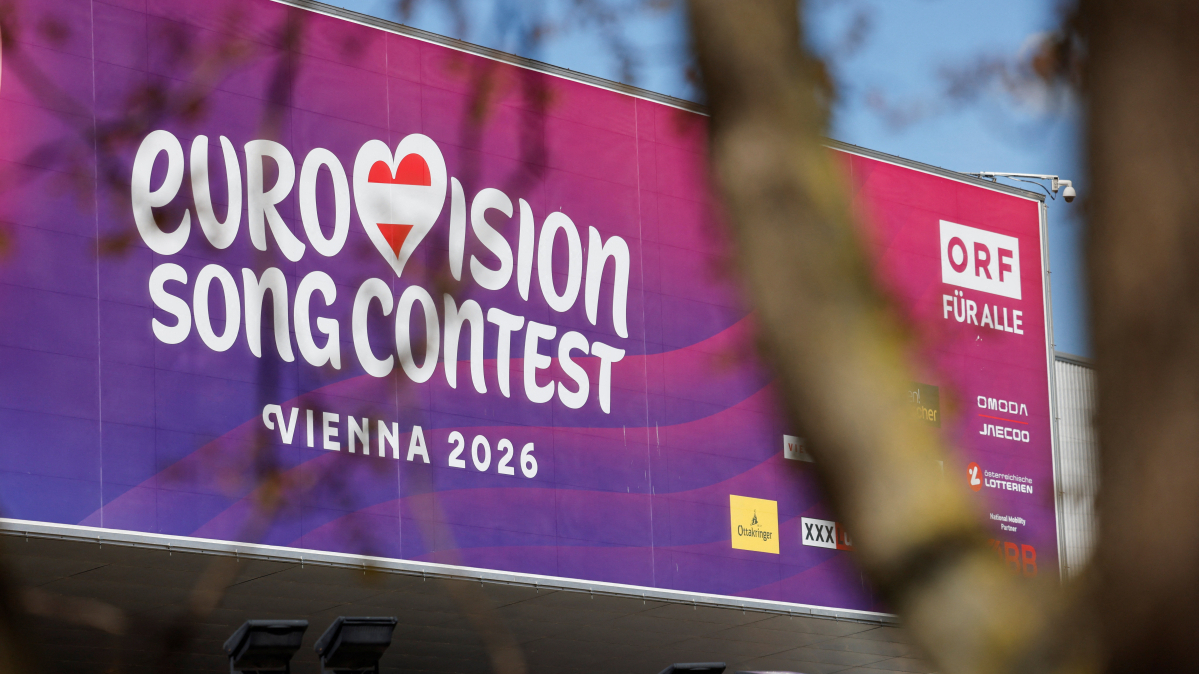
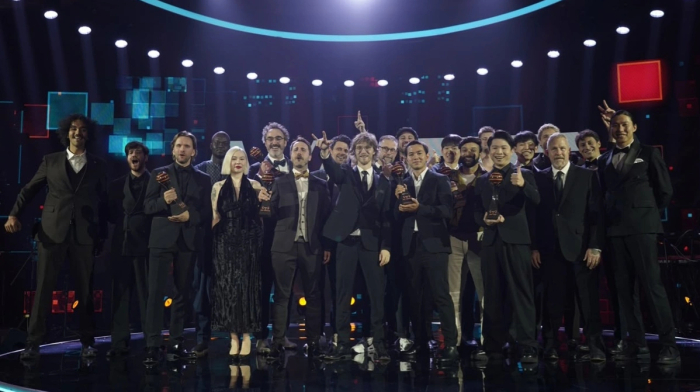
The Eurovision Song Contest opened in Vienna on Tuesday amid heightened political tensions, as Israel competed in the first semi-final despite a boycott by five European broadcasters over the war in Gaza.
The contest, traditionally known as a glittering celebration of pop music and camp spectacle, is marking its 70th anniversary under the shadow of a deep institutional crisis linked to Israel’s military offensive in Gaza, launched after the Hamas-led attacks of 7 October 2023.
Public broadcasters in Spain, the Netherlands, Ireland, Iceland and Slovenia have withdrawn from this year’s event, citing humanitarian concerns over the conflict. As a result, the 2026 contest is the smallest since 2003, with just 35 participating countries.
Media analysts predict the split could significantly reduce Eurovision’s global audience, which reached an estimated 166 million viewers last year - surpassing the 128 million who watched the U.S. Super Bowl.
Heavy security and protests in Vienna
Tensions were evident across the Austrian capital ahead of the semi-final. Inside the arena, strict crowd-control measures and flag restrictions were in place. During Israel’s performance, cheers from supporters and visible Israeli flags were prominent in the audience.
Israel’s entry was among the 10 acts to qualify for Saturday’s Grand Final, progressing from a field of 15 competitors in the first semi-final through a combined jury and public televote.
Outside the venue, the political atmosphere was far more confrontational. Vienna Mayor Michael Ludwig, a member of the Social Democrats, responded angrily on Friday after a small group of pro-Palestinian protesters disrupted a concert where he was speaking.
"We won't let ourselves be terrorised into silence," Mayor Ludwig declared from the stage. "Unfortunately, we will need large security measures because of people like you, for example. That will incur great expense, but we will nevertheless hold a festival of togetherness, I can promise you that."
The comments prompted criticism in Austria. Shoura Hashemi, co-head of Amnesty International Austria, said on X, formerly Twitter, that Ludwig should apologise for what she described as "unbearable, false, divisive" rhetoric directed at peaceful protesters.
Austria’s political establishment has historically maintained strong support for Israel, while pro-Palestinian demonstrations in the country have generally been smaller than those seen in cities such as London and Paris.
Several demonstrations are planned during Eurovision week, with police estimating attendance of up to 3,000 people. A protest on Tuesday afternoon that organisers expected would attract around 500 participants instead drew only about 30 people.
Broadcasters cite humanitarian concerns
The broadcasters behind the boycott said their decisions were driven by moral concerns over the humanitarian situation in Gaza.
Irish broadcaster RTÉ referred to a statement issued in December saying it would be "unconscionable" to participate in an entertainment programme alongside Israel under current circumstances.
Israel and its supporters have argued that the boycott amounts to an international smear campaign against the country.
According to Israeli authorities, at least 1,200 people - most of them civilians - were killed in the Hamas-led attacks on 7 October 2023. Since then, Israel’s military campaign in Gaza has killed more than 72,000 Palestinians, mostly civilians, according to local health authorities and devastated much of the territory’s infrastructure.
Israeli contestant warned over voting appeal
Audience reactions to Israel’s Eurovision entries have varied sharply in recent years.
Last year’s Israeli contestant, Yuval Raphael - a survivor of the 7 October music festival attack - finished second after receiving a strong international public vote despite lower scores from professional juries.
This year’s Israeli entrant, Noam Bettan, has not faced the same level of political scrutiny over his song. However, he received a formal warning from the European Broadcasting Union (EBU) on Saturday after posting videos on social media urging viewers to vote for him 10 times - the maximum permitted under Eurovision rules.
The EBU said the posts breached contest guidelines designed to prevent contestants from encouraging excessive tactical voting.















What is your opinion on this topic?
Leave the first comment