The Eurovision Song Contest's final takes place in Vienna on Saturday, with the organisers hoping the annual show of glitz and Europop will be a success despite five countries' withdrawal over Israel taking part.
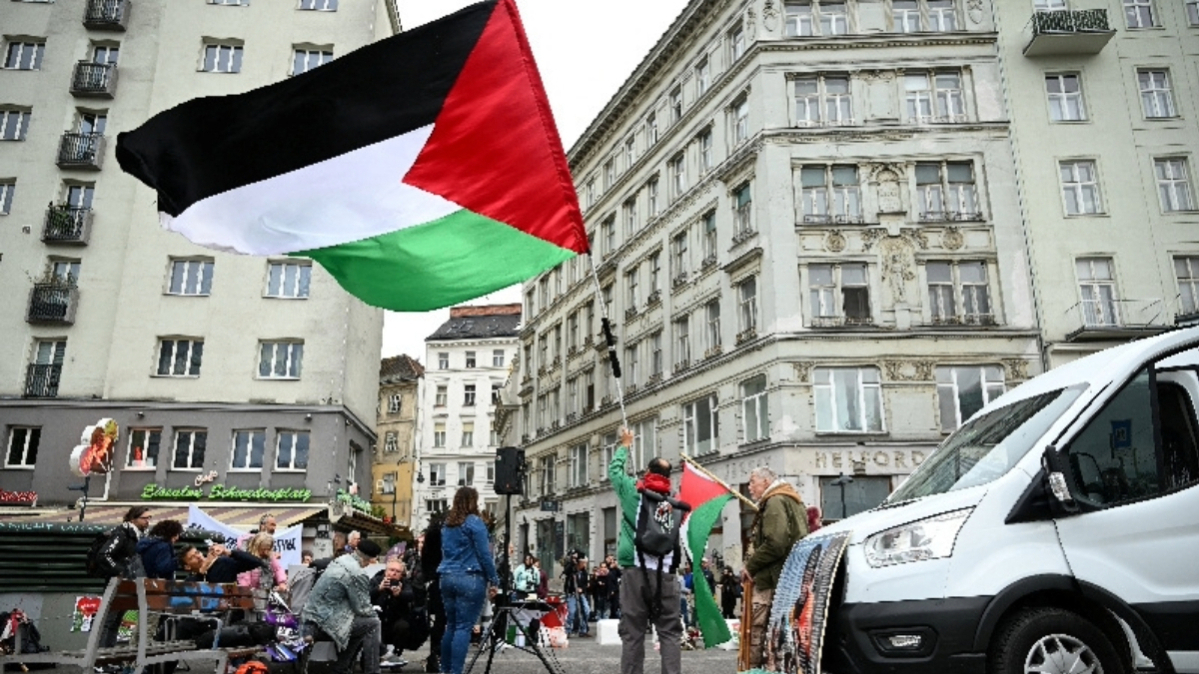
The run-up to Eurovision 2026- the kitsch, usually good-natured pop competition now in its 70th year- has been overshadowed by a boycott involving public broadcasters from Spain, the Netherlands, Ireland, Iceland, and Slovenia.
Held in Vienna, this year’s contest was expected to be a celebration of music, nostalgia, and global attention. Instead, it has been shaped by controversy surrounding Israel’s participation.
The five countries have withdrawn, citing the war in Gaza and criticism of the European Broadcasting Union’s decision to allow Israel to compete. Their absence has noticeably altered the atmosphere both on stage and among fans.
Their boycott is linked to the war in Gaza and criticism of the European Broadcasting Union’s decision to allow Israel to remain in the contest.
A more restrained atmosphere in Vienna
On the ground in Vienna, the atmosphere feels more subdued compared to previous years. Security measures are more visible, and the usual festival-like energy appears reduced.
Fans and journalists alike have pointed to the missing presence of strong-performing delegations, particularly Spain, which traditionally brings significant audience energy.
Beyond the political backdrop, there is also disappointment among some Eurovision followers that the 70th anniversary celebrations feel understated.
Compared to earlier milestone editions, the programming and special performances appear less ambitious, fueling debate over how this milestone year is being marked.
Lighter moments amid tension
Despite the wider controversy, there are lighter moments, particularly among the South Caucasus delegations.
Armenia and Azerbaijan shared a semi-final for the first time since 2019, with interactions between their representatives drawing attention for their relaxed tone.
At a warm-up concert in Amsterdam, the two performers were photographed chatting, while Azerbaijan’s representative Jiva brought a playful energy to the week.
Looking ahead to the Grand Final
As Saturday’s Grand Final gets underway, the question for viewers will be whether Eurovision’s long-standing slogan, “United by Music,” can truly ring true this year.












What is your opinion on this topic?
Leave the first comment