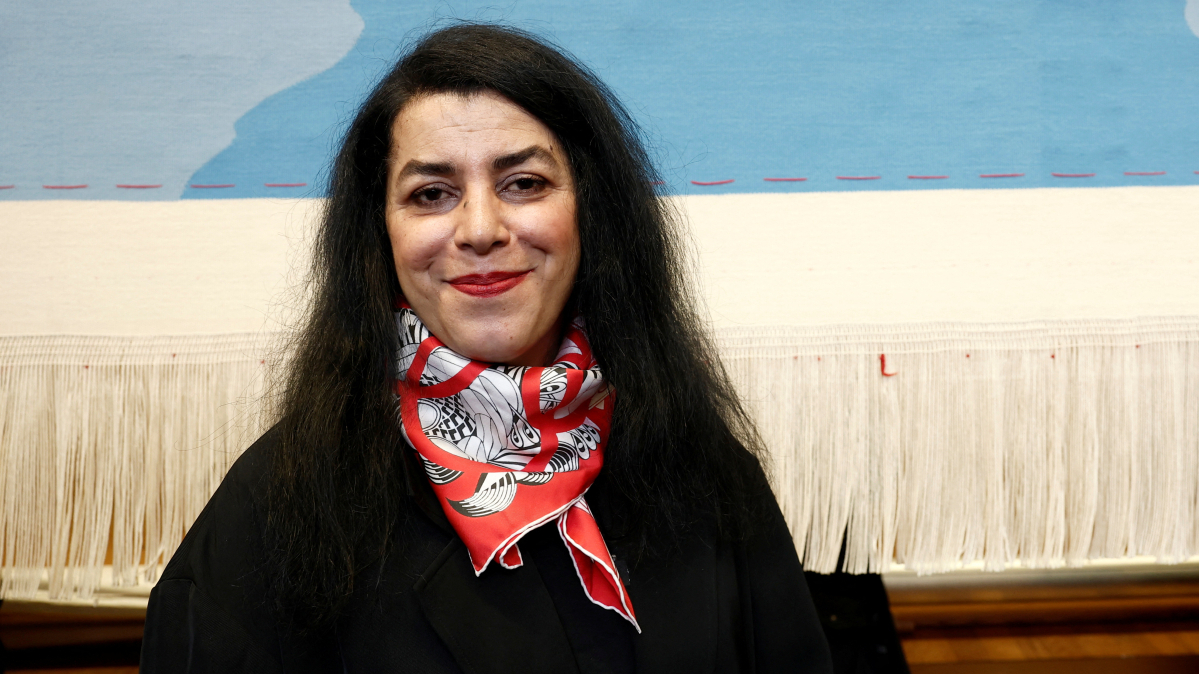
Marjane Satrapi, the Iranian-French artist, filmmaker and author best known for the acclaimed graphic novel Persepolis, has died at the age of 56, the French presidency announced on Thursday.
In a statement, the Élysée Palace paid tribute to Satrapi's cultural impact and international legacy.
"Her passing is that of a figure of French culture and of an artist enamored of freedom, whose work carried a universal message and had earned her immense international renown," the statement said.
A separate statement from Satrapi's family, released through AFP, said she had died of "sadness" a little more than a year after the death of her husband, Swedish actor, producer and screenwriter Mattias Ripa. No further details about the cause of death were provided.
From Tehran to international recognition
Born in Tehran in 1969, Satrapi grew up in a politically engaged family with communist leanings during a period of profound change in Iran.
Following the 1979 Islamic Revolution, her parents sent her to Vienna as a teenager. She later returned to Iran to study fine arts before moving to France, where she continued her artistic training in Strasbourg and built a career that would bring her global recognition.
Her experiences of revolution, exile and identity became the foundation of Persepolis, a powerful black-and-white graphic memoir that chronicled her childhood and adolescence in Iran.
The book became an international bestseller and helped introduce graphic novels to a wider audience. It was later adapted into an animated film co-directed by Satrapi, winning the Jury Prize at the Cannes Film Festival and earning an Academy Award nomination.
A voice for freedom and women's rights
Satrapi's work combined political commentary, personal storytelling and dark humour. Her distinctive artistic style and willingness to tackle difficult subjects made her one of the most influential graphic novelists of her generation.
Beyond Persepolis, she directed several films, including Chicken with Plums, The Voices and Radioactive, a biographical drama about pioneering scientist Marie Curie.
She also contributed to French public life through art, designing a nine-metre wool triptych for the Paris 2024 Olympic Games depicting athletes competing around the Eiffel Tower.
Throughout her career, Satrapi remained a vocal critic of authoritarianism and a strong advocate for women's rights and freedom of expression. She frequently spoke out against repression in Iran and championed the rights of political dissidents.
Principled stance on Iran
In 2025, Satrapi made headlines when she declined the Legion of Honour, France's highest civilian distinction.
Explaining her decision, she criticised what she described as France's "hypocritical attitude" towards Iran.
"I can't continue seeing the children of Iranian oligarchs come to spend their holidays in France, even become naturalised, while at the same time young dissidents have difficulty in obtaining a tourist visa to come to see what the country of the Enlightenment and human rights looks like," she wrote at the time.
Her decision reflected a lifelong commitment to speaking out on issues she believed mattered, regardless of political sensitivities.
Lasting legacy
Satrapi leaves behind a body of work that resonated far beyond literature and film. Through her storytelling, she brought the experiences of ordinary Iranians to international audiences and explored universal themes of identity, freedom and belonging.
Her death marks the loss of a distinctive artistic voice whose work helped shape conversations about exile, culture and human rights across the world.























What is your opinion on this topic?
Leave the first comment