Iran’s Foreign Minister Abbas Araghchi said Tehran has “no trust” in the United States and will only consider negotiations if Washington shows seriousness. His remarks came as talks on Iran’s nuclear programme continued, with Trump and Xi also opposing Iran acquiring nuclear weapons.
⦿ 23:00 GMT | UPDATE
Trump: China to buy 200 Boeing jets, order could rise to 750
Source
China has reportedly agreed to purchase around 200 Boeing aircraft, with the potential for total orders to rise to as many as 750 planes, according to U.S. President Donald Trump. The deal is said to include a mix of Boeing 737 and 777 models, powered by GE Aerospace engines, and would mark Boeing’s first major breakthrough in China in nearly a decade.
Boeing described the arrangement as an initial commitment for 200 aircraft, with further orders expected later, although the deal has not yet been fully finalised. Analysts estimate the initial tranche could be worth around $17–19 billion, with a higher value if more wide-body aircraft are included.
⦿ 22:30 GMT | UPDATE
UAE says all of its actions came under defensive measures to protect sovereignty
Reuters
The United Arab Emirates said on Saturday that all its actions fall within defensive measures designed to protect its sovereignty, civilians, and critical infrastructure, according to a statement from its foreign ministry.
The comment followed a Wall Street Journal report on Monday claiming that the UAE conducted military operations against Iran in early April.
The foreign ministry did not directly address or confirm the reported strikes on Iran.
⦿ 21:33 GMT | UPDATE
At least six killed in Israeli strike on civil defence center in southern Lebanon
Reuters
At least six people were killed, including three paramedics, and 22 were wounded in an Israeli strike on a civil defense center in southern Lebanon, the Lebanese state news agency said early Saturday.
⦿ 20:40 GMT | UPDATE
Trump says he is losing patience with Iran, did not ask China for favors
Reuters
Trump said his patience with Iran is “running out” and claimed that Chinese President Xi Jinping agreed Tehran should reopen the Strait of Hormuz, though China did not publicly confirm any such commitment. He also said he is considering easing U.S. sanctions on Chinese companies buying Iranian oil, while Beijing stressed its opposition to the conflict and did not signal direct intervention.
The dispute over the strait remains central, with Iran effectively restricting shipping amid tensions linked to U.S.-Israeli strikes, causing major disruptions to global energy flows and pushing oil prices higher. Iran has said it will not fully reopen the waterway until U.S. actions stop, while Trump has warned of further pressure if no agreement is reached.
China has denied any intention to supply arms to Iran and appears reluctant to take a stronger role, even as diplomatic talks remain stalled and mistrust between Washington and Tehran persists. Meanwhile, regional instability has widened, affecting shipping routes, energy markets, and broader Middle East security dynamics.
⦿ 19:30 GMT | UPDATE
Seven killed in Gaza as Israel says it targets Hamas leader
Source
Israeli airstrikes in Gaza killed at least seven Palestinians, including a child, according to local medics, with more than 50 others injured. Israel said the strikes targeted Hamas military chief Izz al-Din al-Haddad, but neither Israel nor Hamas confirmed whether he was killed or wounded.
The attack is the most senior Hamas-linked target hit since a U.S.-backed ceasefire deal in October, as both sides remain deadlocked over Gaza’s post-war plan. Israeli leaders accused Haddad of involvement in the 7 October 2023 attacks, while Hamas has not commented on his fate.
The strikes hit residential areas in Gaza City, causing significant civilian damage, amid ongoing instability despite the ceasefire. Since the truce, hundreds of Palestinians and a small number of Israeli soldiers have been killed in continued violence and sporadic clashes.
⦿ 18:34 GMT | UPDATE
Israel, Lebanon extend ceasefire by 45 days, U.S. says
Reuters
Israel and Lebanon have agreed to extend their ceasefire for another 45 days, according to the U.S. State Department.
The extension is intended to allow more time for negotiations and further progress toward maintaining stability along the border.
“We hope these discussions will advance lasting peace between the two countries, full recognition of each other’s sovereignty and territorial integrity, and establishing genuine security along their shared border,” State Department spokesman Tommy Pigott said on X.
On May 14 and 15, the United States hosted two days of highly-productive talks between Israel and Lebanon. The April 16 cessation of hostilities will be extended by 45 days to enable further progress. The State Department will reconvene the political track of negotiations on June… pic.twitter.com/Dcs9NJDdN5
— Tommy Pigott (@statedeptspox) May 15, 2026
⦿ 17:45 GMT | UPDATE
Israel targets Hamas military chief in Gaza strike
Reuters
Israel says it targeted Hamas military chief Izz al-Din al-Haddad in an air strike on Gaza City, describing him as a key figure behind the 7 October attacks.
Hamas has not commented on his fate.
⦿ 16:55 GMT | UPDATE
Greek tanker crosses Strait of Hormuz amid disruption
Reuters
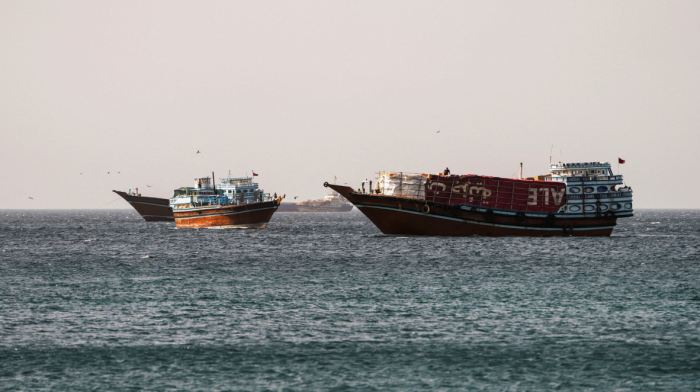
Greek-operated oil tanker crosses Strait of Hormuz as traffic through the vital shipping route remains severely disrupted amid the Iran conflict.
⦿ 15:42 GMT | UPDATE
UAE rejects Iran allegations after BRICS tensions
Reuters
Minister of State Khalifa bin Shaheen Al Marar “affirmed the UAE’s categorical rejection” of what he described as Iranian allegations and attempts to justify attacks targeting the UAE and other countries, according to a statement.
⦿ 15:03 GMT | UPDATE
China urges Iran-U.S. talks, Hormuz reopening
Reuters
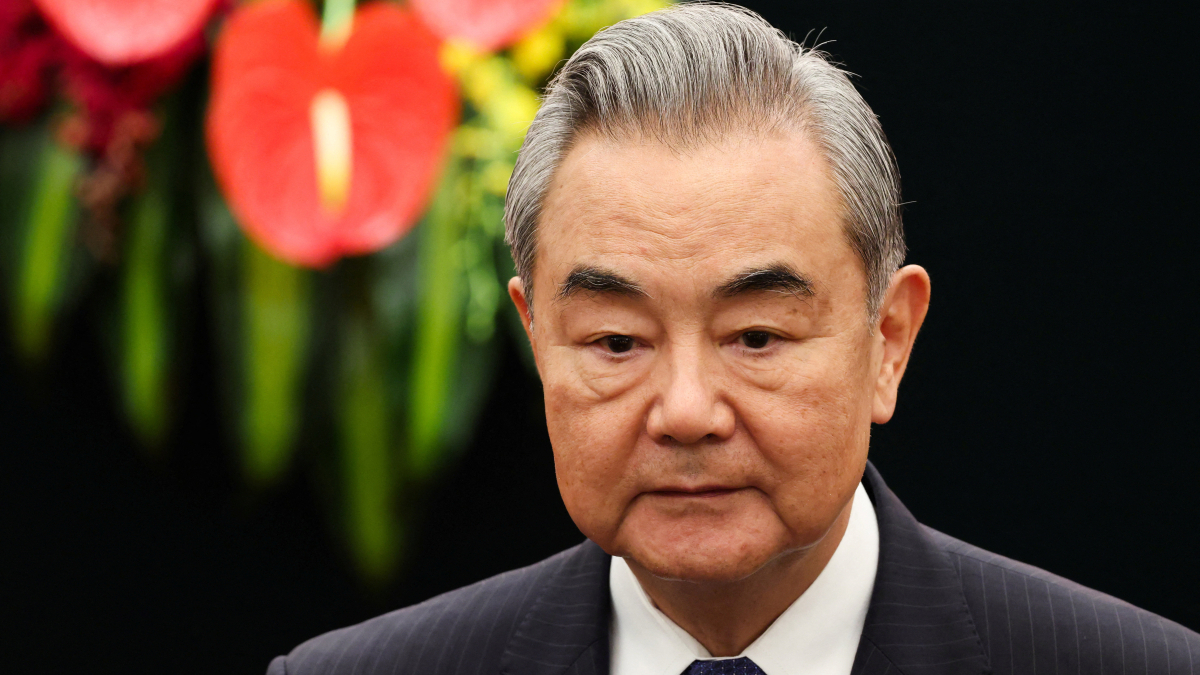
China’s Foreign Minister Wang Yi called on the U.S. and Iran to keep resolving disputes through dialogue and urged the Strait of Hormuz to reopen “as soon as possible”.
China’s Wang Yi at the Great Hall of the People in Beijing, China, 12 May 2026.
⦿ 15:00 GMT | UPDATE
Farhadi says Iran crackdown and war deaths are 'deeply painful'
Reuters
Oscar-winning Iranian director Asghar Farhadi says the deaths linked to Iran’s protest crackdown and ongoing war are “deeply painful” and “will never be forgotten”.
⦿ 14:55 GMT | UPDATE
Pakistan repatriates nationals after U.S. vessel seizure
Reuters
Pakistan says 11 of its citizens and 20 Iranian nationals aboard vessels seized by the U.S. on the high seas have been repatriated, according to Foreign Minister Ishaq Dar.
⦿ 13:26 GMT | UPDATE
Iran’s Araghchi says Tehran will continue protecting security in Hormuz
Reuters
Iran’s Araghchi says Tehran will remain “protector of security in Hormuz” after talks with India’s Jaishankar.
⦿ 12:22 GMT | UPDATE
Germany’s Merz urges Iran to negotiate, reopen Strait of Hormuz after Trump call
Reuters
Germany’s Chancellor Friedrich Merz said Friday he and U.S. President Donald Trump agreed Iran must return to negotiations, reopen the Strait of Hormuz and never obtain nuclear weapons, following what Merz described as a “good phone call” after his China trip.
In posts on X, Merz said the two leaders also discussed efforts toward a peaceful solution in Ukraine and coordinated positions ahead of the upcoming NATO summit in Ankara. He added that Germany and the United States remained “strong partners in a strong NATO.”
I had a good phone call with @POTUS Donald Trump on his way back from China. We agree: Iran must come to the negotiating table now. It must open the Strait of Hormuz. Tehran must not be allowed to have nuclear weapons. (1/2)
— Bundeskanzler Friedrich Merz (@bundeskanzler) May 15, 2026
⦿ 11:00 GMT | UPDATE
Trump weighs easing sanctions on Chinese firms over Iranian oil trade
Reuters
U.S. President said on Friday he is weighing lifting sanctions on Chinese companies that buy Iranian oil and will have a decision soon.
Trump spoke to reporters aboard Air Force One on his way back to the U.S. after a two-day state visit to China.
He also said he was OK with Iran suspending its nuclear program for 20 years, but that there has to be a "real" commitment from Tehran.
⦿ 10:09 GMT | UPDATE
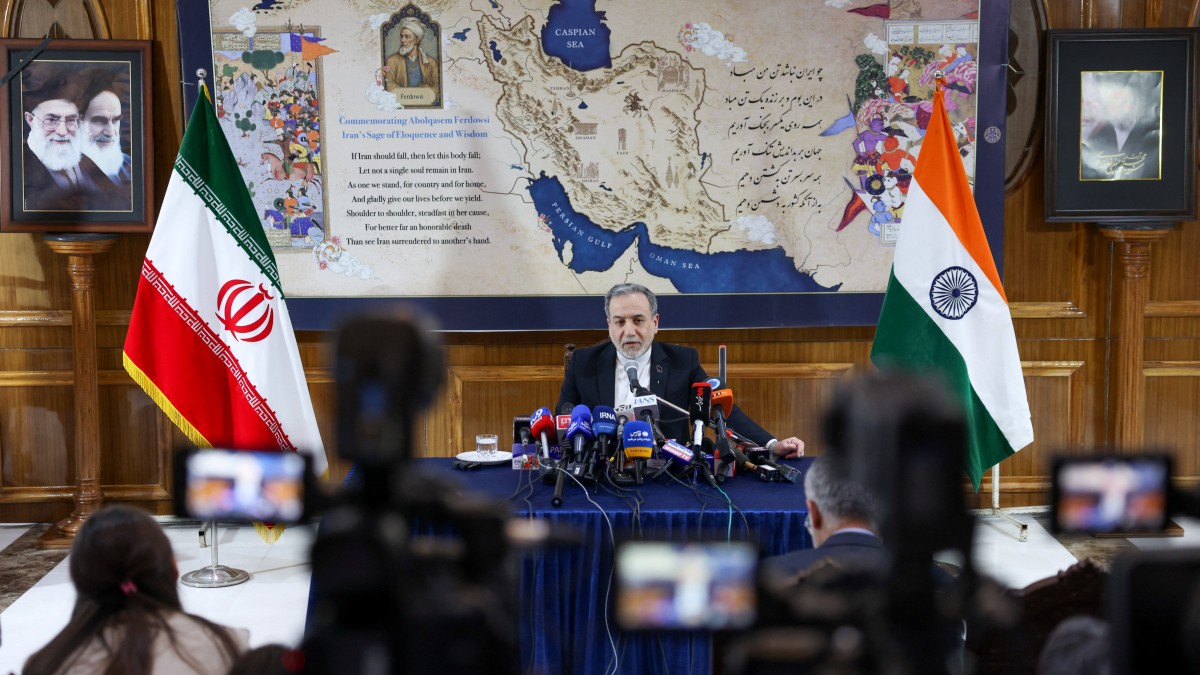
Iran says it has no trust in the U.S. and will only negotiate if serious
Reuters
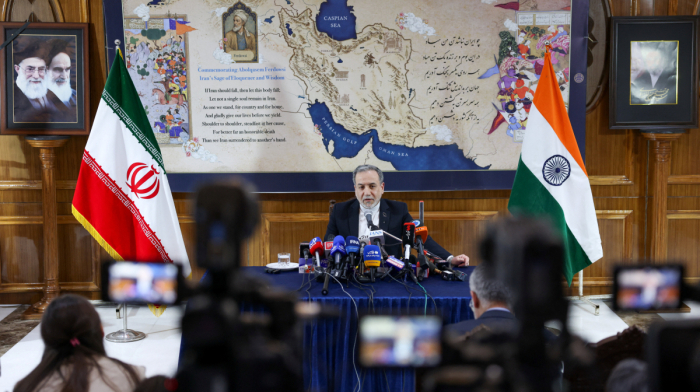
Iran’s Foreign Minister Abbas Araghchi said Tehran has “no trust” in the United States and would only consider negotiations with Washington if it demonstrates seriousness.
Speaking in New Delhi during the BRICS foreign ministers’ meeting, he said Iran is seeking to maintain the ceasefire in order to preserve space for diplomacy.
Araghchi noted that ongoing talks are constrained by mistrust and reiterated that Iran understands the consequences of U.S. sanctions. He also said Tehran remains open to continued energy cooperation with India.
Commenting on the Strait of Hormuz, he described the situation as “very complicated,” adding that vessels should coordinate with the Iranian navy and that all ships may pass except those “at war” with Iran.
European shares fall as inflation concerns weigh on markets
Reuters
European shares tumbled on Friday as a deadlock in U.S.-Iran negotiations dented risk appetite, rattled energy markets and rekindled concerns over an economic slowdown.
Oil prices gained more than 1% as the vital passage remained shuttered.
Inflation data readings this week have shown that the impact of the Iran war has started showing up in big increases in consumer and producer prices.
European markets, dependent on energy imports, remain vulnerable and have lagged behind global peers that rebounded from March lows.
Two drones strike Iranian opposition headquarters near Erbil
Reuters
Two drones targeted the headquarters of the Iranian Kurdish opposition group north of Iraq's Erbil on Friday, security sources told.
⦿ 07:32 GMT | UPDATE
Indian, Iranian top diplomats discuss Mideast conflict
Anadolu
Indian Foreign Minister S. Jaishankar and his Iranian counterpart Abbas Araghchi discussed Friday bilateral cooperation as well as the Israeli- U.S. war with Iran, status of Hormuz and wider conflict in the Middle East.
The meeting took place on the sidelines of the BRICS foreign ministers meeting in the Indian capital of New Delhi. Iran is a member of the bloc.
UAE speeds up oil pipeline project to bypass Hormuz route
Reuters
The United Arab Emirates will accelerate construction of a new oil pipeline aimed at doubling its export capacity through Fujairah, according to Abu Dhabi’s media office.
The project is expected to significantly expand the country’s ability to bypass the largely shuttered Strait of Hormuz for energy exports.
⦿ 05:23 GMT | UPDATE
German economy to take hit from Iran war during Q2
Reuters
Economic growth in Germany, which was just 0.3% in the first quarter, will likely take a significant hit from the effects of the Iran war in the second quarter, the federal economy ministry warned on Friday.
"Rising prices, supply chain issues and uncertainty are weighing on sentiment among businesses and households," the ministry said in its monthly report.
⦿ 04:37 GMT | UPDATE
Hezbollah reports new attacks targeting Israeli troops
Anadolu
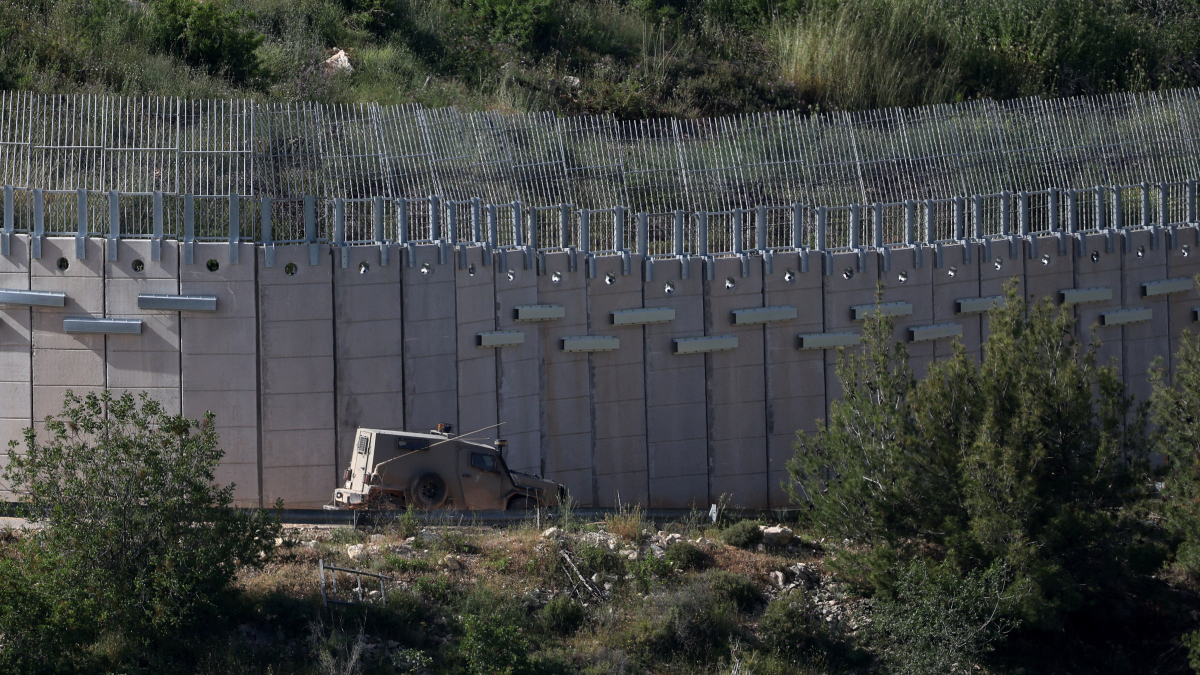
Hezbollah said it launched 13 attacks on Israeli troops, vehicles, and military positions in southern Lebanon.
It added that the operations were in response to continued Israeli ceasefire violations and strikes on Lebanese villages.
The group said the attacks included strikes on three Israeli Merkava tanks in Kfarkela, Al-Bayyada, and Taybeh using missiles and suicide drones, claiming direct hits.
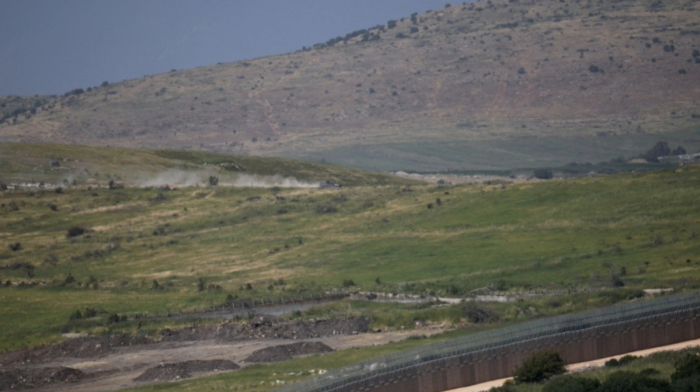
An Israeli military vehicle operates by the Israeli‑Lebanese border, in northern Israel, 14 May, 2026.
⦿ 04:02 GMT | UPDATE
Trump says he and Xi agree to keep Iran from having nuclear arms
Reuters
U.S. President said he discussed Iran with Chinese President and that they do not want Iran to have nuclear weapons and "want the straits open".
The two leaders met at the walled-off Zhongnanhai complex in Beijing as Trump wraps up his state visit to China.
"We’ve settled a lot of different problems that other people wouldn’t have been able to solve," Trump said.
⦿ 03:21 GMT | UPDATE
U.S. reports positive and productive start to Israel-Lebanon talks
Reuters
Israel and Lebanon had a "productive and positive" first day of talks in Washington on Thursday and will continue on Friday, a senior U.S. State Department official said.
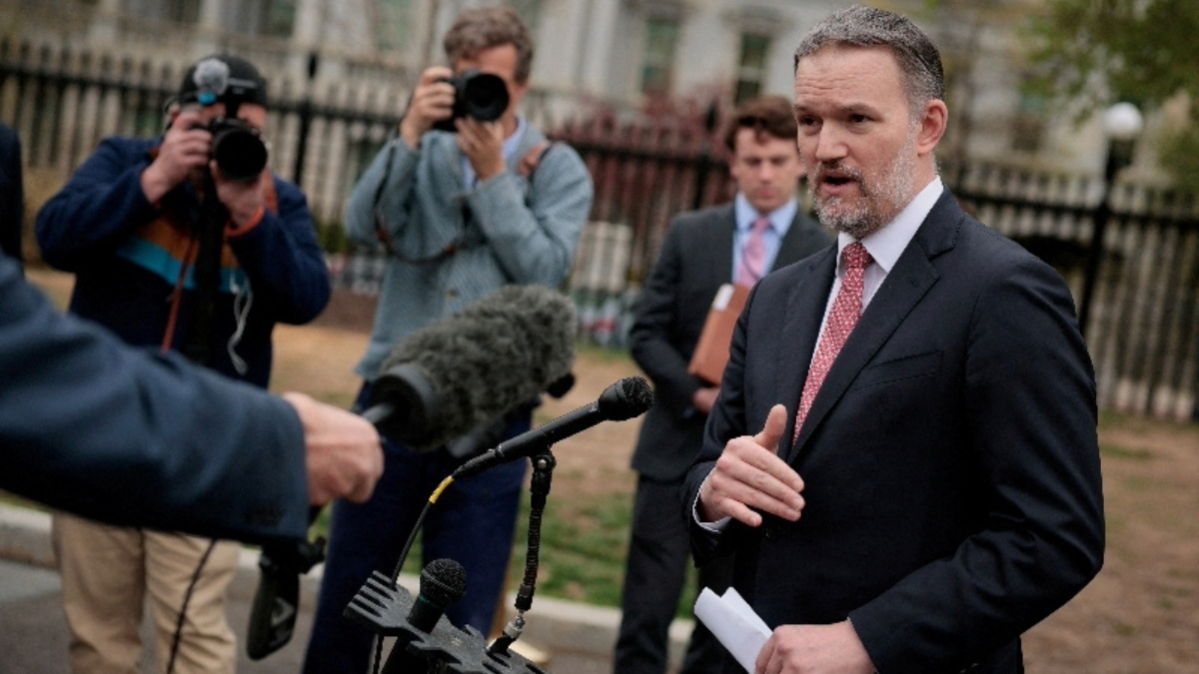
U.S. Trade Representative Jamieson Greer said that Chinese officials made clear the U.S.-China summit that it wants to see the Hormuz reopen without restrictions or tolls and that Beijing will act pragmatically to limit military support for Iran.
"It's really important for China to have the Strait of Hormuz open, no tolling, no military control, and that was clear from the meeting. So we welcome that," Greer told Bloomberg television.
"With respect to Chinese involvement with Iran, our view is the Chinese are being very pragmatic, and they don't want to be on the wrong side of this," Greer added.
U.S. Trade Representative Jamieson Greer speaks with reporters at the White House in Washington, D.C., U.S., 2 April, 2026.
⦿ 02:58 GMT | UPDATE
Trump on Iran: 'I am not going to be much more patient'
Reuters
U.S. President Donald Trump said he would not be much more patient with Iran as he urged Tehran to reach a deal with Washington.
"I am not going to be much more patient," Trump said in an interview aired on Thursday night on Fox News' "Hannity" programme. "They should make a deal."
When asked in the interview about the necessity to retrieve enriched uranium from Iran, Trump suggested the quest was not necessary except for public relations purposes.
"I don't think it's necessary except from a public relations standpoint," Trump said in the interview.
"I just feel better if I got it, actually. But it's, I think, it's more for public relations than it is for anything else."
The U.S., one of nine countries in the world recognised as having nuclear weapons, insists that Iran should move its highly enriched uranium stockpile abroad and renounce domestic enrichment.
Tehran, which does not have nuclear weapons, denies seeking them but says it has the right to develop nuclear technology for peaceful purposes, including enrichment, as a party to the Nuclear Non-Proliferation Treaty (NPT).
Iranian parliamentary spokesman Ebrahim Rezaei said on Tuesday that the country could enrich uranium up to 90% purity, a level considered weapons-grade, if Iran was attacked again.
U.S. President Donald Trump says China's Xi Jinping agreed Iran must reopen the Strait of Hormuz, as Tehran prepares a new shipping mechanism. Tensions over the U.S. blockade and stalled nuclear talks continue to disrupt global oil supplies.
At least four people have been killed in a major Ukrainian drone attack on Russian territory, including the Moscow region, which authorities say faced its largest aerial assault in more than a year.
Bulgaria has won the Eurovision Song Contest for the first time, taking victory in a final overshadowed by a boycott over Israel’s participation and the war in Gaza.
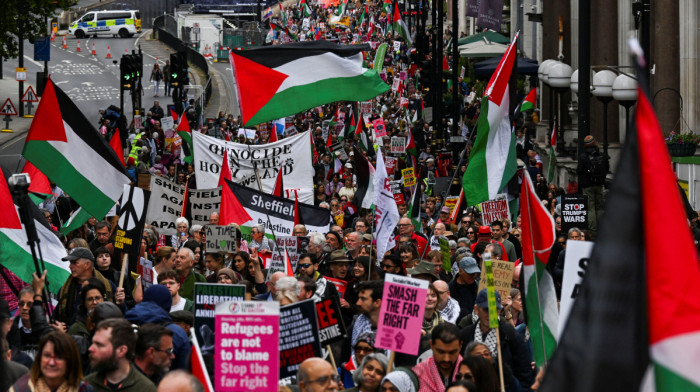
Tens of thousands of demonstrators took to the streets of central London on Saturday (16 May) as two large-scale protests unfolded simultaneously - one focused on immigration and national identity, the other held in support of Palestinians and to mark Nakba Day.
Bulgaria has won the Eurovision Song Contest for the first time, taking victory in a final overshadowed by a boycott over Israel’s participation and the war in Gaza.
Iran’s Foreign Minister Abbas Araghchi said Tehran has “no trust” in the United States and will only consider negotiations if Washington shows seriousness. His remarks came as talks on Iran’s nuclear programme continued, with Trump and Xi also opposing Iran acquiring nuclear weapons.
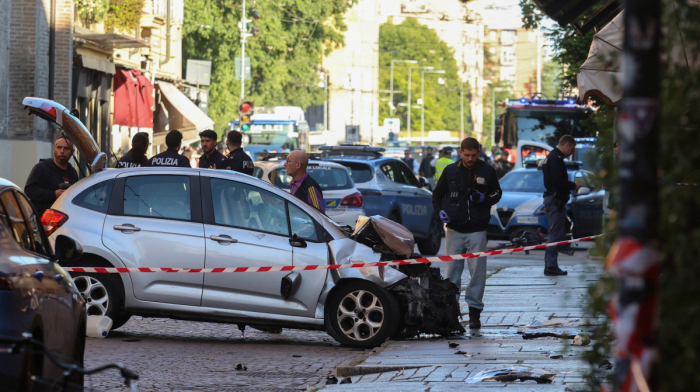
At least eight people were injured after a driver rammed a car into pedestrians in the northern Italian city of Modena, authorities said on Saturday. Four of the victims were reported to be in serious condition.
U.S. President Donald Trump said Washington could destroy Iran’s infrastructure “in two days,” while Tehran warned the U.S. would face growing economic costs from the conflict. The remarks came as Hezbollah reported new attacks on Israeli forces despite an extended Lebanon ceasefire.
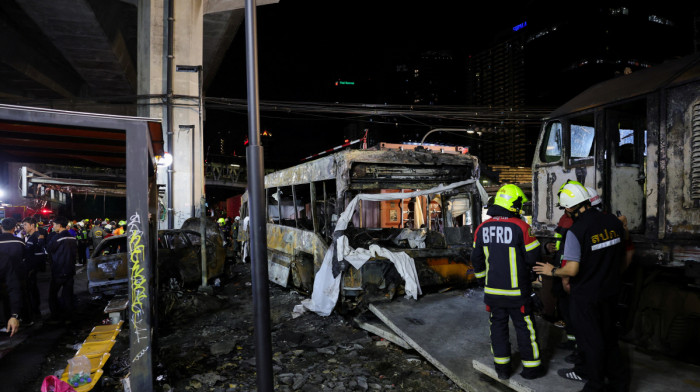
At least eight people have died and 32 others were injured after a freight train collided with a public bus at a railway crossing in Bangkok on Saturday (16 May), triggering a fire that quickly spread through the vehicle.
U.S. President Donald Trump says China's Xi Jinping agreed Iran must reopen the Strait of Hormuz, as Tehran prepares a new shipping mechanism. Tensions over the U.S. blockade and stalled nuclear talks continue to disrupt global oil supplies.
U.S. President Donald Trump said Washington could destroy Iran’s infrastructure “in two days,” while Tehran warned the U.S. would face growing economic costs from the conflict. The remarks came as Hezbollah reported new attacks on Israeli forces despite an extended Lebanon ceasefire.
Israel and Lebanon have agreed to a 45-day extension of a ceasefire that has reduced fighting between Israel and Hezbollah in southern Lebanon. The agreement came as two days of Washington-facilitated talks concluded with a decision to hold further meetings in the coming weeks.
The U.S.-Israeli war with Iran loomed over U.S. President Donald Trump's visit to China, as signs emerged that the conflict is causing a shift in alliances across the Middle East.
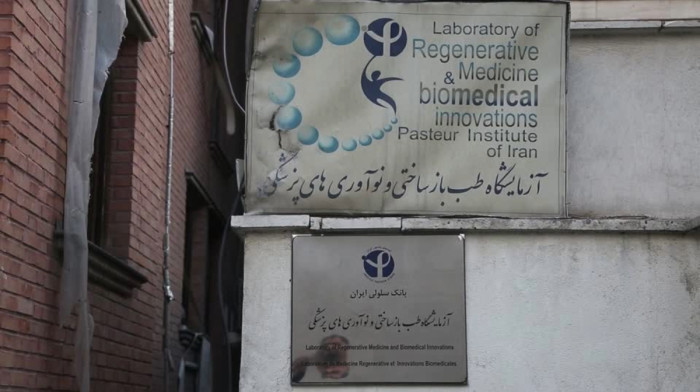
An article published in The Lancet, one of the world’s leading medical journals, has warned that damage to Iran’s Pasteur Institute during the Israel–U.S. war on the Islamic Republic poses a “serious threat to regional health security.”













What is your opinion on this topic?
Leave the first comment