Tens of thousands of demonstrators took to the streets of central London on Saturday (16 May) as two large-scale protests unfolded simultaneously - one focused on immigration and national identity, the other held in support of Palestinians and to mark Nakba Day.
The Metropolitan Police launched one of its largest public order operations in recent years, deploying around 4,000 officers, including reinforcements from outside the capital. By midday, police said 11 people had been arrested for various offences shortly after both marches began.
Authorities had expected crowds of at least 80,000 across the two demonstrations.
Immigration protest draws Robinson supporters
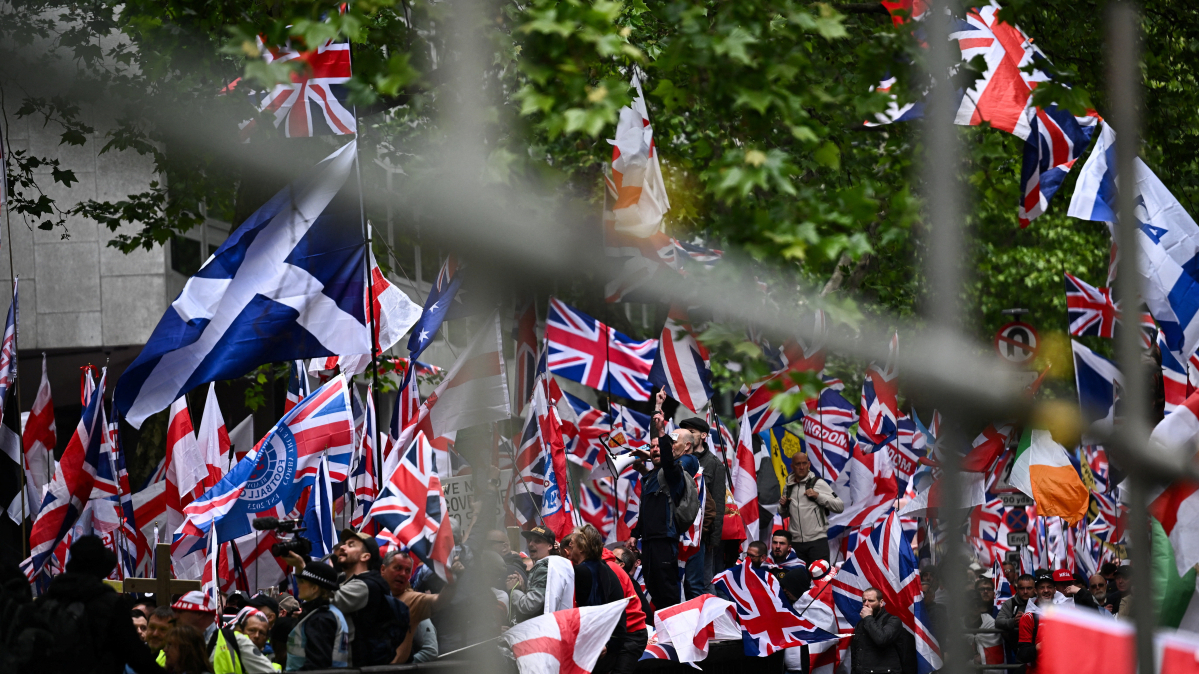
The “Unite the Kingdom” march was organised by anti-Islam activist Stephen Yaxley-Lennon, better known as Tommy Robinson. Protesters gathered in central London carrying mainly British and English flags, while some chanted criticism of Prime Minister Keir Starmer.
Ahead of the demonstration, Starmer accused organisers of “peddling hate and division, plain and simple”.
The government also blocked 11 people described as “foreign far-right agitators” from entering the UK to attend the event.
Many demonstrators said their concerns centred on immigration levels and social change rather than opposition to migration itself.
“I think that too much migration - not migration, but too much migration - is causing a lot of problems, upsetting a delicate balance here,” protester Allison Parr said. She also criticised government environmental policies linked to net-zero targets.
Immigration has become an increasingly sensitive political issue in Britain. Net migration reached nearly 900,000 in both 2022 and 2023, before falling sharply last year following the introduction of tighter visa restrictions.
Public concern over asylum seekers arriving in small boats has also intensified pressure on Starmer’s government and contributed to rising support for the right-wing Reform UK party, led by Nigel Farage, who has publicly distanced himself from Robinson.
Robinson, who has previous convictions including assault and stalking, had urged supporters before the march to remain peaceful, describing the rally as “the greatest patriotic display the world has ever seen”.
Pro-Palestinian demonstrators mark Nakba Day
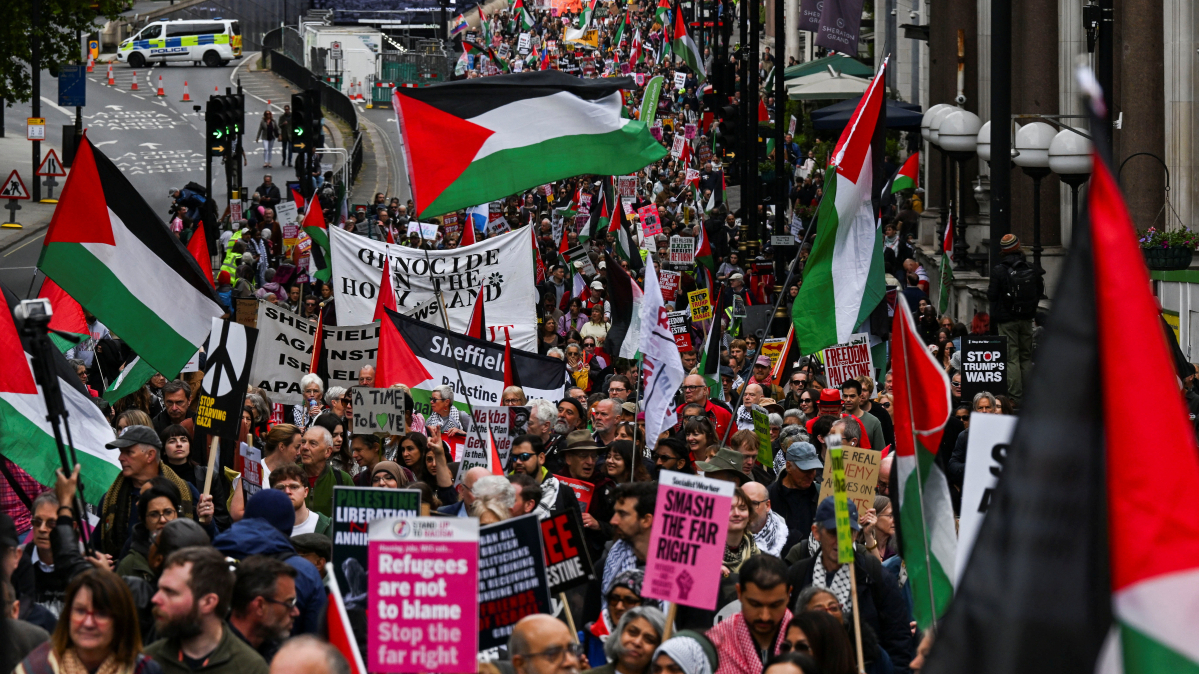
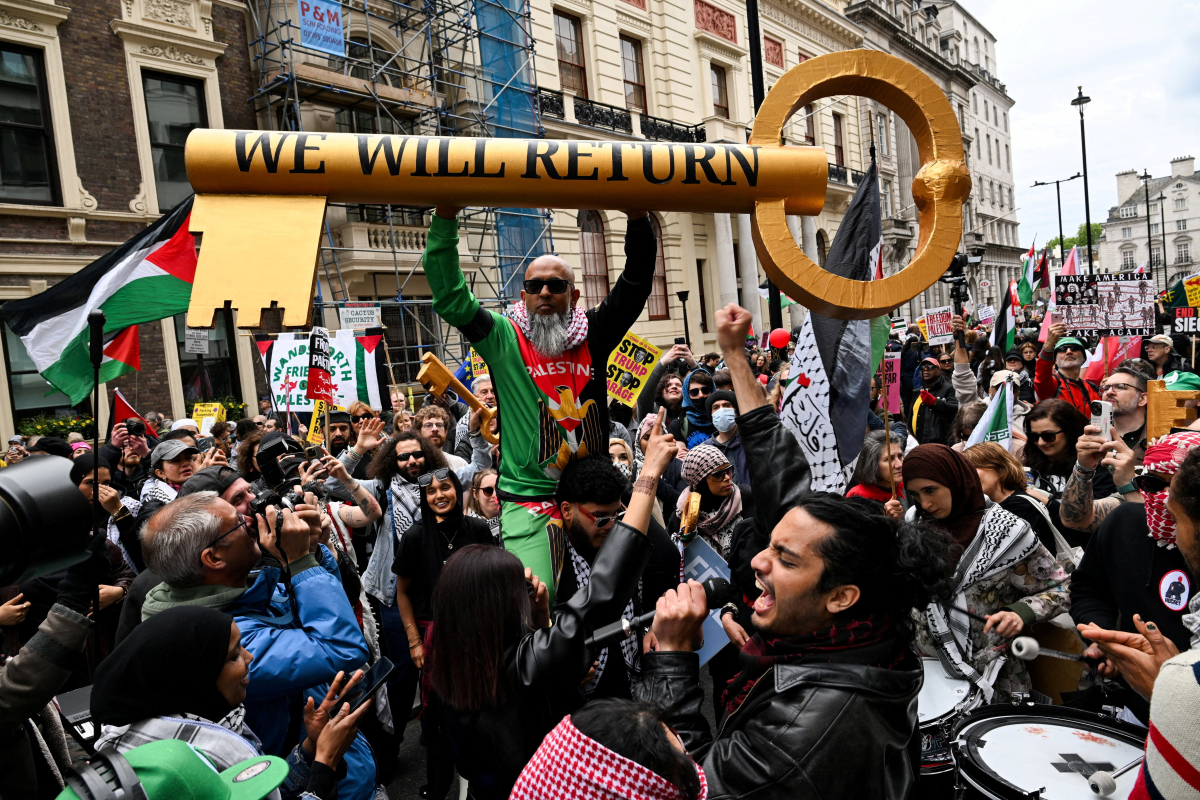
Nearby, thousands of pro-Palestinian demonstrators marched through the capital to commemorate Nakba Day, which marks the mass displacement and loss experienced by Palestinians during the 1948 war surrounding the creation of Israel.
The annual commemoration - “Nakba” means “catastrophe” in Arabic - drew large crowds carrying Palestinian flags and calling for an end to the war in Gaza. Some anti-racism groups and counter-protesters opposing the Unite the Kingdom rally also joined the march.
The demonstrations took place amid heightened tensions in London following several recent incidents targeting Jewish communities, including arson attacks on Jewish sites and the stabbing of two Jewish men last month in a case being investigated as terrorism.
Police have repeatedly warned about the strain caused by regular large-scale protests linked to the Israel-Gaza war. Since the Hamas attacks on Israel in October 2023, London has seen 33 major pro-Palestinian marches.
Officials said many Jewish residents now feel uncomfortable travelling into central London during demonstrations.
Heavy police presence across the capital
Police maintained a visible presence throughout the day and said they would take firm action against hate speech and support for banned organisations.
The government had previously stated that protesters chanting “globalise the intifada” could face arrest, arguing that many British Jews interpret the phrase as encouraging violence and antisemitism.
Some demonstrators on Saturday were heard chanting “Death to the IDF”, referring to the Israeli military. Police said similar language had previously resulted in arrests when directed at Jewish individuals or groups.
While the majority of protesters remained peaceful, officers continued to monitor both marches closely as the crowds moved through central London.













What is your opinion on this topic?
Leave the first comment