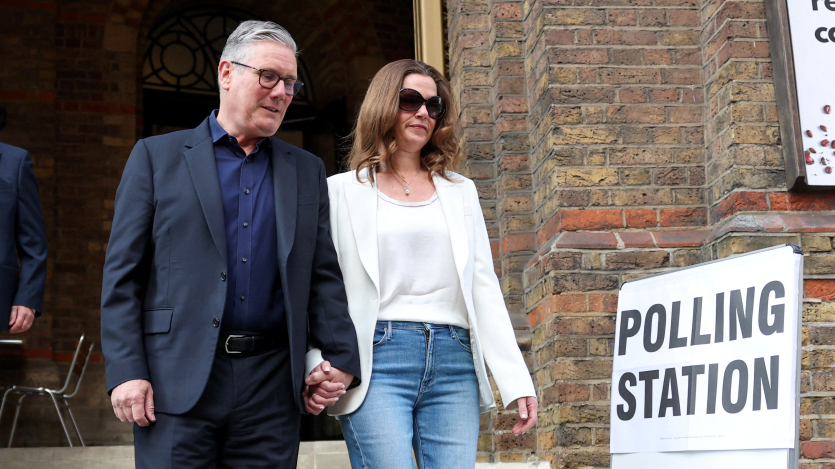
British Prime Minister Keir Starmer vowed to carry on as leader on Friday (8 May) after his ruling Labour Party suffered heavy losses in local elections. Labour lost hundreds of councillors across the country, as some figures in the party said he should stand down.
Labour’s election bloodbath
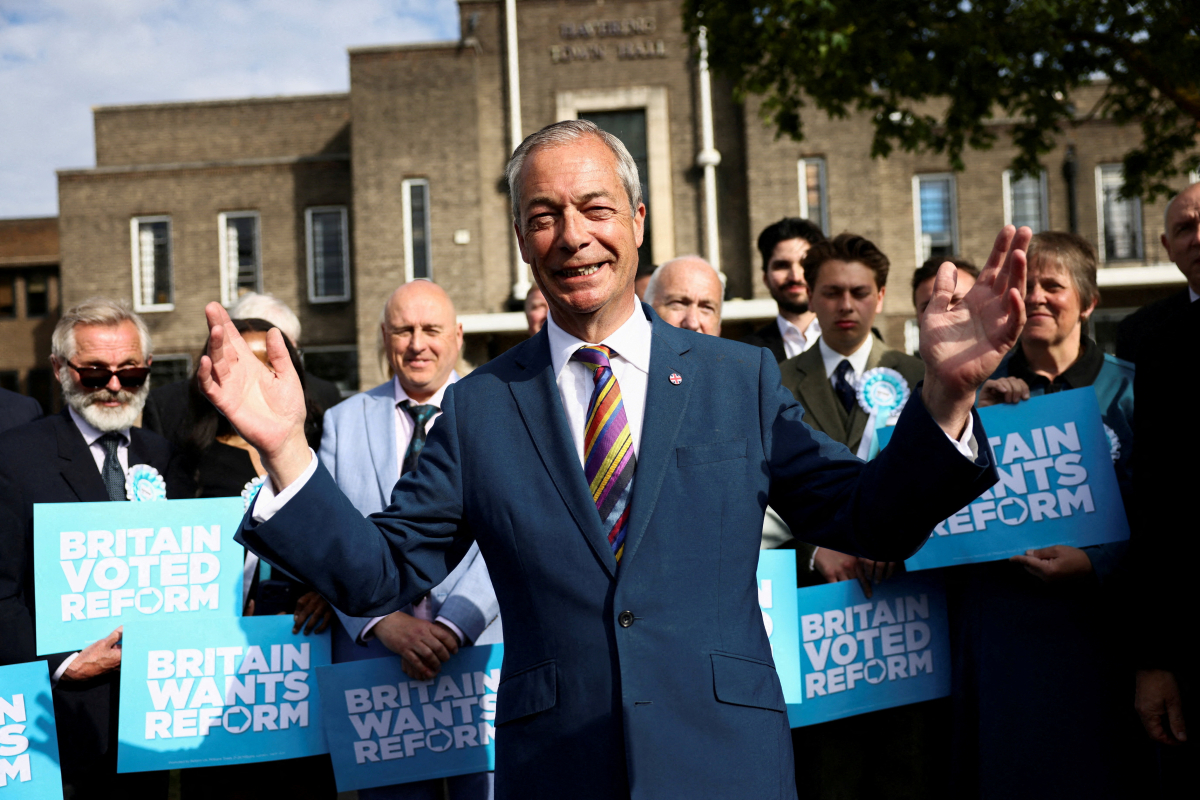
Right-wing populists Reform UK gained hundreds of seats from what historically have been the UK’s two main parties, Labour and the Conservatives. The party led by the driving force behind Brexit, Nigel Farage, notably made major gains in traditionally Labour areas in the north west of England and are projected to emerge as the biggest party in the central English city of Birmingham.
The left-wing Greens also took seats from Labour, particularly in metropolitan areas and London. In the UK capital, the Greens took the mayoralty of Hackney in East London and Lewisham in South London off Labour and made huge gains in diverse south London Labour strongholds like Lambeth and Lewisham.
Labour was also defeated heavily in Scotland and Wales, where elections for the devolved parliaments were held.
Will Starmer face a leadership contest?
For the moment it seems unlikely. Despite the heavy losses on Friday and his personal approval rating sinking to the worst for any British leader in recent times, no Labour Party MP has launched a leadership challenge.
Furthermore, some senior cabinet members publicly backed Starmer on Friday. Defence Secretary John Healey expressed his support for the Prime Minister, telling Sky News that Starmer will “stay the course.”
Justice Minister Sarah Sackman, meanwhile, told the same news channel that she expected Starmer to lead Labour into the next elections. “The country is fed up with the psycho drama of a revolving door of Prime Ministers,” she said.
Who could replace Starmer?
There have been recurrent rumours that former Deputy Prime Minister Angela Rayner, Greater Manchester Mayor Andy Burnham and Health Secretary Wes Streeting are considering potential leadership bids.
Polls suggest Burnham is the public’s preferred replacement for Starmer, but the former government minister has a major obstacle to becoming Prime Minister.
He quit as a national lawmaker in 2017 after winning the Greater Manchester mayor election and would need to be reelected to Parliament in order to become Prime Minister.
Even if he found a Labour lawmaker willing to stand down, given the party’s current unpopularity with voters, there are no guarantees Burnham would win the election.
While Rayner and Streeting are known to be mulling the top job, Streeting is set to face an uphill struggle to hang on to his seat in the next national election, having won it by just by hundreds of votes in 2024.
Rayner has an on paper a comfortable 6,791 majority, but Reform UK swept aside 47 years of Labour control of the area’s local council on Friday, indicating she may even face a challenge come a national election.
Does anyone actually want the job?
Timing is everything, and right now Britain’s Labour government is facing acute problems, both domestically and internationally, that a replacement leader would inherit without any obvious new solutions available to them.
Ahead of the local elections, polling firm YouGov found that roads (which includes potholes, parking and congestion) was the top local concern for voters, followed by the economy and cost of living and then healthcare services.
The Starmer government has tried to address these issues. Earlier this year, it announced an investment of £7.3 billion in highways maintenance over four years to tackle potholes, doubling previous funding levels.
The government has raised the minimum wage, cut fuel duty and introduced energy bill subsidies. It is also plowing billions of pounds more into the NHS as part of a decade-long plan to improve the service.
However, stubbornly high inflation, spiralling housing costs and increased taxes mean that for some the impact of the government’s policies isn’t being felt fast enough.
With demands for more defence expenditure set against a backdrop of heightened global uncertainty and nervous financial markets, the government has been cautious to go further with spending commitments.
A new leader would inherit all these problems and would need pre-prepared solutions to avoid the same fate as Starmer.
How would someone challenge Starmer?
A leadership challenge can be triggered if there is enough support from within Labour for a candidate to replace Starmer. Labour members of parliament have never successfully removed a sitting prime minister in the party's more than 125-year history.
By contrast the Conservatives, who ran the government between 2010 and 2024, went through five Prime Ministers in eight years from 2016.
Any candidate wishing to make a challenge would need to secure the public support of 20% of Labour lawmakers. With Labour currently holding 403 seats in parliament, that amounts to 81 backers.
Candidates also must meet thresholds for support from grassroots Labour Party organisations, and from affiliated organisations such as trade unions. Starmer would have an automatic right to be on the ballot paper, if he chose to fight the contest.
If only one candidate qualifies, there is no vote: the candidate is elected unopposed as Labour leader and becomes Prime Minister. If more than one candidate qualifies, the winner is decided by a ballot of Labour members and affiliates. The winner then becomes Prime Minister.
















What is your opinion on this topic?
Leave the first comment