Every year on 15 May, Palestinians across the Middle East mark Nakba Day - a commemoration of the mass displacement that accompanied the creation of the state of Israel in 1948.
Nakba means “catastrophe” in Arabic. For Palestinians, it refers to the loss of homes, land and communities during the war that followed the end of British rule in Palestine and the establishment of Israel.
More than 75 years later, the Nakba remains central to Palestinian identity and political life. Many Palestinian families still keep documents, photographs and keys from homes they or their relatives left behind in 1948.
In refugee camps across Gaza, the West Bank, Jordan, Lebanon and Syria, memories of villages lost generations ago continue to be passed down from parents to children.
This year’s commemoration comes as hundreds of thousands of Palestinians have once again been displaced by the war in Gaza and ongoing Israeli military operations in the West Bank.
How did the Nakba begin?
The origins of the conflict stretch back decades before 1948.
In 1917, British Foreign Secretary Lord Arthur Balfour issued the Balfour Declaration, expressing support for the establishment of a “national home for the Jewish people” in Palestine, which at the time was part of the Ottoman Empire and later came under British control following the First World War.
During the British Mandate period, Jewish immigration to Palestine increased significantly, particularly as Jews fled persecution in Europe. At the same time, tensions grew between Jewish and Arab communities over land, political representation and the future of the territory.
In 1947, the United Nations proposed partitioning Palestine into separate Jewish and Arab states, with Jerusalem placed under international administration.
Jewish leaders accepted the plan, while Palestinian Arab leaders and neighbouring Arab states rejected it, arguing that it unfairly allocated more than half the land to the proposed Jewish state despite Arabs making up the majority of the population at the time.
1948 war and mass displacement
On 14 May 1948, Israel declared independence following the withdrawal of British forces. A day later, armies from Egypt, Syria, Jordan, Iraq and other Arab states entered the conflict.
The war lasted for months and resulted in major territorial changes. Israel expanded beyond the borders proposed under the United Nations partition plan, while Jordan took control of the West Bank and Egypt administered Gaza.
During the fighting, an estimated 700,000 to 750,000 Palestinians either fled or were expelled from their homes. Hundreds of villages were destroyed or depopulated.
Massacres in places such as Deir Yassin and Tantura became deeply embedded in Palestinian collective memory and contributed to waves of fear and displacement.
Many Palestinians ended up in refugee camps that were originally intended to be temporary shelters. Decades later, some of those camps still exist.
Why does the 'right of return' matter?
One of the most enduring issues linked to the Nakba is the Palestinian demand for a “right of return” for refugees and their descendants.
In December 1948, the United Nations General Assembly adopted Resolution 194, stating that refugees wishing to return to their homes and live peacefully “should be permitted to do so” or receive compensation.
For many Palestinians, the issue is not only political but deeply personal. Keys carried during Nakba commemorations symbolise homes left behind and the hope - however distant - of returning one day.
Israel rejects a large-scale return of Palestinian refugees, arguing that it would fundamentally alter the country’s demographic balance and threaten its identity as a Jewish state.
The issue remains one of the core unresolved questions in the Israeli-Palestinian conflict.
How is Nakba Day commemorated?
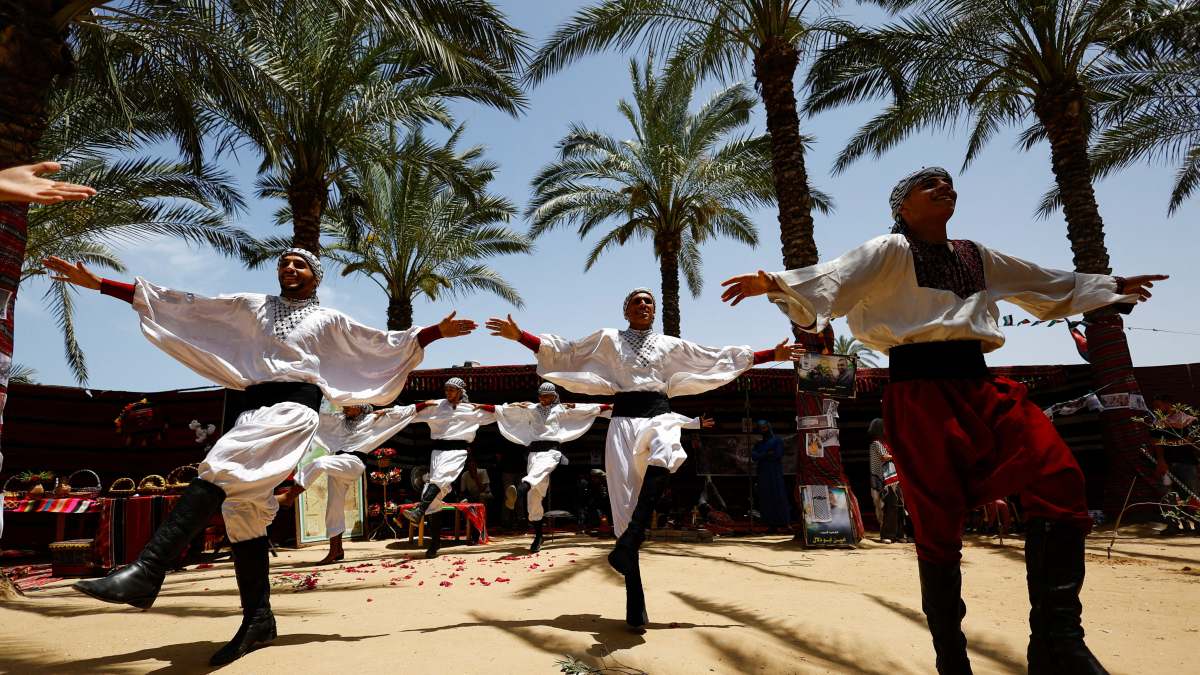
Nakba Day is marked each year through marches, cultural events, speeches and moments of remembrance across Palestinian communities.
In Ramallah this week, crowds gathered in the city centre as mosques sounded a 78-second siren marking the 78th anniversary of the Nakba.
On Tuesday (12 May), a large procession moved from the grave of late Palestinian leader Yasser Arafat towards Manara Square. Palestinian flags filled the streets while scouts played drums and bagpipes.
Participants carried a giant Palestinian flag through the city and raised large symbolic keys representing the “right of return”.
For many Palestinians, Nakba Day is not only about remembering the past. It is also about linking historical displacement with present realities in Gaza, the West Bank and refugee communities across the region.
As the uncertainty of Gaza's future remains, the memory of 1948 has become even more immediate for many families living through conflict today.















What is your opinion on this topic?
Leave the first comment