As geopolitical alignments across Eurasia continue to evolve, U.S. engagement in the South Caucasus is once again drawing attention, particularly in relation to Azerbaijan, Armenia, and the broader regional peace process.
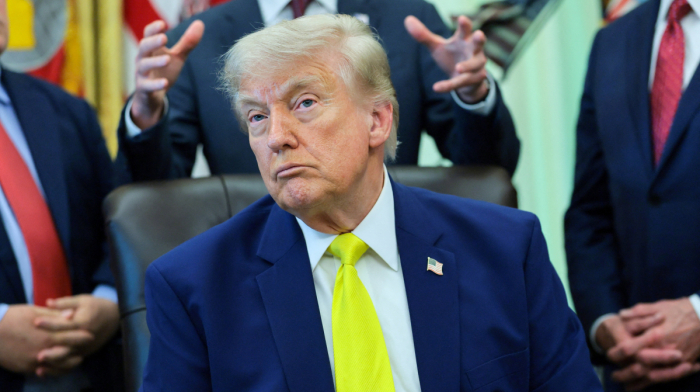
Recent signals from Washington, including President Donald Trump’s message to participants of the Baku Energy Week, have been interpreted by analysts as indicators of continuity in U.S. regional policy.
The developments come as Azerbaijan continues high-level engagement with U.S. officials on energy, trade, and regional connectivity.
Speaking to AnewZ, Glen Howard, President and Chairman of the Saratoga Foundation in Washington D.C., said U.S. policy in the region remains broadly pragmatic and focused on strategic connectivity rather than confrontation.
U.S. engagement with Azerbaijan
Howard said Azerbaijan remains an important partner for Washington in a changing geopolitical environment, particularly in the energy and connectivity space.
“The Trump administration is basically continuing its transactional connectivity with the Caucasus region,” he said, adding that Azerbaijan is “a big part of this.”
He also described the extension of the Section 907 waiver as a continuation of pragmatic cooperation, reflecting Washington’s interest in maintaining stable relations with Baku.
Section 907 of the U.S. Freedom Support Act is a provision that restricts direct U.S. government assistance to Azerbaijan. It was introduced in 1992 amid the Armenia-Azerbaijan conflict and has been periodically waived by U.S. presidents since 2001.
The waiver allows Washington to maintain security and energy cooperation with Baku despite the restriction remaining formally in place.
Howard further stressed that U.S. strategic thinking is increasingly shaped by energy diversification and alternative transit routes.
“Commercial connectivity is very important,” he noted, pointing to growing U.S. attention on the Caspian region, including Azerbaijan and its role in regional gas and transport corridors.
Armenia-Azerbaijan peace process
Turning to Armenia, Howard said U.S. engagement is increasingly linked to expectations around regional normalisation between Yerevan and Baku, particularly in the context of Armenia’s upcoming elections.
He suggested that Washington’s role is primarily facilitative rather than coercive, aimed at encouraging progress in negotiations rather than dictating outcomes.
At the same time, he emphasized that political developments inside Armenia remain central to the pace of the peace process, particularly questions around constitutional change and domestic consensus needed for a final agreement.
Howard also noted that regional normalisation between Armenia and Azerbaijan is closely tied to broader U.S. interests in stability and connectivity across the South Caucasus.
Balancing dynamics in the region
Howard said Armenia continues to pursue a balancing approach in its foreign policy, navigating relations between Russia, the West, and its immediate neighbours.
He argued that this balancing act is taking place within a wider regional shift, where states are increasingly recalibrating their external alignments.
On Russia’s role, Howard said Moscow’s influence in the South Caucasus is gradually diminishing, though it still retains leverage in certain areas.
He reiterated that energy and transport routes remain central to regional competition and cooperation, particularly as global supply chains continue to diversify.
Outlook for U.S. regional policy
Howard concluded that while the South Caucasus remains complex and politically sensitive, the overall direction of U.S. engagement is consistent: supporting connectivity, encouraging normalisation between Armenia and Azerbaijan, and strengthening Azerbaijan’s role in regional energy infrastructure.
He described the current phase as one of cautious momentum, shaped by both domestic political cycles in Armenia and broader geopolitical shifts affecting Eurasia.

















What is your opinion on this topic?
Leave the first comment