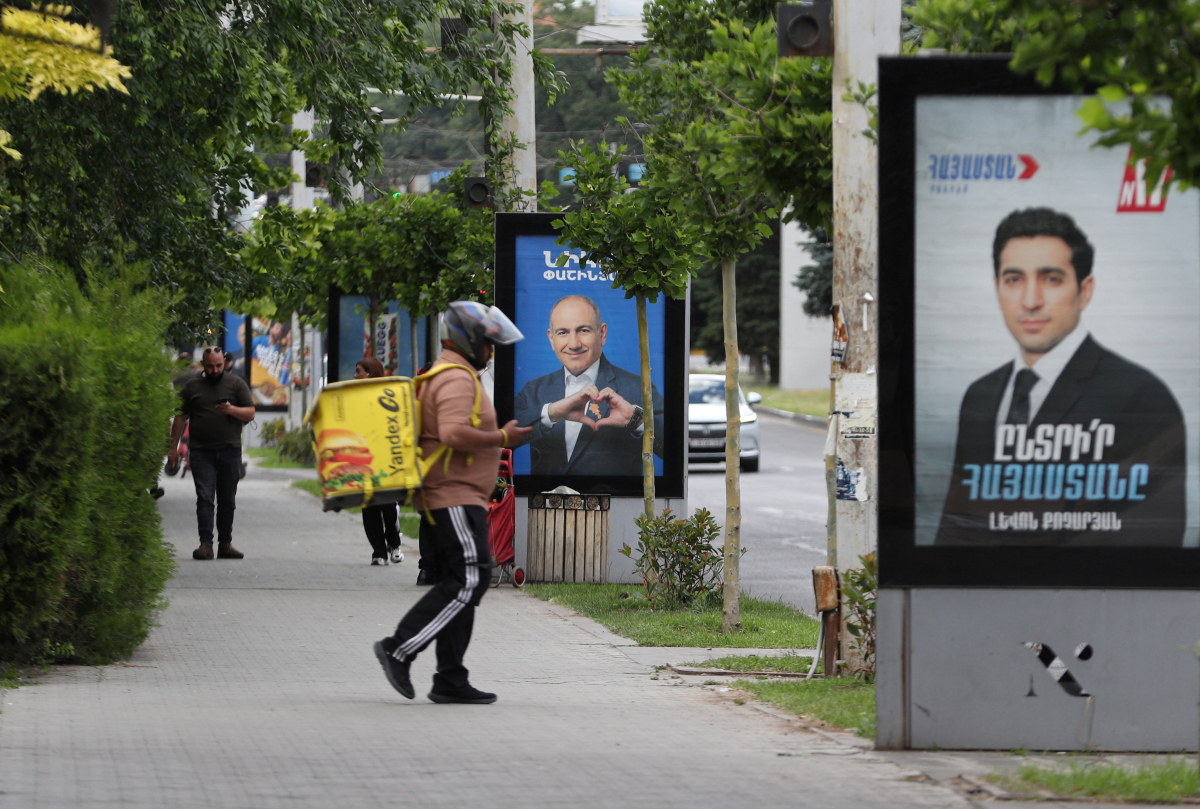
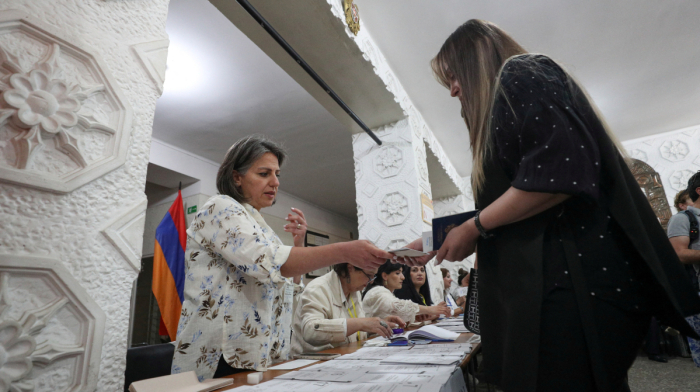
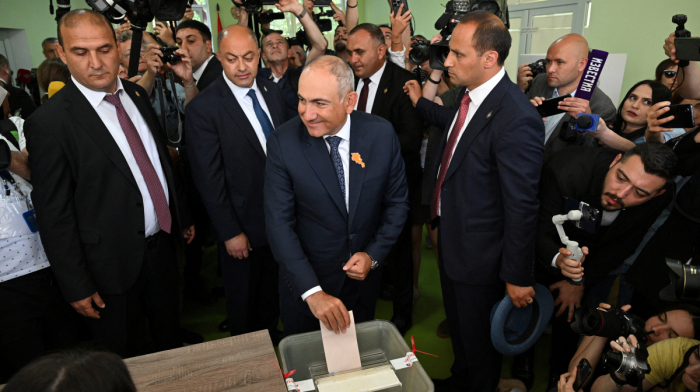
Armenia’s National Assembly election on 7 June is increasingly being viewed not only as a domestic political contest, but also as a vote that could shape the future direction of the South Caucasus.
The election comes at a sensitive moment in the Azerbaijan–Armenia normalisation process, following the finalisation of the peace treaty text earlier this year and ongoing debates inside Armenia over constitutional reform, regional integration and relations with external powers.
It also coincides with a period of heightened diplomatic activity. In early May, Armenia hosted the 8th summit of the European Political Community, followed by what was billed as the first-ever EU–Armenia Summit in Yerevan. The gatherings brought a number of European leaders to Armenia, while a visit by French President Emmanuel Macron attracted particular attention amidst growing debate over Armenia’s geopolitical orientation.
A few weeks later, U.S. Secretary of State Marco Rubio paid a flying visit to Yerevan, where he met with Armenian Foreign Minister Ararat Mirzoyan and signed a strategic partnership agreement covering security, trade and infrastructure cooperation. Shortly after, U.S. President Donald Trump offered his endorsement of Prime Minister Nikol Pashinyan ahead of the 7 June elections.
A choice between peace and confrontation
Pashinyan has framed the election as a choice between peace and renewed confrontation, warning that voters face a decision between peace with Azerbaijan and a return to conflict.
Meanwhile, the three main opposition forces - the Armenia Alliance led by former President Robert Kocharyan; Strong Armenia, led by its founder, Russian-Armenian businessman Samvel Karapetyan, who is the party's lead candidate; and Prosperous Armenia, led by Gagik Tsarukyan - continue to challenge his approach towards Azerbaijan and the broader peace agenda. Pashinyan has frequently described each of these groups as a “war party”.
At the same time, regional and international actors are closely watching the vote for signs of whether Armenia will continue moving towards normalisation and economic integration or return to more confrontational political narratives. Karapetyan, one of the opposition’s most prominent figures, remains under house arrest in Yerevan after the Anti-Corruption Court extended the measure for a further three months in April.
Against this backdrop, AnewZ spoke with three experts about the political and geopolitical implications of the elections for both Armenia and Azerbaijan: Matthew Bryza, former U.S. Ambassador to Azerbaijan; Giorgi Tumasyan, a specialist in international relations; and Nargiz Mammadova, an expert in international relations at the Baku-based CASPIA Centre.
Peace process becomes central election issue
Speaking to AnewZ, Bryza says the Azerbaijan–Armenia peace process has become deeply intertwined with Armenia’s internal political struggle. He notes that constitutional reform remains one of the key obstacles to signing the agreement.
“Amending a constitution is obviously a complex political process," he says. "It requires a two-thirds parliamentary majority and national support. Russia does not want to see that peace treaty move forward, and neither do many opponents of peace in Armenia.”
“Therefore, there is a strong push to defeat Prime Minister Nikol Pashinyan and his political movement in order to end that peace process and the prospect of constitutional amendments,” he added.
An Armenian perspective: A referendum on geopolitical direction
Offering an Armenian viewpoint, Giorgi Tumasyan says the peace process is the defining issue of this election cycle, serving effectively as a referendum on the country's future.
“The debate for many Armenian voters is not simply about peace versus no peace,” he explained. “The real question is about what kind of peace Armenia enters into, whether it is negotiating from a position of strategic realism, and what the long-term guarantees are for security.”
Tumasyan noted that while Russia has historically been Armenia's primary security partner, recent geopolitical shifts have allowed the current government to diversify its foreign policy, notably by strengthening ties with the EU and the United States.
He emphasised that the election has ultimately transcended individual personalities, turning into a fundamental choice between upholding or undermining the Washington agreements and the TRIPP regional connectivity project agreed between Washington, Baku and Yerevan.
The constitutional hurdle and election outcomes
Tumasyan also shed light on the internal logic behind the controversial issue of constitutional reform. While opposition groups frame changes as a concession to foreign pressure, Tumasyan argued that the changes align with Armenia's own strategic shift toward a 'real Armenia' concept based on internationally recognised borders.
“Since the Garabagh movement is over and Armenia recognises the territorial integrity of Azerbaijan, there is no logic to having mentions of Garabagh in the constitution,” he stated.
However, achieving this change depends heavily on the scale of Pashinyan’s expected victory. While polls suggest the ruling Civil Contract party will secure a majority without needing a coalition, Tumasyan indicated that the real test is whether they secure the two-thirds 'constitutional majority' required to initiate a referendum.
If the ruling party falls short of a two-thirds majority, Tumasyan predicts an ad-hoc coalition on constitutional changes is unlikely due to the pro-Russian opposition's hostile rhetoric. In that scenario, Armenia could face snap elections in one to two years to allow voters to see the tangible economic benefits of peace with Azerbaijan and Türkiye before voting on a new constitution.
Aliyev’s signals and regional normalisation
Bryza described President Ilham Aliyev’s recent remarks as part of a broader effort to support the continuation of the peace process.
“He recently said that Azerbaijan and Armenia are now existing in a state of peace, saying ‘de facto, we are at peace’.”
“President Aliyev is also making it very clear that he wants to finalise the peace treaty and move both Armenia and Azerbaijan towards a more peaceful and prosperous future, including through joint infrastructure and economic projects.”
Diverging visions for regional integration
The contrast between the competing political platforms heavily impacts how Armenia will approach regional trade routes. Under another Pashinyan administration, Tumasyan anticipates a steady push to open transport links and integrate Armenia into economic projects connecting the South Caucasus with Europe, Central Asia, and the Middle East to reduce the country’s isolation.
Conversely, opposition figures like Kocharyan and Karapetyan are expected to pivot heavily back toward a Russia-centred security model. Tumasyan warned that while the opposition claims they will not outright withdraw from the Washington agreements, their desire to introduce vague adjustments and invite external actors threatens to create severe obstacles for regional normalisation.
Debate over the EU mission and Armenia’s direction
Mammadova also questioned the continued role of the EU monitoring mission deployed on the Armenian side of the conditional border.
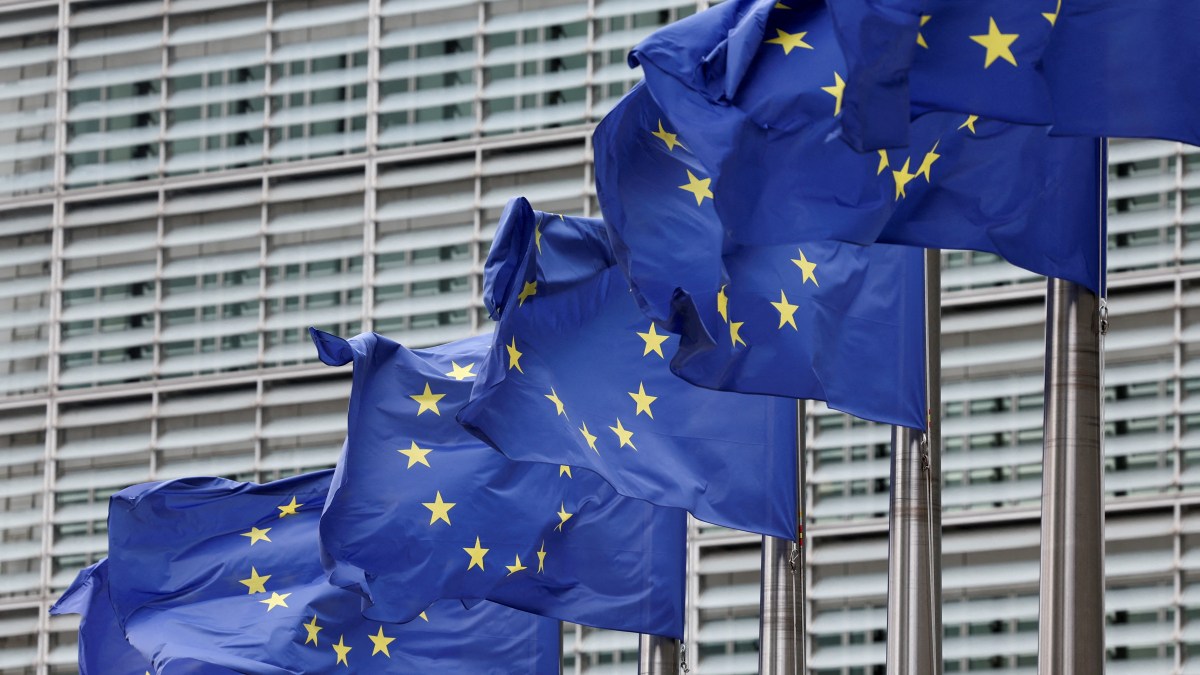 European Union flags flutter outside the EU Commission headquarters in Brussels, Belgium, 16 July, 2025, Reuters
The future of the EU Mission in Armenia (EUMA) has also become part of wider discussions surrounding the peace process. Under the initialled Azerbaijan–Armenia peace agreement, the mission is expected to withdraw following ratification of the treaty. What form any future European monitoring presence might take remains unclear, with observers pointing to possibilities ranging from relocation further inside Armenia to integration with broader EU partnership mechanisms.
A vote with regional implications
Bryza said the election reflects both domestic political divisions and broader geopolitical competition surrounding Armenia’s future orientation.
“Many Armenians who support a peace treaty with Azerbaijan believe it would improve their lives, not only by reducing the risk of conflict but also by reintegrating Armenia into the regional economy of the South Caucasus, Türkiye and Europe.”
He also pointed to Russia’s continued influence in the region.
“There is also a geopolitical dimension because Russia does not want Armenia moving closer to the European Union and further away from Moscow.”
Mammadova similarly argued that the election could determine which political vision prevails inside Armenia.
“Pashinyan and his team seem to understand that the prosperity of the South Caucasus is not possible without peace between Azerbaijan and Armenia.
“So the election becomes very important. It will show which political logic prevails: the logic of peace and normalisation, or the logic of confrontation and separatist narratives.”
Speaking to AnewZ, Matthew Bryza, Nargiz Mammadova, and Giorgi Tumasyan agreed that Armenia’s National Assembly election has become closely tied to the future of the Azerbaijan–Armenia peace process and the wider geopolitical direction of the South Caucasus. While the analysts pointed to growing support for regional normalisation and economic cooperation, they also noted continued resistance from political groups opposed to reconciliation, making the election a potentially decisive moment for both Armenia’s domestic politics and broader regional stability.














What is your opinion on this topic?
Leave the first comment