Armenian Prime Minister Nikol Pashinyan has said that the opening of railway transit routes through Azerbaijan has helped shield Armenia’s economy from the wider impact of regional instability linked to the crisis in the Strait of Hormuz.
Speaking on regional developments, Pashinyan said that without access to Azerbaijani rail infrastructure, Armenian consumers would have faced significantly higher inflation and more severe disruptions to fuel supplies amid ongoing geopolitical pressures.
He described the reopening of transport links as part of a broader shift in regional dynamics, arguing that the emerging peace framework now rests on what he called a “solid legal foundation”.
He pointed to border delimitation arrangements as the first bilateral international agreement signed between Armenia and Azerbaijan during this phase of normalisation.
The prime minister cited the village of Kirants as an example of the new realities on the ground, saying that local schoolchildren now attend classes and play football close to the border without security incidents.
Pashinyan also said that the absence of ceasefire violations for more than two years has fundamentally changed the security environment, shifting priorities towards regional economic integration.
He added that the permanent reopening of transport and transit routes is a central component of the TRIPP project, which he said is intended to ensure Armenia is no longer “landlocked in a functional sense” through expanded regional connectivity.
Grain shipments
His remarks come as regional rail transit has expanded significantly following the reopening of cross-border logistics routes.
A freight train carrying more than 1,000 tonnes of Russian grain has recently travelled to Armenia via Azerbaijan, underscoring the practical implementation of renewed transport links.
The shipment consisted of 11 wagons carrying 1,023 tonnes of agricultural goods.
It began its journey at the Azerbaijani-operated Bilajari railway station and moved towards Boyuk Kasik railway station near the Georgian border, before continuing through Georgia en route to Armenia.
The latest delivery followed a similar grain shipment earlier in the week, when a seven-wagon train carrying 488 tonnes of Russian grain was transported along the same route.
Official transport data show that more than 22,000 tonnes of grain and around 610 tonnes of fertiliser have now been moved from Russia to Armenia via Azerbaijan, reflecting the steady expansion of the corridor for essential goods.
Petroleum trade
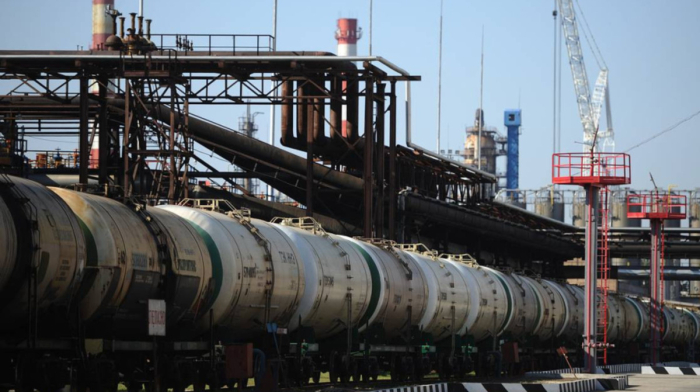
Alongside agricultural shipments, petroleum products have also begun moving through the same regional transit network.
A recent consignment included 39 rail tank cars carrying around 4,500 tonnes of diesel fuel, which departed from Guzdek station and travelled through Georgia en route to Armenia.
The combined flows of grain, fertiliser and fuel now form part of an expanding South Caucasus transit network linking Azerbaijan, Georgia and Armenia, reflecting the gradual normalisation of regional logistics and the reopening of key cross-border transport routes.



















What is your opinion on this topic?
Leave the first comment