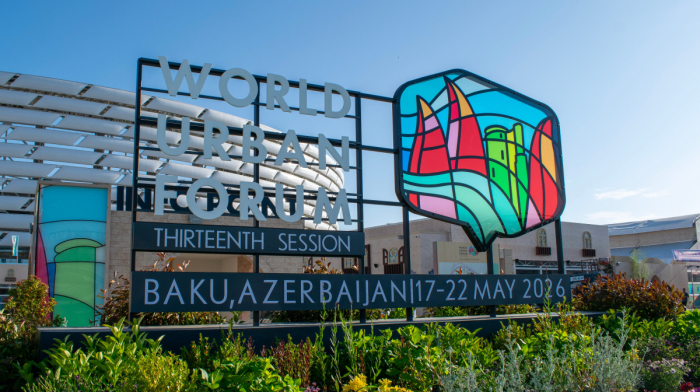
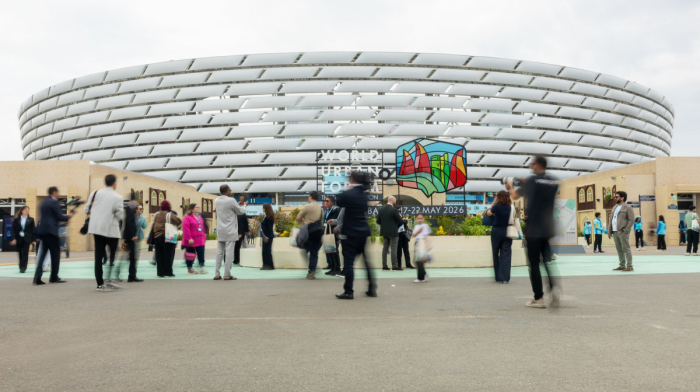
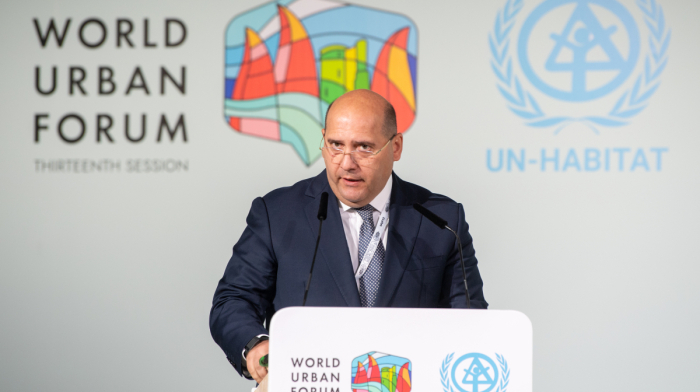
The World Urban Forum (WUF) opens this week in Baku, Azerbaijan, bringing together governments, city leaders, urban planners, researchers and civil society to exchange ideas on how cities can become more inclusive, resilient and sustainable.
What is the World Urban Forum?
The World Urban Forum (WUF) was established by the United Nations in 2001 through the UN General Assembly and was first held in 2002 in Nairobi, Kenya.
It is organised by the United Nations Human Settlements Programme, the UN agency responsible for promoting socially and environmentally sustainable towns and cities.
Unlike formal UN negotiations, the forum does not produce binding treaties or resolutions. Instead, it operates as a global platform for dialogue, knowledge-sharing and partnership-building on urban development.
Its importance has grown alongside accelerating global urbanisation, with more than half of the world’s population now living in cities, according to UN-Habitat, which is expected to increase further in the coming decades.
Global priority
Urban areas have become central to global development debates because they concentrate both opportunity and risk. They function as engines of economic growth, innovation and productivity, yet they also face mounting pressures such as housing shortages, overstretched infrastructure and widening inequality.
At the same time, cities are highly exposed to climate impacts, including flooding, heatwaves and sea-level rise, while also contributing significantly to global emissions.
These interconnected challenges have made urban policy a key component of the international development agenda, particularly within the framework of the United Nations Sustainable Development Goals, especially SDG 11, which focuses on making cities inclusive, safe, resilient and sustainable.
Forum agenda
The World Urban Forum is designed as a global “solutions platform” rather than a negotiating body.
It brings together a wide range of participants, including national governments, mayors, urban experts, private sector representatives and civil society organisations to exchange experiences and explore practical responses to urban challenges.
Discussions at the forum typically focus on sharing policy innovations, exploring financing models for housing and infrastructure, presenting approaches to climate-resilient urban planning, and strengthening cooperation between cities and international institutions.
The forum also supports the implementation of the New Urban Agenda adopted in 2016, which outlines global principles for sustainable urban development.
Because it does not produce binding agreements, the forum’s influence is primarily shaped by its ability to generate ideas, guide policy thinking and encourage voluntary commitments that can be implemented at national and local levels.
Baku welcomes WUF
Since its first edition in 2002, the World Urban Forum has evolved into one of the largest global gatherings on urban issues.
Early meetings focused on defining the global urban agenda, while later editions expanded into areas such as climate resilience, inequality, governance and sustainable financing. In recent years, the emphasis has increasingly shifted toward practical solutions, particularly around housing, climate adaptation and digital transformation.
The most recent forum, WUF12, was held in Cairo, Egypt in 2024 and placed strong focus on real-world urban responses to global challenges, including housing delivery, climate resilience, financing gaps and the use of technology in urban planning.
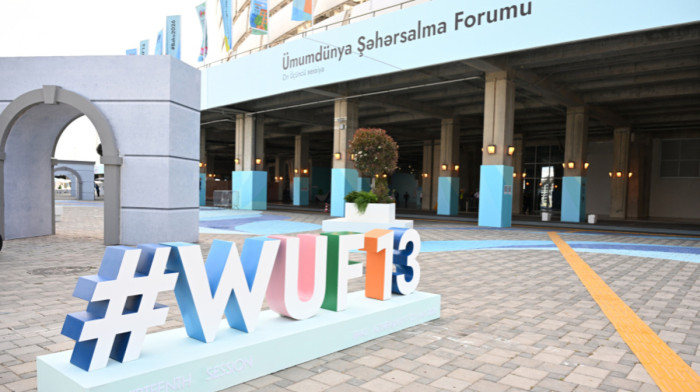
The upcoming WUF13 is expected to continue in this direction, with housing and resilient urban development at the centre of discussions as the world moves closer to the 2030 deadline for achieving the Sustainable Development Goals.
Why this matters now
The renewed global focus on urban policy reflects a broader reality: cities are where many of the world’s most pressing challenges are most visible, but also where many solutions are being developed and tested.
From housing innovation to climate adaptation strategies, urban policy is becoming a central pillar of how governments respond to global change.
As the World Urban Forum opens in Baku, it reinforces a growing consensus in international development: the future of sustainable progress will be largely determined in cities.










What is your opinion on this topic?
Leave the first comment