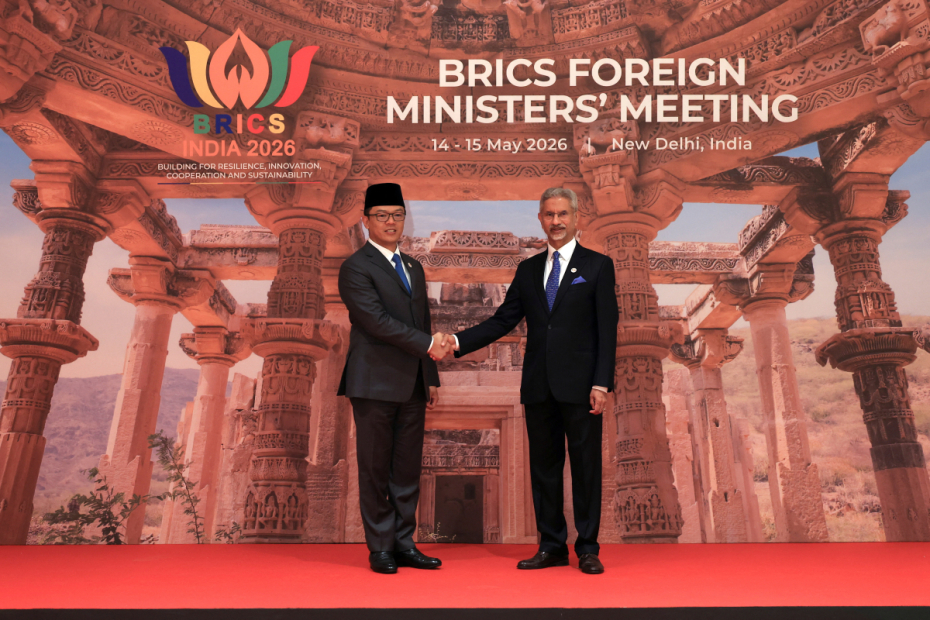
Foreign ministers from the expanded BRICS bloc gathered in New Delhi on Thursday (14 May) for a crucial two-day meeting overshadowed by the ongoing Iran war, internal tensions within the grouping and mounting fears over global energy supplies.
The gathering coincides with U.S. President Donald Trump’s state visit to China, where he is holding talks with Chinese President Xi Jinping amid growing concerns over the conflict in the Middle East and disruption to maritime trade routes.
The war involving Iran entered its 76th day on Thursday, with diplomatic efforts struggling to gain traction and the Strait of Hormuz remaining heavily disrupted - a major concern for global markets and BRICS economies alike.
Iran urges BRICS to condemn U.S. and Israel
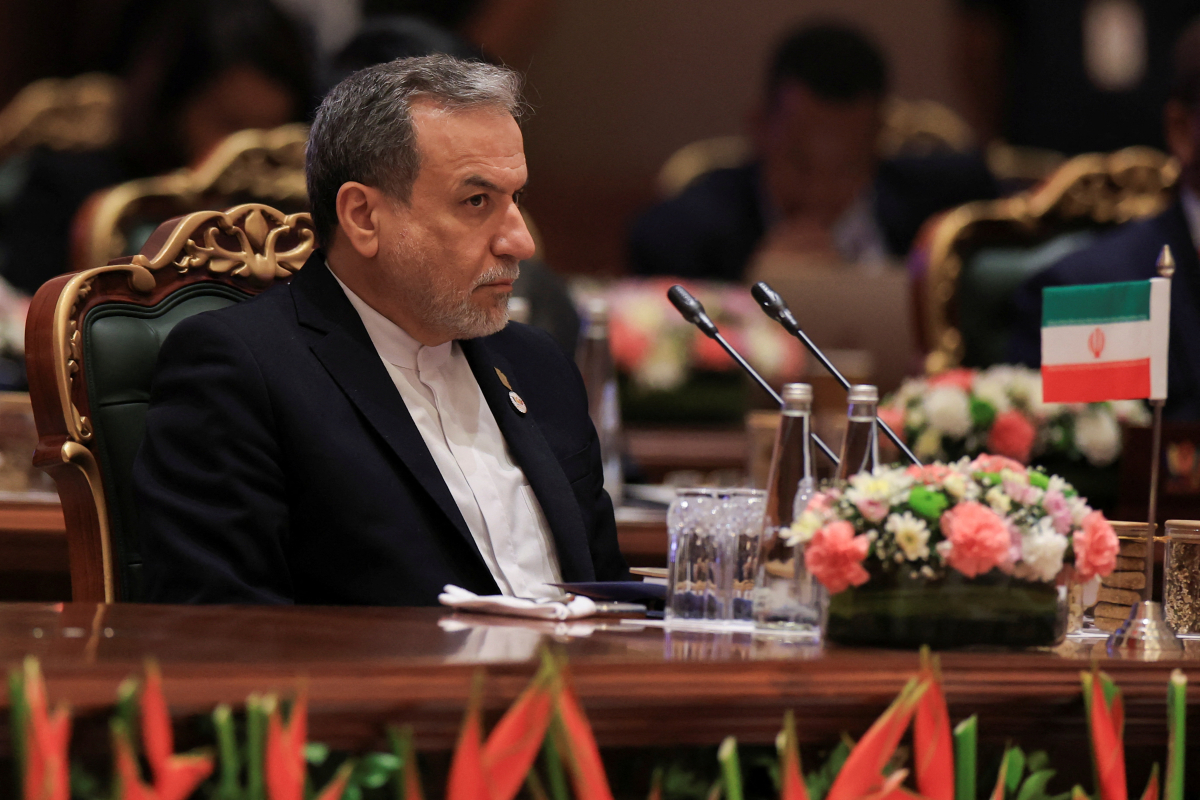
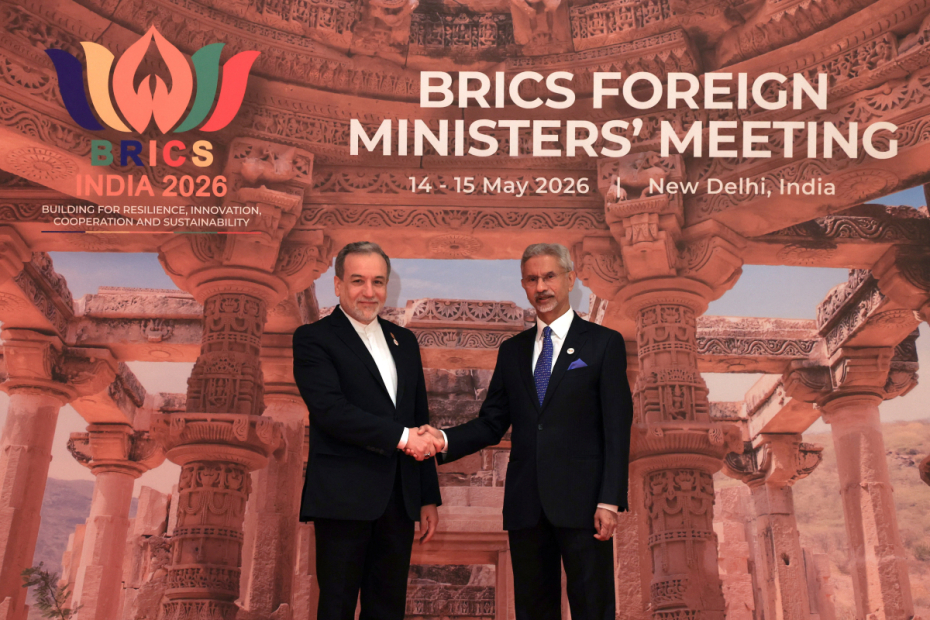
Iranian Foreign Minister Abbas Araghchi used the BRICS meeting to call on member states to condemn what he described as unlawful aggression by the United States and Israel.
Addressing ministers from the BRICS+ grouping - which now includes Brazil, Russia, India, China, South Africa, Egypt, Ethiopia, Indonesia, Iran and the UAE - Araghchi accused Washington and Tel Aviv of violating international law.
“Iran therefore calls upon BRICS member states and all responsible members of the international community to explicitly condemn violations of international law by the United States and Israel,” he said.
He described Iran as a “victim of illegal expansionism and warmongering” and urged the bloc to resist “Western hegemony and the sense of impunity that the U.S. believes it is entitled to.”
Later, according to Iran’s semi-official Mehr news agency, Araghchi directly accused the United Arab Emirates of involvement in military operations against Iran, telling delegates that the UAE was “directly involved in the aggression against my country.”
The UAE was represented at the meeting by Deputy Foreign Minister Khalifa Shaheen Al Marar.
The exchange underscored growing fractures within BRICS over the Iran conflict, particularly between Tehran and Abu Dhabi, whose tensions have sharply escalated since the war began on 28 February.
India attempts diplomatic balancing act
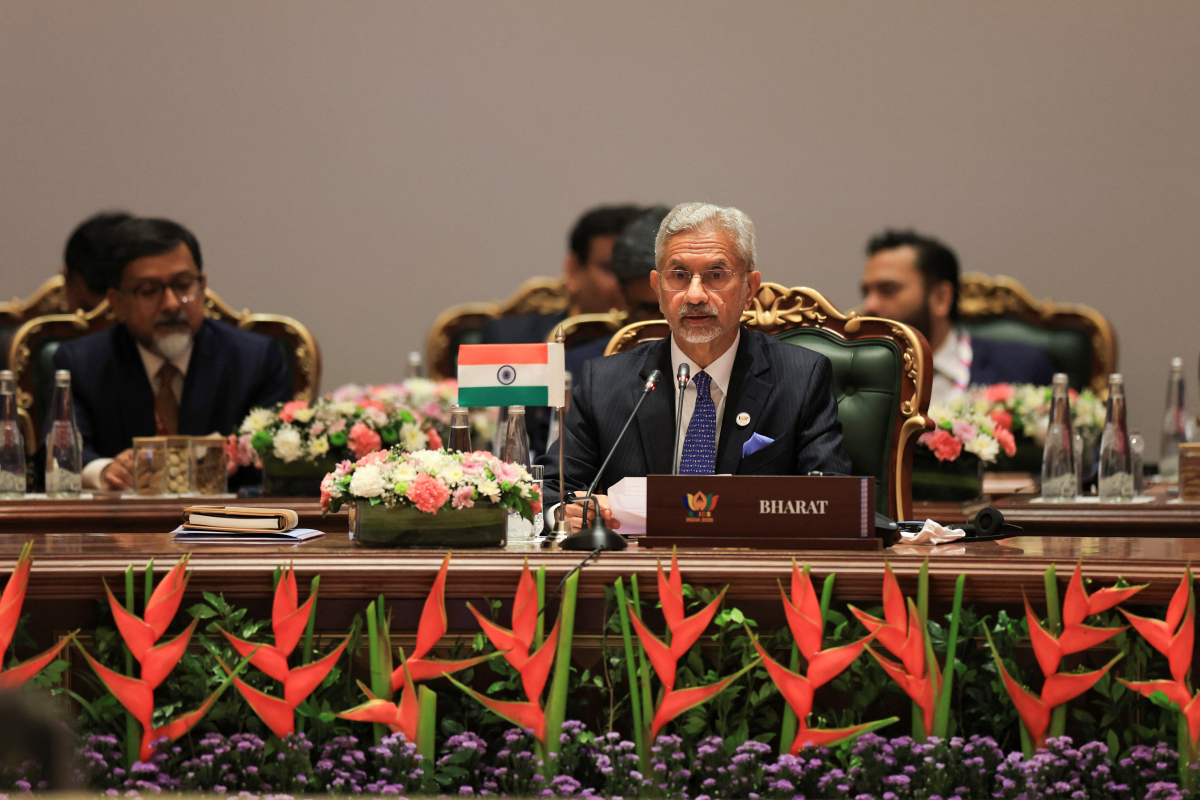
India, which is hosting the meeting and serving as BRICS chair for 2026, faces a delicate diplomatic balancing act between Iran, the UAE, Israel and the United States.
Opening the meeting, India’s Foreign Minister Subrahmanyam Jaishankar stressed the importance of secure maritime trade routes as the Strait of Hormuz remains under blockade.
“Safe and unimpeded maritime flows through international waterways, including the Strait of Hormuz and Red Sea, remain vital for global economic well-being,” Jaishankar said.
Without naming specific countries, he also criticised the increasing use of unilateral sanctions and coercive measures.
“Such measures disproportionately affect developing countries,” he said. “These unjustifiable measures cannot substitute dialogue, nor can pressure replace diplomacy.”
India is among the countries hardest hit by disruption in the Gulf. The country is the world’s third-largest oil importer and relies heavily on shipments passing through the Strait of Hormuz.
Indian-flagged vessel sinks amidst Gulf tensions
The regional security situation was further highlighted on Wednesday (13 May) when an Indian-flagged vessel travelling from Somalia to the UAE sank in Omani waters after a fire broke out on board.
All 14 crew members were rescued by Oman’s coastguard.
Indian authorities did not officially identify the cause of the incident. However, British maritime risk management group Vanguard said the fire appeared to have been triggered by an explosion likely caused by a drone or missile strike.
The vessel had been carrying live livestock cargo.
Although a ceasefire between some parties in the region is technically in place, sporadic attacks have continued across the Gulf and surrounding waterways.
What is BRICS?
BRICS is a grouping of major emerging economies seeking to coordinate economic and security policies while strengthening the voice of the Global South in international affairs traditionally dominated by Western powers.
The acronym originally stood for Brazil, Russia, India and China, whose foreign ministers first met in 2006. The bloc held its first summit in 2009 and became BRICS after South Africa joined in 2010.
The organisation expanded significantly in 2023 when invitations were extended to Egypt, Ethiopia, Iran, Saudi Arabia and the United Arab Emirates following their applications for membership.
Saudi Arabia has not yet formally joined, but Egypt, Ethiopia, Iran and the UAE have become full members. Argentina was also invited but declined after President Javier Milei campaigned on strengthening ties with the West.
Indonesia officially joined BRICS in January 2025 after its membership was approved during the Johannesburg summit in 2023.
The bloc rotates its annual presidency among members. Brazil hosted last year’s summit, Russia hosted in 2024, and India is hosting this year’s meetings.
Who is attending the Delhi meeting?
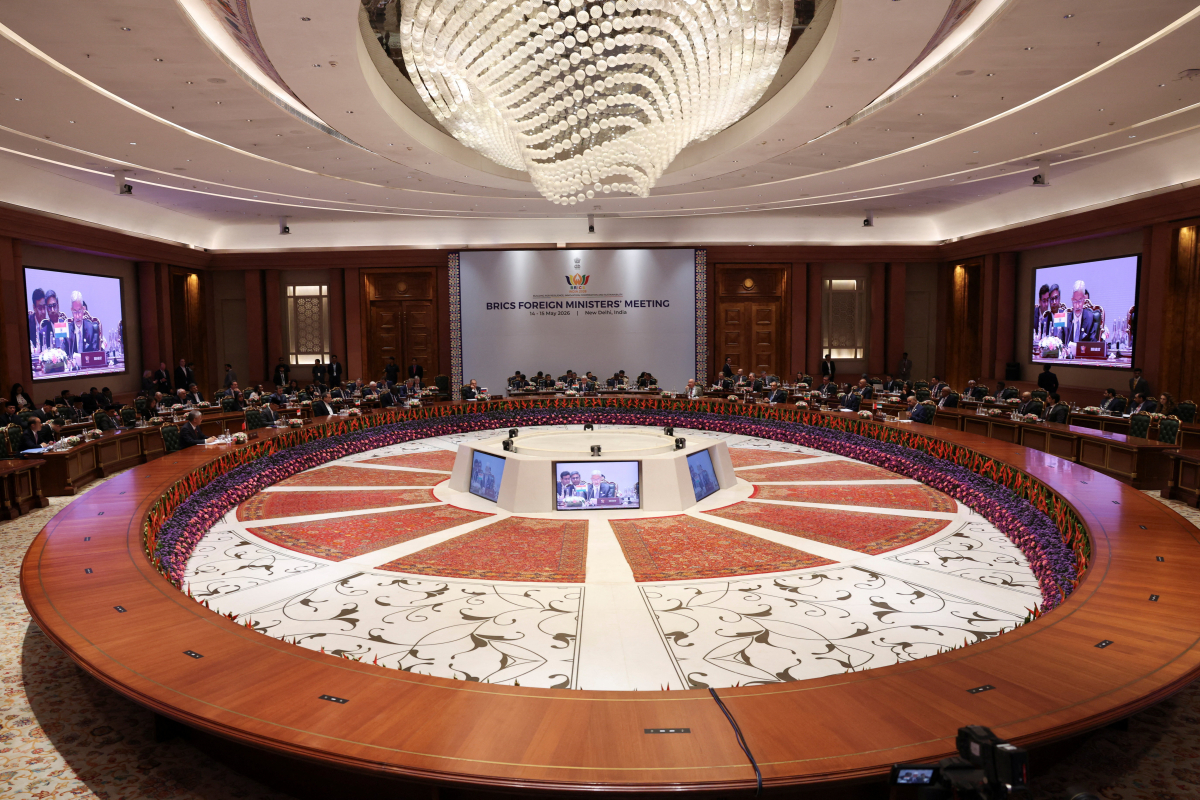
The foreign ministers’ meeting is being held from 14 to 15 May in New Delhi ahead of the 18th BRICS summit scheduled for September.
Most sessions are taking place at Bharat Mandapam, a major exhibition and convention centre near India’s Supreme Court.
On Thursday, ministers arrived at around 10am local time (04:30 GMT), with meetings continuing throughout the day before a dinner hosted in the evening. Another session is scheduled for Friday morning.
Indian Prime Minister Narendra Modi is also expected to join visiting leaders via conference call from Seva Teerth, the newly established administrative headquarters of the Indian prime minister’s office.
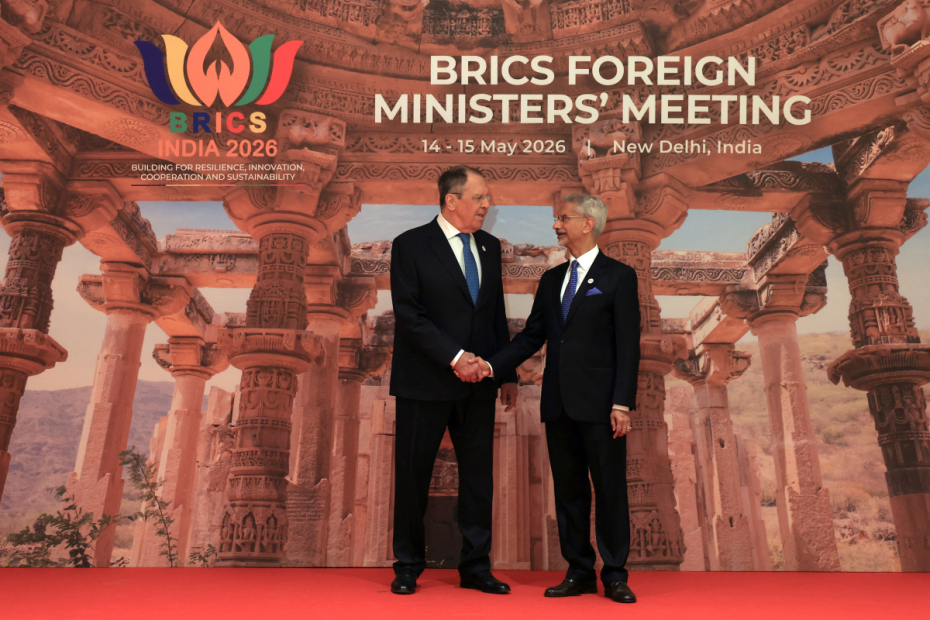
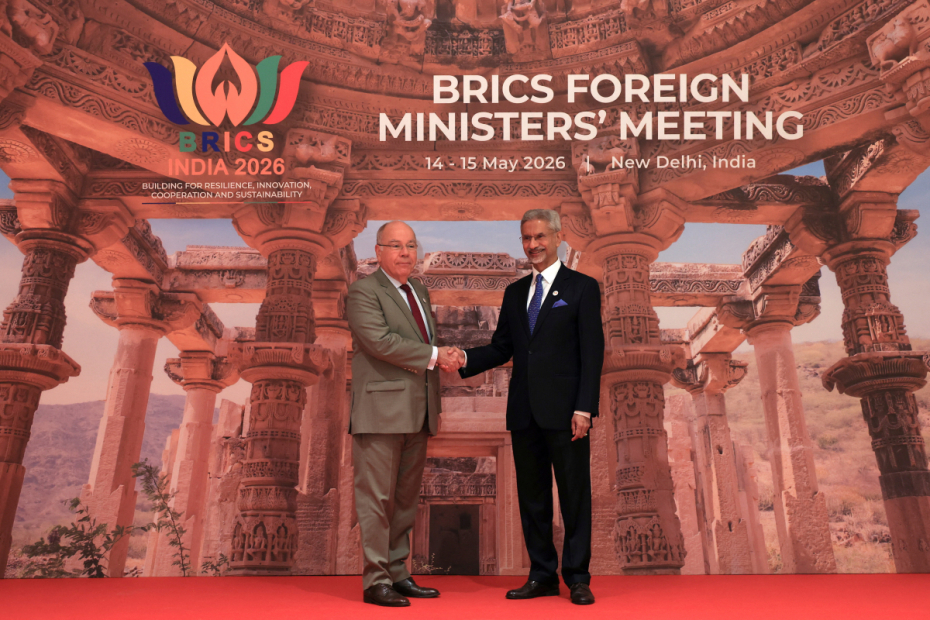
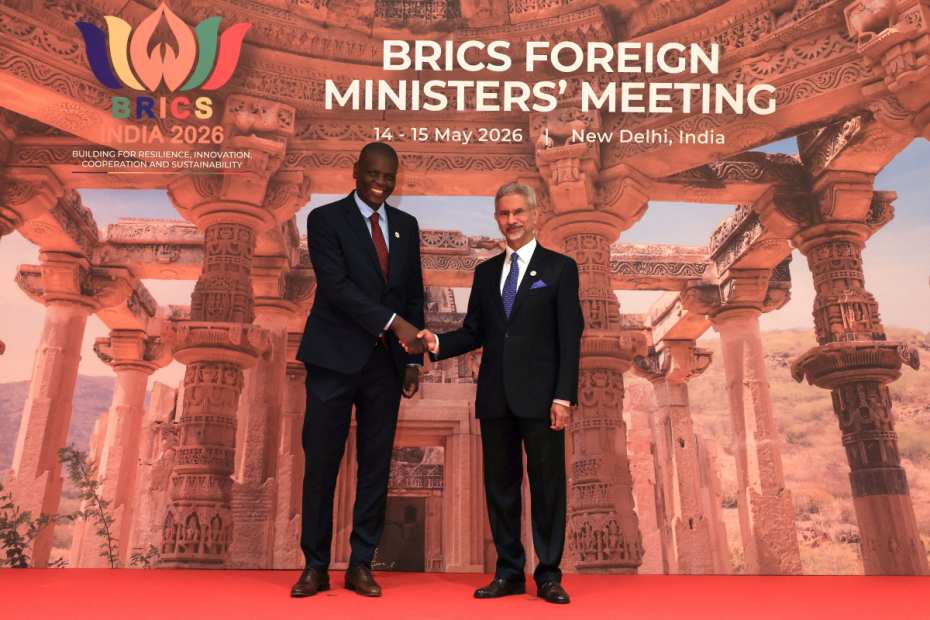
Among those attending are Russian Foreign Minister Sergey Lavrov, South African Foreign Minister Ronald Lamola, Brazilian Foreign Minister Mauro Vieira, Iran’s Araghchi and Indonesian Foreign Minister Sugiono.
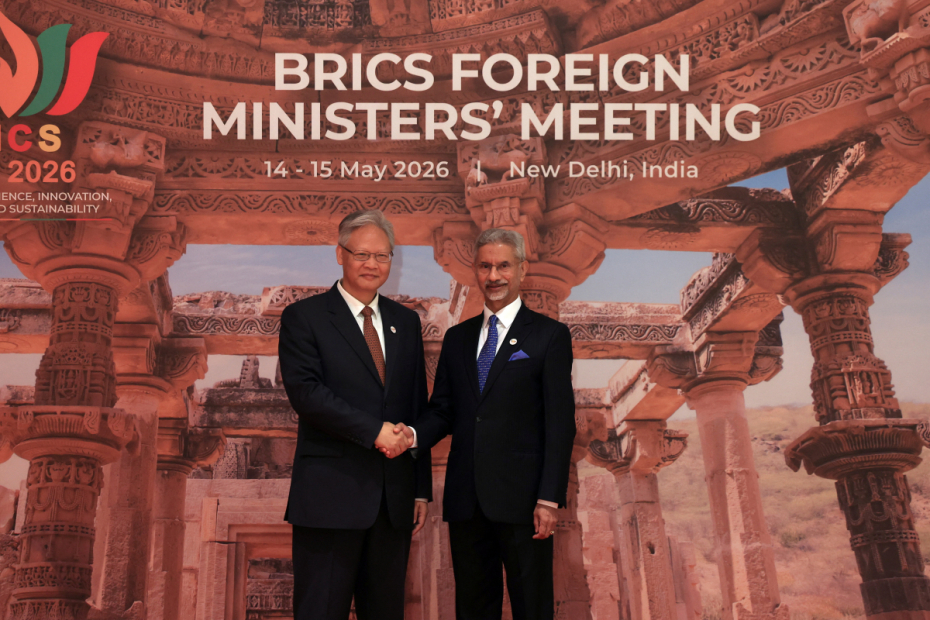
Chinese Foreign Minister Wang Yi did not attend due to Trump’s visit to Beijing. China is instead represented by Ambassador Xu Feihong.
Iran war dominates agenda despite official theme
Officially, the meeting’s theme is “Building for Resilience, Innovation, Cooperation and Sustainability,” according to India’s Ministry of External Affairs.
The agenda includes discussions on healthcare cooperation, communicable and non-communicable diseases, sustainability and economic coordination among developing economies.
However, the Iran war has instead dominated discussions.
Analysts say the conflict has exposed serious divisions within BRICS, particularly regarding Iran, Israel and the Gulf.
In April, India hosted a meeting of BRICS deputy foreign ministers and special envoys for the Middle East and North Africa. That gathering ended without a joint statement after disagreements between Iran and the UAE over how to address the U.S.-Israel war.
Iran sought stronger condemnation of Israel and the United States, while the UAE viewed itself as a victim of Iranian attacks.
Israel’s war in Gaza has also become another divisive issue within BRICS. Reports suggest India attempted to soften criticism of Israel during previous negotiations, preventing consensus within the bloc.
Observers say these differences may once again make it difficult for BRICS to issue a unified statement.
Trump-Xi talks overshadow diplomacy
The Delhi meeting is also unfolding alongside Trump’s high-profile visit to China.
Trump arrived in Beijing on Wednesday evening and was welcomed with a formal ceremony before heading to his hotel.
On Thursday, he is expected to hold bilateral talks with Xi, followed by a working lunch on Friday before returning to the United States.
Analysts believe Trump may try to persuade China to pressure Iran into easing tensions in the Gulf and reopening the Strait of Hormuz.
According to a White House official, Trump and Xi agreed during discussions that the strait should remain open and that Iran should never acquire nuclear weapons.
Observers note that China has historically avoided taking leading roles in prolonged international conflict mediation, preferring instead to intervene during final negotiation stages, as it did during the 2023 Iran-Saudi Arabia normalisation talks, which have since collapsed.
However, analysts suggest Beijing may now face increasing pressure to adopt a more active diplomatic role because of the global economic risks posed by the conflict.
Strait of Hormuz crisis shakes global energy markets
The disruption in the Strait of Hormuz remains one of the most significant consequences of the war.
The narrow waterway connects Gulf oil producers to global markets and previously handled roughly 20 percent of the world’s oil and liquefied natural gas supplies.
Since early March, Iran has restricted shipping through the strait, allowing passage only to selected vessels after negotiations with the Islamic Revolutionary Guard Corps.
Iranian attacks on U.S. assets and Gulf energy infrastructure during the early stages of the war further disrupted supplies.













What is your opinion on this topic?
Leave the first comment