live U.S. hits Iranian radar installations after drone threat in Strait of Hormuz
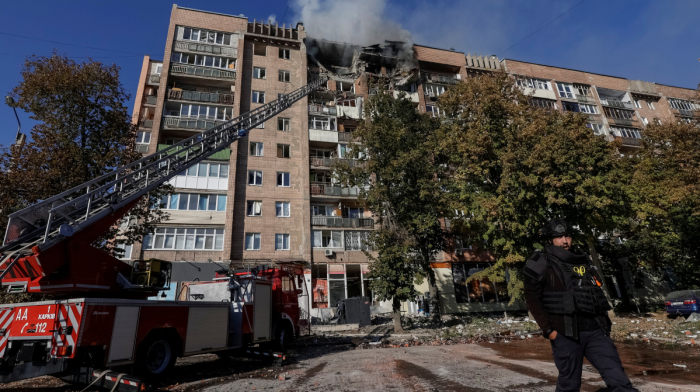
The U.S. said it struck Iranian radar sites on Qeshm Island and in Goruk after intercepting four drones, while Iran's Revolutionary Guards said they l...
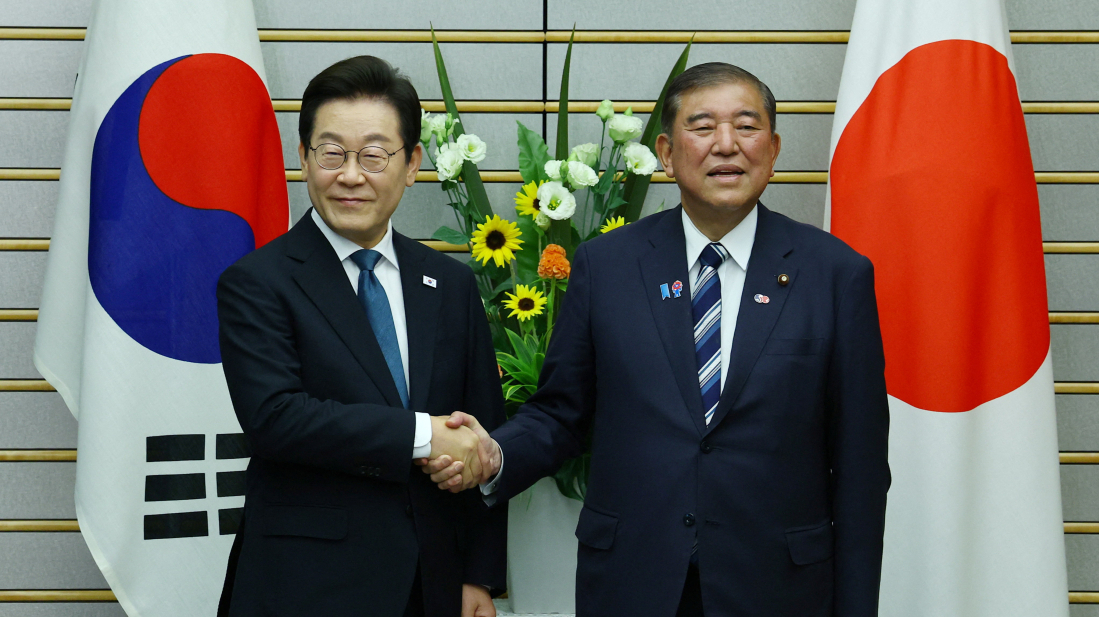
Japanese Prime Minister Shigeru Ishiba and South Korean President Lee Jae Myung reaffirmed their commitment to security cooperation on Saturday, ahead of Lee’s planned summit with U.S. President Donald Trump on Monday.
During his first official visit to Japan since taking office in June, Lee met Ishiba at the prime minister’s residence in Tokyo, where the two discussed bilateral relations, including closer coordination with the United States under a trilateral pact signed by their predecessors.
“Stable relations benefit both our countries and our region,” Ishiba said during expanded summit talks. “It is also crucial that we strengthen our trilateral alliance with the U.S.”
Lee’s surprise election victory—following the impeachment of conservative President Yoon Suk Yeol for declaring martial law—had initially fuelled concerns in Tokyo that ties could deteriorate. Lee has been a vocal critic of previous attempts to ease tensions rooted in resentment over Japan’s 1910–45 colonial rule of the Korean Peninsula.
Last week, Seoul expressed “deep disappointment and regret” after Japanese officials visited a Tokyo shrine honouring Japan’s war dead, which many South Koreans regard as a symbol of wartime aggression. Even so, Lee has signalled support for closer ties, including during his first meeting with Ishiba on the sidelines of the G7 summit in Canada in June.
Despite their differences, both U.S. allies remain heavily dependent on Washington to counter China’s growing influence in the region.
Together they host around 80,000 American troops, dozens of warships and hundreds of military aircraft.
“As the international order has been unsettled recently over trade and security issues, I believe South Korea and Japan, which share values, systems and ideology, should strengthen cooperation more than ever,” Lee said during his talks with Ishiba.
In Washington, Lee and Trump are expected to address security concerns including China, North Korea, and Seoul’s financial contributions towards U.S. forces stationed in South Korea-an issue on which Trump has repeatedly pressed for increases.
Japan and South Korea also see eye to eye on trade, having agreed to 15% tariffs on U.S. imports of their goods after Trump threatened to impose higher duties.

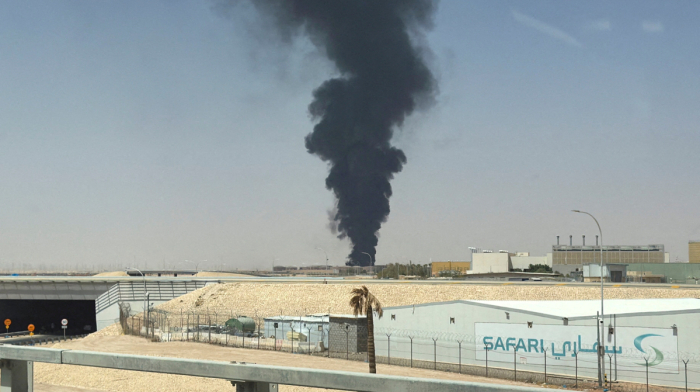
Iran’s Revolutionary Guards (IRGC) said in a statement that its Aerospace Force did not strike the Kuwait Airport passenger terminal on Wednesday, and that the destruction was instead caused by a failed U.S. Patriot missile.
The new AnewZ documentary, TARGET: Yerevan, builds its explosive case on exclusive, secret recordings originally published by Minval Politika.
Five Azerbaijani citizens have been killed and three others injured following drone attacks on two cargo vessels in the Sea of Azov, Azerbaijan's Foreign Ministry said on Friday.
Azerbaijan has strongly rejected allegations published by CNN claiming that its territory was used for Israeli military and intelligence operations against Iran, describing the report as entirely baseless and demanding a retraction.
Armenia will hold parliamentary elections on 7 June 2026, a vote that will shape the country’s political direction for the next five years. Understanding how the electoral system converts votes into parliamentary power is key to following the outcome and its wider regional implications.
People across Gaza are facing a worsening humanitarian crisis, with millions struggling to access food, clean water, shelter and medical care as the conflict continues.
More than 6,000 people gathered outside a vote-counting centre in Seoul on Friday night, demanding this week’s local elections be repeated after ballot shortages left some voters unable to cast their ballots.
The next time a goal goes in during a Champions League final, fans around the world could watch it from every angle at once — frozen, rotated and replayed in ways that were impossible only a few years ago.
An ageing, poorly insured shadow armada now accounts for around one-sixth of the world's tanker fleet. Hidden by design and fraught with risk, it operates beyond conventional oversight. A maritime law expert explains how it works, who profits, and why much of the world looks the other way.
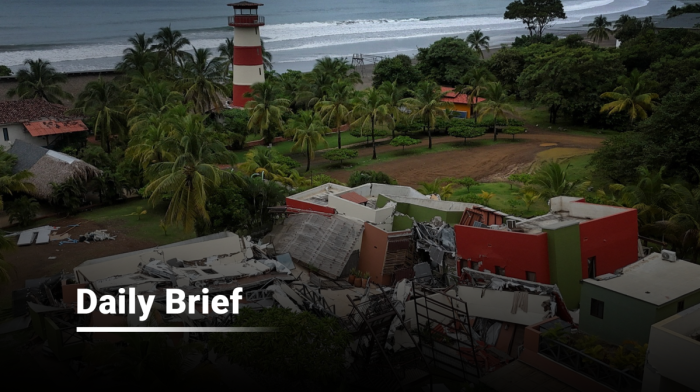
Start your day informed with the AnewZ Morning Brief. Here are the top stories for the 6 June, covering the latest developments you need to know.
You can download the AnewZ application from Play Store and the App Store.
What is your opinion on this topic?
Leave the first comment