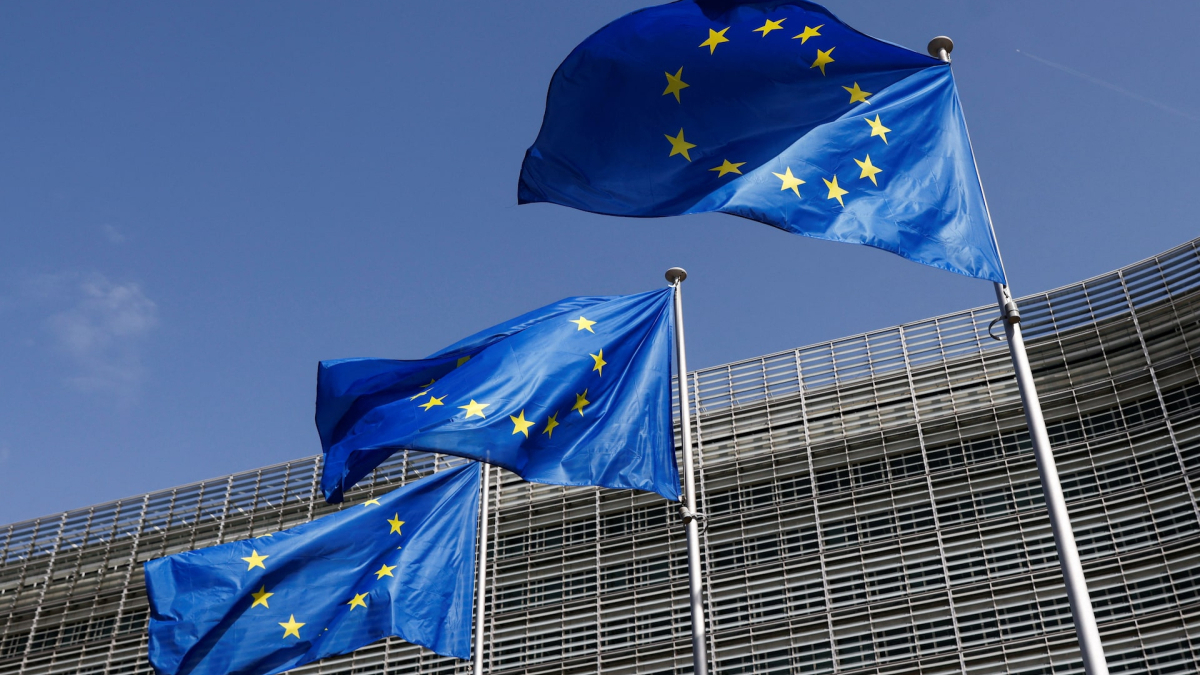
European Union stands with its member states in the face of any threat, EU Commission President Ursula von der Leyen said in response to the drone strike that hit Britain's Royal Air Force base of Akrotiri in southern Cyprus overnight.
"While the Republic of Cyprus was not the target, let me be clear: we stand collectively, firmly and unequivocally with our Member States in the face of any threat," von der Leyen said in a post on X on Monday.
Her comments comes as Cypriot President Nikos Christodoulides said in a speech that the Shahed-type unmanned aerial vehicle (UAV) caused minor damage when it crashed into the military facilities at 12:03 a.m.
It was not immediately clear from where the Iranian-made Shahed had been fired. Two sources, speaking on condition of anonymity, told Reuters the British bases intercepted a second drone, but one of the sources later said it was 'one drone'.
"All the competent services of the republic are on alert and in full operational readiness," Christodoulides said.
The strike, which hit a runway, was the first attack on the military facility since a rocket attack by Libyan militants in 1986. It shook the east Mediterranean island, a holiday hotspot and home to thousands of foreign companies.
Von der Leyen's comment comes as the European Commission’s security college is scheduled to meet on Monday to consider its response to the escalating situation in the Middle East.
Meanwhile the European Commission has asked member states to share oil security of their supply assessments by the end of the day. It's also considering convening an ad-hoc meeting of its oil coordination group later this week. But it says it doesn't see any immediate oil security of supply impacting the EU.
Security meetings
EU foreign ministers held an emergency online meeting late Sunday to discuss regional stability.
She said, that "Iranian strikes in Manama were unjustified and unacceptable, I told Hamad Bin Isa Al Khalifa of Bahrain."
Von der Leyen said she spoke to Saudi Crown Prince Mohammed Bin Salman saying she would work closely to de-escalate and safeguard regional stability.
Following the emergency talks, EU top diplomat Kaja Kallas warned against the prospect of further military escalation that could destabilise the broader region. She emphasised the critical need to keep key waterways open, specifically noting the Strait of Hormuz, which serves as a vital transit route for global energy supplies.
Evacuation preparations
In response to the growing security threat, several European countries said they're drafting contingency plans to evacuate their citizens from the Middle East. Hundreds of thousands of European nationals are currently believed to be in the affected area, either in transit or on holiday.
To manage the logistical challenges, member states are expected to collaborate and share resources, utilising joint extraction flights to safely remove their citizens from the region before commercial airspace faces wider closures.
Nuclear deterrence speech
In a separate development regarding European defence, French President Emmanuel Macron is scheduled to deliver a highly anticipated speech on nuclear deterrence on Monday afternoon. The address comes as European nations reassess their own defence capabilities and security strategies amid rising global military conflicts.










What is your opinion on this topic?
Leave the first comment