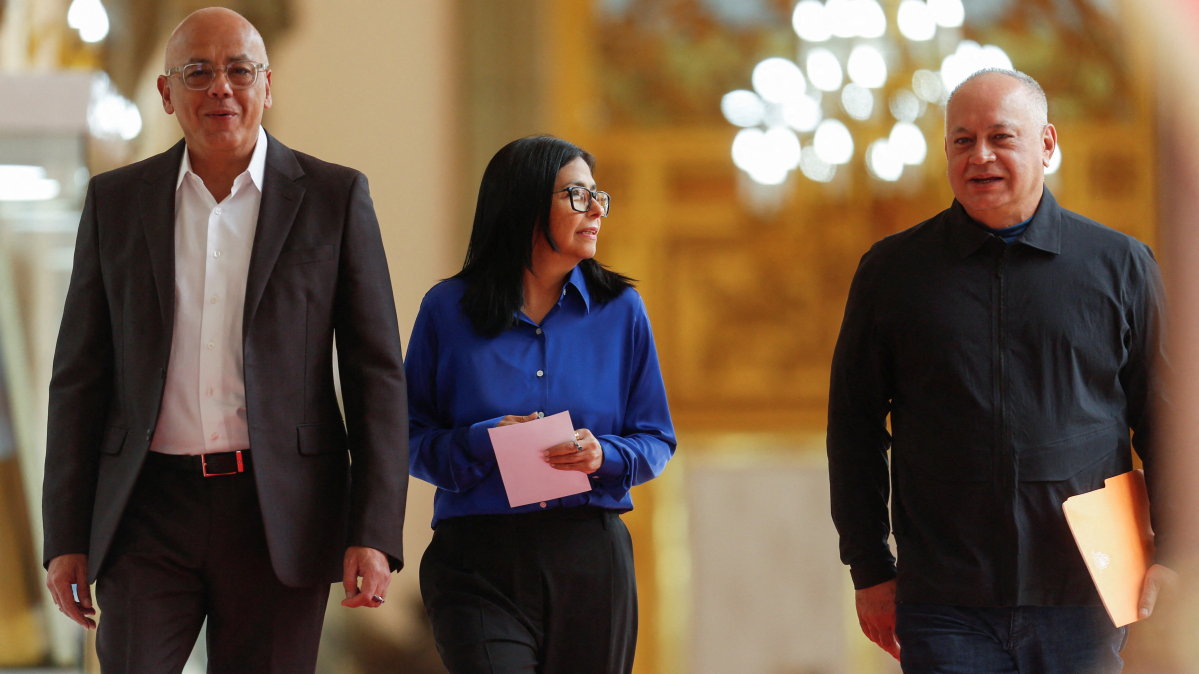
Trump administration officials held months-long discussions with Venezuela’s hardline interior minister Diosdado Cabello before the U.S. operation that led to the seizure of President Nicolás Maduro, according to multiple people familiar with the matter.
The communications, which continued after the 3 January U.S. raid, were aimed at preventing instability inside Venezuela, the sources said. U.S. officials warned Cabello against using the security forces and ruling-party militants under his control to target opposition figures.
Cabello, 62, oversees Venezuela’s intelligence services, police and parts of the armed forces, an apparatus that remains largely intact following Maduro’s ouster. He is named in the same U.S. drug-trafficking indictment used to justify Maduro’s arrest but was not detained during the operation.
Sources said discussions with Cabello began in the early days of the current Trump administration and intensified in the weeks before the raid. Contact has continued since Maduro’s removal, including conversations touching on U.S. sanctions and the indictment Cabello faces.
The communications have not been previously reported and are considered central to Washington’s efforts to manage Venezuela’s fragile transition. U.S. officials fear that if Cabello deploys the forces he controls, it could destabilise the country and undermine interim President Delcy Rodríguez, whom Washington has publicly praised.
It remains unclear whether the talks addressed Venezuela’s future governance or whether Cabello has followed U.S. warnings. He has publicly pledged unity with Rodríguez, though the two have long been viewed as rivals rather than close allies.
Cabello has been in contact with U.S. officials both directly and through intermediaries, one source said. All sources spoke on condition of anonymity due to the sensitivity of the communications. The White House and the Venezuelan government did not immediately respond to requests for comment.
Long regarded as Venezuela’s second-most powerful figure, Cabello is a former military officer and close ally of the late President Hugo Chávez. He later became a key loyalist and enforcer for Maduro, with influence over military intelligence and civilian counter-intelligence agencies.
He has also been linked to pro-government militias known as colectivos, armed civilian groups that have been used to suppress protests. U.S. officials worry that Cabello’s record of repression and rivalry with Rodríguez could make him a potential spoiler during the transition.
Rodríguez has been working to consolidate power by installing loyalists while meeting U.S. demands to increase oil production, according to Reuters interviews with sources in Venezuela.
Cabello has been under U.S. sanctions for years. In 2020, Washington issued a $10 million bounty for his arrest and indicted him as a senior figure in the so-called “Cartel de los Soles”, a network U.S. prosecutors say involves senior Venezuelan officials. The reward has since been raised to $25 million, allegations Cabello has denied.
Following Maduro’s removal, some U.S. politicians questioned why Cabello was not detained. In recent days, reports of security searches have declined, and both Washington and Caracas have said that detainees considered political prisoners will be released.
The Venezuelan government says Cabello is overseeing that process as interior minister, though rights groups say releases are proceeding slowly and hundreds remain detained.










What is your opinion on this topic?
Leave the first comment