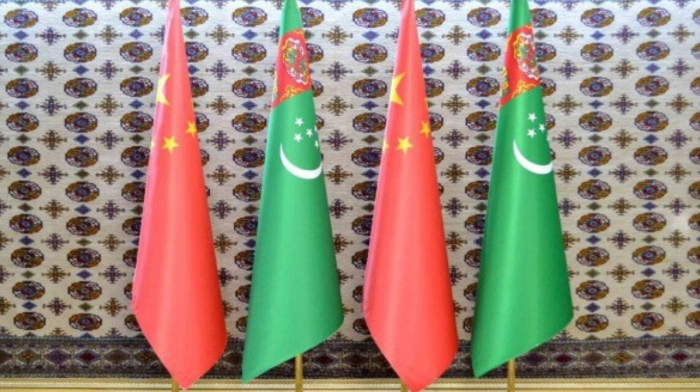
A landmark agreement between Türkiye’s state pipeline operator BOTAŞ and Turkmenistan’s state-owned Turkmengaz marked a significant step forward in the energy ties between the two nations.
This historic deal which saw the commencement of gas supplies from Ashgabat to Ankara on March 1, 2025 is notable for its innovative structure that bypasses the need for a direct pipeline connection between the two countries.
Instead, the arrangement operates through a unique swap mechanism, where Turkmen gas is first injected into Iran's network, and in return, Iran sends an equivalent volume of gas to Türkiye through its existing pipelines.
While the initial volumes of gas are modest, with around 1.3 billion cubic meters planned for delivery in 2025, the deal is being seen as a strategic move for both countries.
For Türkiye, the agreement represents a vital step toward diversifying its energy imports and enhancing its energy supply security.
As Türkiye continues its efforts to reduce reliance on single-source suppliers, this deal with Turkmenistan is a key development in its long-term energy resilience strategy.
For Turkmenistan, the agreement opens up a new export route, offering the country an opportunity to tap into new markets and reduce its dependence on a single major buyer.
Given Turkmenistan's rich natural gas reserves, this deal is seen as an important opportunity for the country to expand its reach in the global energy market and lessen its reliance on traditional customers.
However, in late October 2025, Turkmen officials confirmed that gas deliveries to Türkiye had been temporarily paused.
While Turkmenistan cited technical reasons for the disruption, there were reports suggesting payment issues could have contributed to the halt.
Analysts have also pointed to potential complications arising from U.S. and European Union sanctions, as well as possible transit difficulties through Iran, which might be affecting the flow of gas.
Despite the temporary pause, both sides remain optimistic that the situation is only a short-term setback. Negotiations are currently underway to resolve the issues and resume the delivery of gas to Türkiye.
Both Türkiye and Turkmenistan are committed to ensuring that the deal is fully implemented and expanded, and they are eager to see the long-term potential of the agreement realized.
The deal, while still in its early stages, has already proven to be a significant milestone in the relationship between the two nations, as well as in the broader context of regional energy dynamics.
If successfully navigated, it could serve as a model for future energy cooperation in the region, contributing to greater energy security and stability for both countries.










What is your opinion on this topic?
Leave the first comment