Japan opens door to global arms market with overhaul of defence export rules
Japan on Tuesday unveiled its biggest overhaul of defence export rules in decades, scrapping restrictions ...
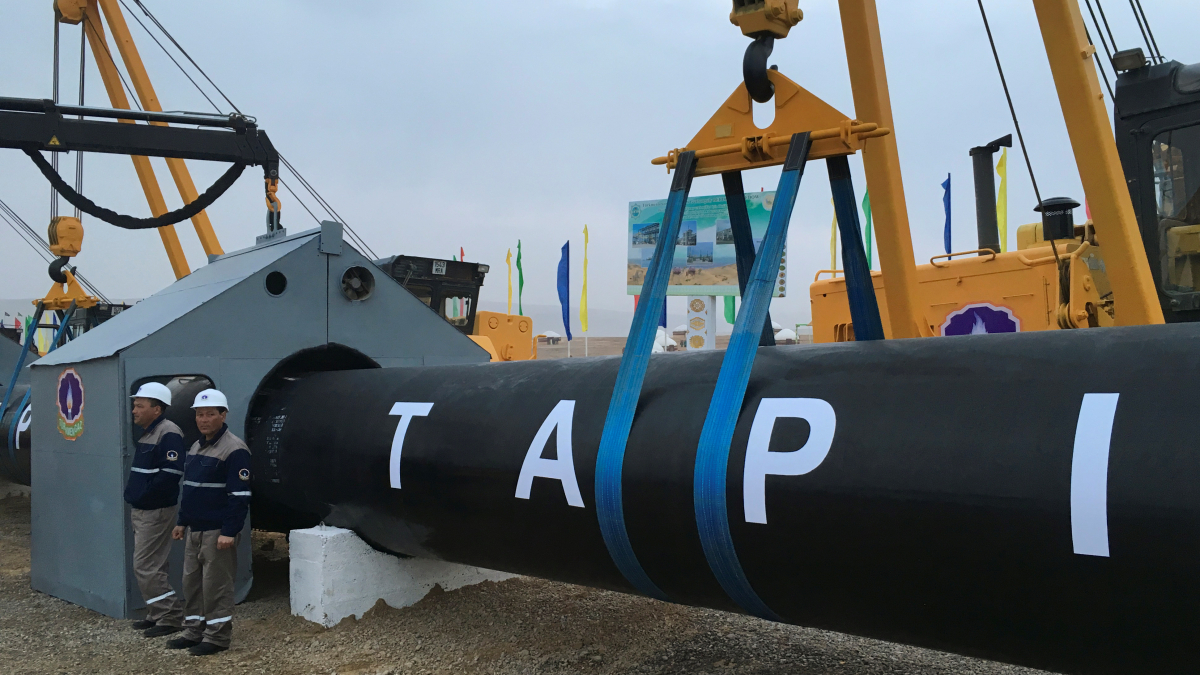
Afghanistan’s Ministry of Mines and Petroleum says around 25 kilometres of the TAPI gas pipeline have been laid in Herat province, as work continues on one of the region’s largest energy projects.
The update was shared by the ministry’s spokesman, Humayun Afghan, who said progress had been made on the Afghanistan section of the pipeline in Herat. Summarising the latest work, he said: “So far, about 25 kilometres of the pipeline have been laid, and preparations have been completed for an additional 120 kilometres.”
The ministry said new pipes and technical equipment are also being transported to the project area, which officials say is expected to help speed up work in the coming months. It added that the 153-kilometre Herat stretch is expected to be completed by the end of the current calendar year.
Humayun Afghan said the project would continue according to schedule and would be ready for operation once completed.
The Turkmenistan-Afghanistan-Pakistan-India (TAPI) pipeline is one of the region’s largest energy projects. It is designed to stretch 1,814 kilometres and carry up to 33 billion cubic metres of natural gas each year from Turkmenistan through Afghanistan to Pakistan and India, according to official project details.
Afghan officials have said the project could bring wider economic benefits to the country, including jobs, stronger regional connectivity and around $400 million a year in revenue.
Work on the TAPI project officially began in Afghanistan in September 2024 in the presence of Afghan and Turkmen officials. The latest update suggests construction is continuing to move forward in Herat, one of the key sections of Afghanistan’s route.

Iran accuses the United States of breaching a ceasefire after a commercial ship was seized in the Gulf of Oman, vowing retaliation, as Israel warns south Lebanon residents to avoid restricted areas.
Progessive Bulgaria, led by pro-Russian Eurosceptic Rumen Radev is on track to form Bulgaria’s next government, after official results showed a runaway victory for the coalition in the Balkan nation's parliamentary elections on Monday (20 April).
Secretly filmed footage from two UK laboratories has reignited debate over animal testing in drug development, after a former worker alleged that monkeys, dogs and other animals endured prolonged distress during safety trials for new medicines.
A powerful 7.5 magnitude earthquake has struck off Japan’s north-eastern coast, triggering urgent tsunami warnings with waves of up to 3 metres expected, prompting residents to seek immediate safety.
Blue Origin, the U.S. space company of billionaire Amazon founder Jeff Bezos, successfully reused and recovered a booster for its New Glenn rocket launched from Florida on Sunday (19 April), in the latest chapter of its intensifying rivalry with Elon Musk’s SpaceX.
Israeli strikes killed at least five people across the Gaza Strip on Monday (20 April), Palestinian health officials said, as clashes were reported between Hamas fighters and an Israeli-backed militia.
President of Armenia Vahagn Khachaturyan met a senior NATO envoy in Yerevan to discuss expanding cooperation the presidential office said.
Kyrgyzstan plans to expand its nationwide video surveillance system, with up to 20,000 cameras set to be installed, President Sadyr Zhaparov has announced.
Turkish authorities are mulling new measures to protect children from dangerous online content after the country was shaken last week by two separate school shootings.
Five Central Asian states are launching a $30 million programme to tackle water scarcity and land degradation, as climate pressures and rising demand sharpen risks across the region.
You can download the AnewZ application from Play Store and the App Store.
What is your opinion on this topic?
Leave the first comment