France has unveiled a delayed wave of renewable energy tenders to boost energy independence and strengthen domestic and European industry.
On Thursday (2 April), the French government confirmed plans to tender seven offshore wind projects with a combined capacity of 10 gigawatts (GW). Smaller schemes covering 1.2 GW of solar power and 0.8 GW of onshore wind will also open to bidders.
Push for energy security and lower costs
For Finance Minister Roland Lescure, the announcement signals more than an expansion of clean energy. “The idea now is to continue on this path and accelerate,” he told journalists, pointing to decades of investment in nuclear power that he said have helped shield French households from the worst of the current energy crisis.
Those households, he added, are already seeing the benefits. Electricity prices in France remain “30% to 35% lower than our Italian neighbours”, a difference increasingly felt by families facing rising living costs across Europe.
Delays and global tensions
The timing of the tenders is significant. They come two years later than planned, after political disagreements over funding stalled progress. In the meantime, global tensions have intensified.
The ongoing disruption to shipping through the Strait of Hormuz has pushed energy prices higher, with further increases expected across Europe in the coming weeks.
Against this backdrop, officials say the new projects are designed to reduce France’s dependence on imported oil and gas while ensuring economic benefits remain closer to home.
“We want these bids to be done as much as possible with our technologies, our factories, our employees,” Lescure said, underlining a shift towards a “Made in Europe” approach.
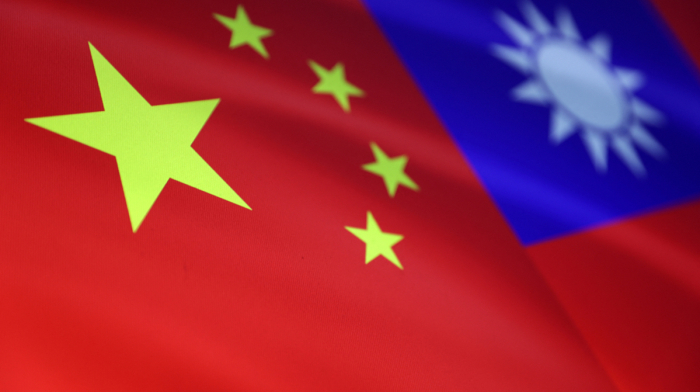
This principle is already being built into the tender process. A new “resilience” criterion will favour projects that rely more heavily on European-made components, as part of a broader effort to reduce reliance on Chinese supply chains.
Stricter rules on supply chains
Junior Energy Minister Maud Brégeon said that, for solar projects, the rules will apply directly to photovoltaic cells and modules. In offshore wind, developers will face limits on the number of key components sourced from China, as well as caps on the use of Chinese permanent magnets in turbines.
Future tenders are expected to go further, incorporating sustainability and cybersecurity requirements.
For coastal communities and industrial regions, the stakes are both economic and environmental. France currently has less than 2 GW of offshore wind installed, but its 10-year energy law, passed in February, sets a target of 15 GW by 2035.
Officials say the latest tenders mark a decisive step towards that goal. For engineers, factory workers and suppliers across Europe, they may also represent a more immediate opportunity: anchoring the continent’s energy transition within its own industries.













What is your opinion on this topic?
Leave the first comment