live U.S. resumes Iran port blockade, threatens strikes on energy targets
U.S. President Donald Trump announced the reimposition of a U.S. naval blockade on all Iranian ports and warned that power plants and bridges could be...
Japan and Indonesia will deepen coordination on energy security, Tokyo said, as the U.S.-Israeli war on Iran disrupts vital oil and gas flows to Asia.
Japan’s Prime Minister Sanae Takaichi said the two countries would strengthen cooperation amid growing concern over the conflict’s impact on global energy markets. Speaking in Tokyo alongside Indonesia’s President Prabowo Subianto, she said the Iran situation had renewed global focus on resource security, describing Indonesia as a major resource-rich nation.
The leaders met as tensions in the Middle East disrupt shipments through the strategically important Strait of Hormuz, a key route for oil and gas supplies to Asia.
Indonesia is the world’s largest exporter of thermal coal for power generation, accounting for about half of global exports. It is also a major liquefied natural gas supplier, with roughly a quarter of its shipments destined for Japan.
Japan said on Friday (27 March) it will allow utilities to increase the use of coal-fired power plants from next month to cushion potential disruption to liquefied natural gas imports caused by the war.
Both leaders said they would “make their best efforts to convince all parties (in the Middle East) to de-escalate” the conflict. Prabowo also invited Japan’s participation in Indonesia’s economy, including in critical minerals, rare earths, industrialisation and nuclear energy.
Neither leader provided details on how the two countries would coordinate on economic security.
In response to the conflict, Japan has opened its oil stockpiles and is seeking energy supplies beyond the Middle East.

The United States carried out a third consecutive night of airstrikes against Iran, targeting military capabilities around the Strait of Hormuz as Donald Trump announced the reinstatement of a blockade on Iranian shipping and proposed a 20% fee on cargo passing through the strategic waterway.
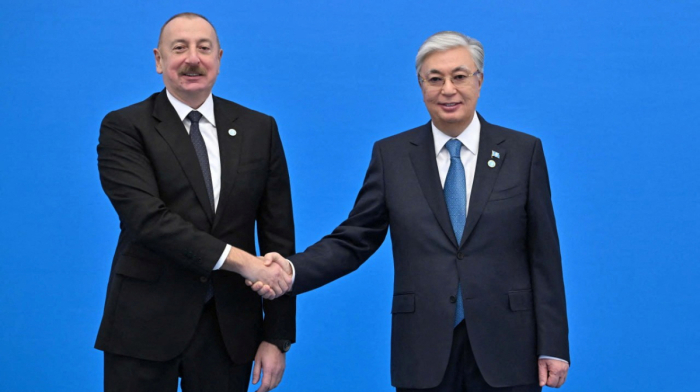
President Ilham Aliyev is holding his annual question-and-answer session with international journalists at the 4th Shusha Global Media Forum in Azerbaijan.
The United States and Iran have significantly escalated their conflict, exchanging heavy missile and drone strikes across the Gulf region. Iran claims it has once again closed the Strait of Hormuz, a vital global shipping route.
Start your day informed with AnewZ Morning Brief. Here are the top news stories for the 13th of July, covering the latest developments you need to know.
An overnight fire at a popular bar in Bangkok has killed at least 30 people and injured 70 others, making it one of the deadliest pub disasters in the Thai capital in recent years. Authorities say the venue quickly filled with thick smoke, trapping patrons inside.
A senior U.S. commerce official told lawmakers on Tuesday that only a small number of Nvidia's H200 artificial intelligence chips have been shipped to China so far, as scrutiny grows over Washington's export controls on advanced technology.
Oil prices rose nearly 3% on Tuesday to their highest level in four weeks as the United States and Iran stepped up attacks around the Strait of Hormuz, adding fresh uncertainty to global energy supplies.
China has approved fast-fashion retailer Shein's long-awaited initial public offering (IPO) in Hong Kong, clearing the way for the company to pursue a stock market listing after previous attempts in the U.S. and London failed.
European carmakers have urged the European Union to make sure new “Made in EU” rules do not put existing investments in Türkiye and Morocco at risk.
Microsoft is expected to announce a new round of job cuts as early as next week as the technology giant looks to reduce costs, according to reports.
You can download the AnewZ application from Play Store and the App Store.
What is your opinion on this topic?
Leave the first comment