“I’m seeking immediate negotiations to once again discuss the acquisition of Greenland by the U.S.,” US President Donald Trump told the World Economic Forum. During his Wednesday (21 January) address, he once more cited national security concerns as the reason for wanting to own the Arctic island.
President Trump argued that only the U.S. could safeguard the vast Arctic territory, describing it as a “giant piece of ice” whose security was vital for both Europe and the United States. He stressed that U.S. control of Greenland would not threaten NATO, but would enhance collective defence.
Trump also framed the acquisition in historical terms, recalling the U.S. military’s role in Greenland during World War II.
“We saved Greenland and successfully prevented our enemies from gaining a foothold in our hemisphere,” he said. “After the war, we gave Greenland back to Denmark. How stupid were we to do that? But we did. But how ungrateful are they now?”
Trump suggested that the European allies of the U.S. should repay Washington’s foreign policy efforts by giving up Greenland. He said that probably won’t happen “unless I decide to use excessive strength and force, where we would be, frankly, unstoppable.”
“But I won’t do that. … People thought I would use force. I don’t have to use force. I don’t want to use force. I won’t use force. All the United States is asking for is a place called Greenland, where we already had it as a trustee but respectfully returned it back to Denmark not long ago,” he added.
He portrayed Greenland as a strategically crucial location, sitting between the U.S., Russia, and China, and described it as a core U.S. national security interest. While acknowledging the growing prominence of rare earth metals, President Trump insisted the primary motivation was national and international security.
On the possibility of rejection, Trump warned, “We want a piece of ice for world protection and they won’t give it. They have a choice: They can say yes, and we will be very appreciative, or you can say no and we will remember.”
In response to the U.S. President's speech, the European Union’s legislative body, on Wednesday, suspended work on the formal approval and implementation of the trade deal it reached last summer with President Trump.
“Given the continued and escalating threats, including tariff threats, against Greenland and Denmark, and their European allies, we have been left with no alternative but to suspend work,” said Bernd Lange, chairman of the European Parliament’s international trade committee.
“Until the U.S. decides to re-engage on a path of cooperation rather than confrontation,” no steps to move the deal forward would be taken, Lange added.
“Our sovereignty and territorial integrity are at stake. Business as usual impossible,” he wrote in a post on X.
Beyond Greenland, Trump used his speech to criticise Europe’s energy and economic policies. He denounced the continent’s shift from fossil fuels to wind and solar, calling it the “green new scam, perhaps the greatest hoax in history,” and cited rising electricity costs and what he called declining output in Germany as examples.
He criticised European government spending, migration, and trade policies, claiming these had left parts of Europe “unrecognisable,” and urged European nations to follow the U.S. model.
On tariffs, Trump said he used them strategically to secure favoured-nation treatment for drug prices, ensuring the U.S. did not have to pay “13, 14, 15 times more than certain other countries.”
He recounted a conversation with French President Emmanuel Macron, explaining that he threatened tariffs on French goods unless France agreed to Washington’s demands on drug pricing.
“Without tariffs I wouldn’t have been able to get it done,” Trump said, stressing that the U.S. cannot subsidise the whole world and will instead pay the lowest price available globally. He added that this approach would ultimately bring drug prices down everywhere.
Trump also highlighted U.S. achievements during his year in office, claiming success in “ending wars” abroad at great cost, and reiterated his expectation that Europe should take primary responsibility for the Russia-Ukraine conflict.
“Focus in Ukraine should be Europe’s responsibility because the U.S. is far away,” he said, while calling on NATO members to increase their financial contributions. He said he was expecting talks with Ukrainian President Volodymyr Zelenskyy while in Switzerland, however Zelenskyy had previously announced he wouldn't attend this year's WEF.
Finally, he touted U.S. economic gains, asserting that “when America booms, the entire world booms,” and highlighted recent U.S. interventions in Venezuela as examples of pragmatic diplomacy.
“The leadership of the country has been very good… very, very smart,” Trump said, noting U.S. involvement in oil agreements that he claimed would benefit Venezuela financially.
Europe Defense
“For the U.S. to stay safe, you need a safe Arctic, a safe Atlantic, and a safe Europe.” NATO Secretary-General Mark Rutte told an earlier panel at the WEF, underlining the strategic importance of NATO and transatlantic security.
During a panel titled “Can Europe Defend Itself?”, Rutte noted that Arctic security is increasingly contested by Russia and China, and emphasised that NATO member states are actively coordinating to protect the region. He emphasised that transatlantic cooperation remains the cornerstone of European security.
His words came hours before U.S. President Donald Trump touched down in Davos to give a much-anticipated address to the Forum.
While territorial disputes such as Greenland must be addressed “in an amicable way,” Rutte stressed that the alliance’s main priority remains Ukraine.
“Focus in Ukraine should be our number one priority, and then we can discuss all the issues, including Greenland. But it should be Ukraine first, because it is crucial for our European and U.S. security,” he said, highlighting that European and U.S. safety hinges on continued support for Kyiv amid ongoing Russian attacks.
Poland’s President Karol Nawrocki echoed the importance of the U.S.-European partnership while underlining Europe’s growing defense responsibilities.
“We feel responsible for NATO—it’s the largest alliance in history,” he said, citing Poland’s significant increases in defense spending and its continued hosting of U.S. troops on Polish soil.
Nawrocki also stressed the strategic significance of Greenland, framing it within broader geopolitical challenges, including Chinese and Russian activity in Europe’s eastern flank, and the need for strong transatlantic ties.
Finland’s President Alexander Stubb reinforced the message of strengthened European defense, noting that Finland and Sweden’s recent NATO membership “doubles NATO’s border” and significantly enhances Europe’s ability to defend itself independently if required.
Stubb highlighted Finland’s Arctic capabilities, including conscription-trained personnel and advanced military assets, while stressing that European nations must complement battlefield readiness with robust civilian infrastructure, energy security, and comprehensive defense planning.
Ukraine's absence
Ukrainian President Volodymyr Zelenskyy revealed late on Tuesday (20 January), that he will not attend the WEF this year, saying his focus must remain on responding to Russia’s latest missile strikes and securing urgent air defence and energy support for the country.
In a post on X, Zelenskyy pointed to widespread power outages and damage to critical infrastructure following a large-scale Russian attack, arguing that Ukraine cannot afford to lose time on meetings that do not deliver concrete results.
He said Kyiv remains open to engagement with partners, including in Davos, but only where discussions directly contribute to protecting lives, restoring energy systems and strengthening Ukraine’s security.
Discussions are also expected to take place between U.S. and European officials on the sidelines of the forum.
Economics and technology
Sessions throughout the day examine whether the global economy risks entering a period of instability reminiscent of the 1920s, how governments can avoid jobless growth, and whether climate-related shocks could trigger a new form of recession.
Technology and finance are among the day’s leading topics, alongside debates over artificial intelligence (AI), capital flows, and global markets.
One of the most anticipated speakers, Nvidia CEO Jensen Huang said during a panel, that the world is witnessing the largest infrastructure buildout in history, driven by the rapid development of artificial intelligence systems.
“We are now a few billion dollars into it,” Huang said, noting that trillions of dollars of infrastructure still remain to be built.
He described the AI industry as a “five-layered cake,” with energy at the base, followed by chips, cloud infrastructure, AI models, and applications at the top.
While many people focus on the models and applications, Huang emphasised, it is the underlying infrastructure that powers the AI systems.
Conversations also centre on how AI is transforming productivity and competition, the future of financial stability, and the role of investment in navigating an era of higher risk and fragmentation.
Other panels explore whether India can become the world’s third-largest economy, the sustainability of Russia’s wartime economic model, and the future of global development aid amid tightening fiscal conditions.
Green transition
Climate and sustainability remain prominent themes, with sessions addressing energy security, the future of nuclear power, food and water systems, and the role of the private sector in accelerating climate action.
Efforts to protect nature and promote circular economic models are also expected to feature strongly.
As the forum enters its later stages, debates in Davos continue to reflect a world grappling with slowing cooperation, rising strategic competition and rapid technological change, with leaders seeking pathways to growth while managing deepening geopolitical divides.
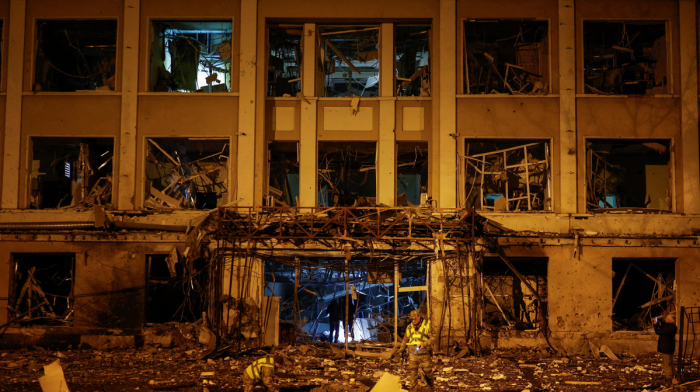
U.S. President Donald Trump has criticised Ukrainian President Volodymyr Zelenskyy for continuing to target Russia's energy infrastructure, while Russian strikes on Kyiv overnight killed at least one person and damaged a metro station.
The day after waiving sanctions and tariffs related to Russian exports, U.S. President Donald Trump said on Saturday he has yet to announce a final decision on the matter as Secretary of State Marco Rubio said officials want more time to evaluate the situation.
A Saudi AH-6i helicopter crashed in the Najran region of Saudi Arabia due to a technical malfunction, killing its two crew members, the Saudi-led coalition's spokesman Brigadier General Turki al-Maliki said in a statement on Sunday.
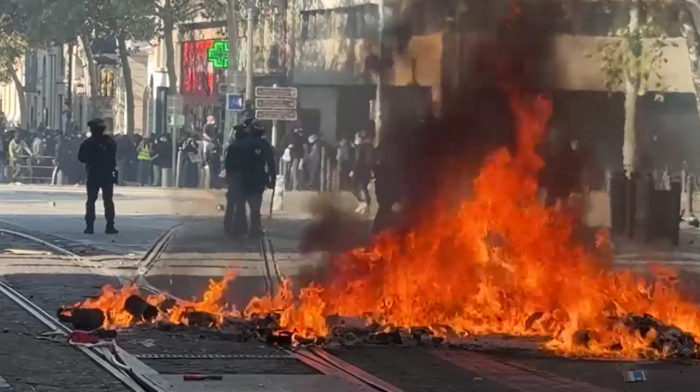
French President Emmanuel Macron has condemned the violence, looting and vandalism that erupted during cost-of-living protests across France. Prime Minister Sébastien Lecornu held crisis talks on Monday, calling for partial curfews and raising the possibility of a state of emergency.
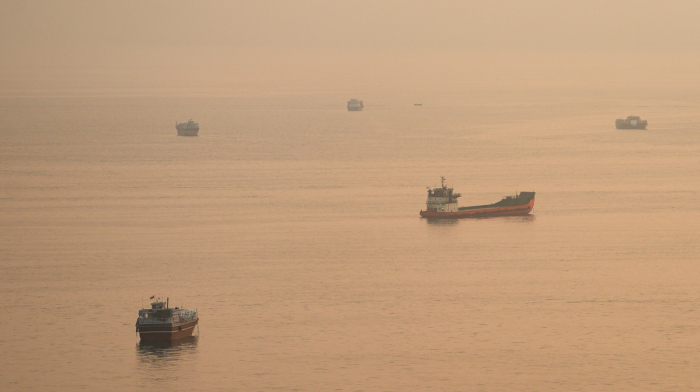
An oil tanker caught fire after striking a naval mine in the southern part of the Strait of Hormuz, Iran’s Islamic Revolutionary Guard Corps (IRGC) Navy said late Sunday.
Ukrainian President Volodymyr Zelenskyy is arriving in Oslo for talks on the Russia-Ukraine conflict, the Norwegian government has said. U.S. President Donald Trump's Special Envoy Steve Witkoff is also expected in the Norwegian capital this week for talks with Zelenskyy and European officials.
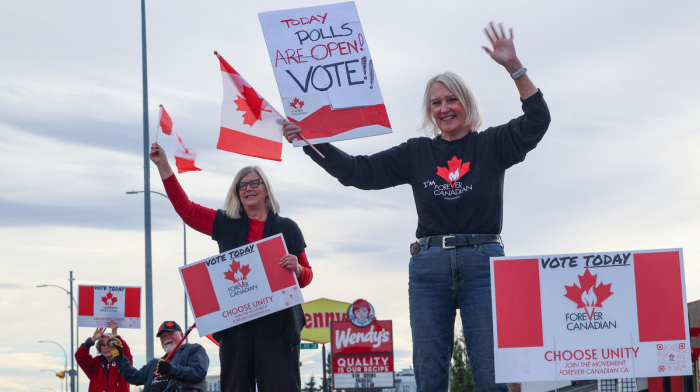
Canada’s oil-rich province of Alberta voted to remain part of the country in a non-binding referendum on Monday, 19 October, CBC News reports, delivering a much-needed victory for Prime Minister Mark Carney amid an ongoing trade war with the United States.
A Kenyan court has convicted cult leader Paul Mackenzie and 28 co-defendants of murder over the deaths of 191 people, including 190 children, in a case that shocked the world and exposed one of the deadliest cult-related tragedies in recent memory.
The U.S. and five Central Asian nations have held high-level talks in Samarkand, focusing on trade, investment and regional security as Washington seeks to strengthen its presence in the strategically important region.
French authorities imposed local curfews in parts of Paris, Lille and Nice on Monday after a weekend of riots and looting linked to nationwide anti-government protests, as the government faced mounting criticism over security failures.
Download the AnewZ app
You can download the AnewZ application from Play Store and the App Store.








What is your opinion on this topic?
Leave the first comment