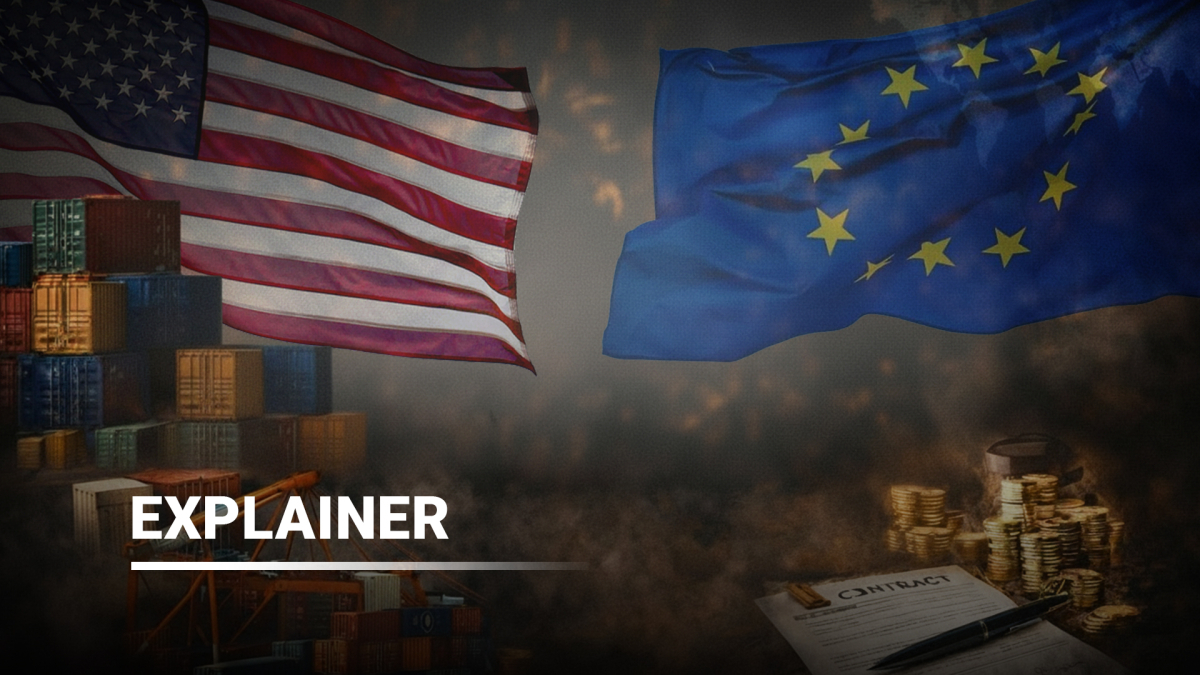
A fragile EU–U.S. trade deal is under strain following U.S. President Donald Trump’s tariff threats over Greenland. European leaders are now forced to weigh up not only their immediate response but also what a deeper trade confrontation could entail.
Tensions intensified after the European Parliament (EP) signalled it was preparing to suspend approval of the deal. On Wednesday (21 January) the Parliament, the European Union's legislative body, suspended work on the deal:
"Given the continued and escalating threats, including tariff threats, against Greenland and Denmark, and their European allies, we have been left with no alternative but to suspend work" on the agreement, said Bernd Lange, the chairman of the EP's Committee on International Trade.
What was agreed?
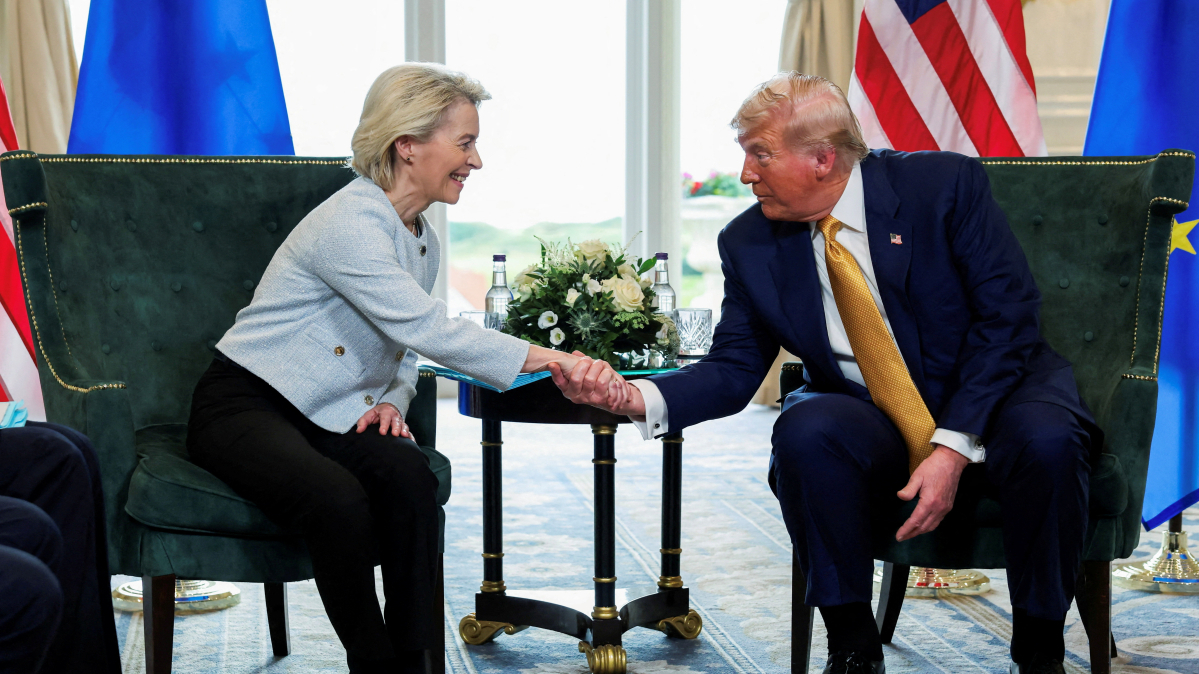
Trump and European Commission President Ursula von der Leyen reached the agreement setting new terms for EU–U.S. trade on 27 July 2025, describing it as the first step towards a broader, long-term framework.
The deal was intended to restore stability and predictability for businesses, secure EU access to the U.S. market, protect integrated value chains and jobs, and deepen cooperation on economic security and supply chains.
Both sides agreed to coordinate on steel, aluminium and copper overcapacity, reduce tariffs through quotas, and lower non-tariff barriers. A U.S. tariff ceiling of 15 percent was agreed for "most EU exports."
U.S. President Donald Trump shakes hands with European Commission President Ursula von der Leyen, in Turnberry, Scotland, UK, July 27, 2025.
Reuters
Trump tariff threat
However, the deal was tested within months, with Trump linking trade relations to a broader geopolitical dispute over Greenland.
Trump has warned the trade truce could unravel, saying the U.S. could impose escalating tariffs unless it is allowed to buy Greenland, home to about 57,000 people.
He said the measures could take effect from 1 February, naming EU members Denmark, Sweden, France, Germany, the Netherlands and Finland, as well as the UK and Norway.
Trump initially declined to say whether he would use force to seize Greenland, but dismissed the presence of NATO allies on the island, saying “that wasn’t a military” and that “they sent a few people… to guard against Russia.”
European leaders rejected his position. Denmark’s Foreign Minister Lars Løkke Rasmussen said: “We are living in 2026. You can trade with people, but you don’t trade people.”
Greenland’s Prime Minister Jens-Frederik Nielsen said the territory must decide its own future, adding: “We will not let ourselves be pressured. We stand firm on dialogue, on respect and on international law.”
What will the EU do next?
EU leaders are due to discuss next steps on Greenland at an emergency summit in Brussels on Thursday (22 January). Any decision will require consensus among the bloc’s 27 member states — a process that can be politically slow and complex.
One option remains a package of tariffs on €93 billion ($109 billion) worth of U.S. imports, announced last year in response to Trump’s 'Liberation Day' tariffs, but put on hold during negotiations.
That reprieve expires on 6 February 2026, meaning EU levies could take effect the following day unless extended or replaced by approval of the deal.
Another option, being pushed by French President, Emmanuel Macron, is the Anti-Coercion Instrument (ACI). It has never been used and could restrict access to public tenders, investments or banking activity, or limit trade in services — an area where the U.S. runs a surplus with the EU, including in digital services. The instrument is designed to respond to economic pressure only as a last resort.
Macron has urged the EU to consider its retaliatory tools, saying Washington’s “endless accumulation” of tariffs was “fundamentally unacceptable,” especially when used as leverage against territorial sovereignty.
Retaliation: what leverage does the EU have?
If tensions escalate further, the EU has a defined, but tightly constrained, set of tools under the ACI. It allows restrictions on imports and exports of goods and services, as well as measures affecting intellectual property rights and foreign direct investment. It could also limit access to the EU market - including public procurement - tighten chemical and sanitary rules, or restrict access to EU funding.
In theory, retaliation could target politically-sensitive pressure points. These range from U.S. products closely associated with Republican states, such as Kentucky bourbon, to sectors aligned with Trump’s support base, including crypto and Silicon Valley.
Other potential levers include areas the U.S. relies on abroad. For example, insulin imports from Denmark, or European-made weight-loss drugs like Ozempic and Wegovy, though EU officials have cautioned that such measures would be highly sensitive and politically difficult.
Speaking at the World Economic Forum in Davos, European Commission President Ursula von der Leyen framed the moment as part of a broader shift in global trade, warning that “geopolitical shocks can and must serve as an opportunity for Europe” and calling it “a necessity to build a new form of European independence.”
She said Europe was choosing “fair trade over tariffs, partnership over isolation,” while remaining committed to “de-risking our economies and diversifying our supply chains.”
Despite the range of options, EU diplomats say political appetite for aggressive retaliation remains limited, with most member states wary of triggering a full-scale trade war and preferring targeted, proportionate and temporary measures, particularly given the need for consensus among the bloc’s 27 members.
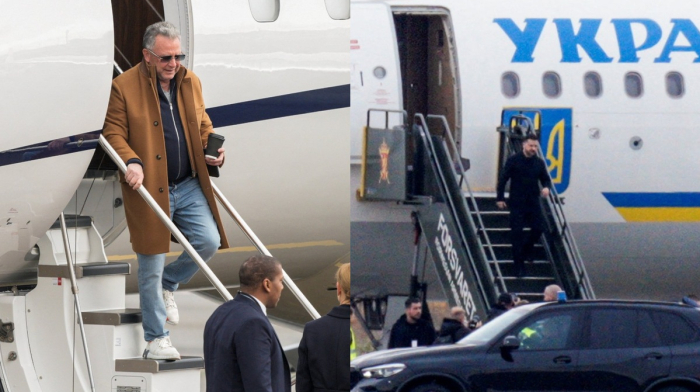
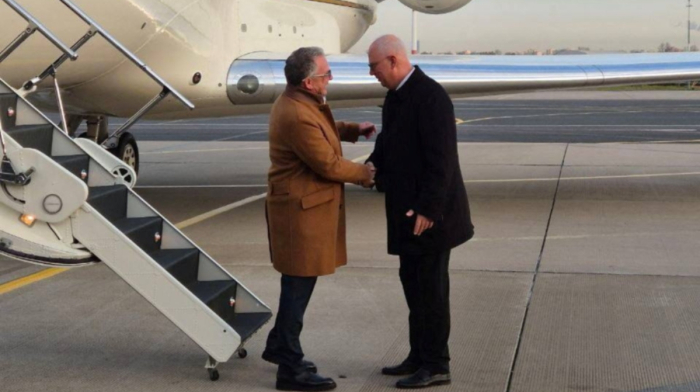
Ukrainian President Volodymyr Zelenskyy has arrived in Norway for talks about the Russia-Ukraine war. He is expected to meet with U.S. President Donald Trump's Special Envoy Steve Witkoff, who arrived in Oslo earlier. Witkoff will also meet European officials.
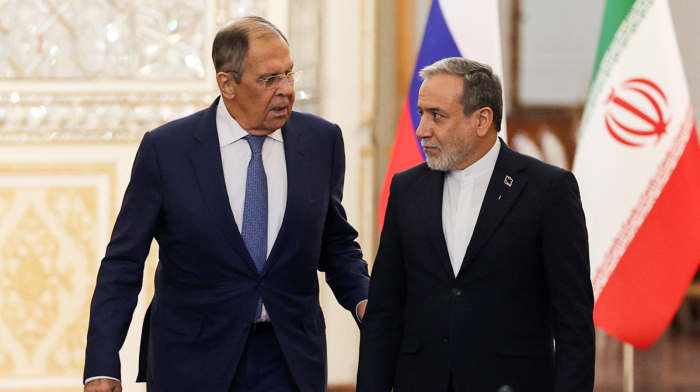
Iranian Foreign Minister Abbas Araghchi said regional issues should be resolved through diplomacy and blamed the United States for insecurity and tensions in the Strait of Hormuz, speaking at a joint news conference with Russian Foreign Minister Sergey Lavrov on Monday.
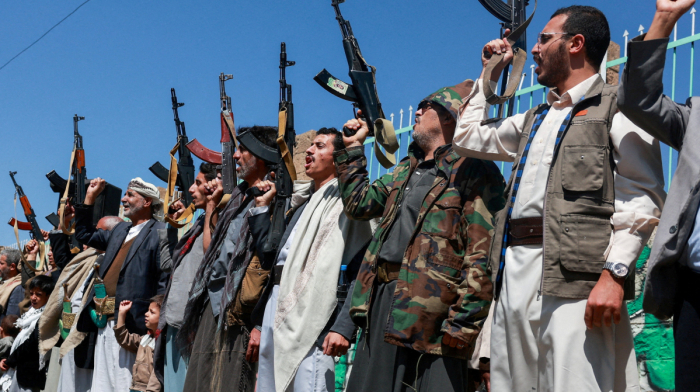
Yemen's Houthis have denied targeting the holy city of Medina on Wednesday adding that they have not conducted any military operations towards Saudi Arabia either, denying earlier comments from the Saudi-led coalition in Yemen.
U.S. envoy Steve Witkoff is meeting Russian President Vladimir Putin in St. Petersburg, with discussions focused on the war in Ukraine and the prospects for progress in ongoing diplomatic efforts.
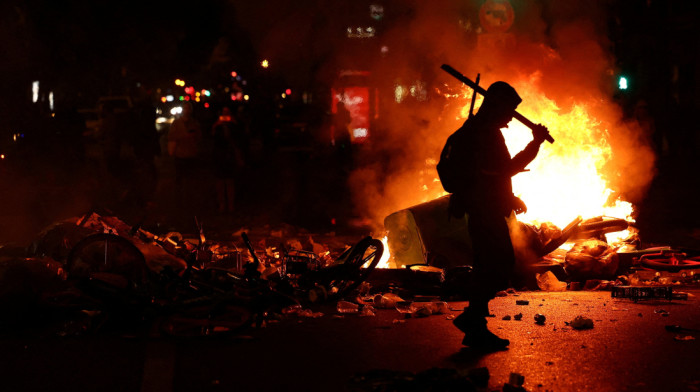
French authorities imposed local curfews in parts of Paris, Lille and Nice on Monday after a weekend of riots and looting linked to nationwide anti-government protests, as the government faced mounting criticism over security failures.
U.S. federal prosecutors have charged six people over an alleged scheme that arranged hundreds of fraudulent marriages in Massachusetts to help immigrants living in the country illegally obtain green cards and, potentially, citizenship.
Türkiye, Qatar, Pakistan and Indonesia have signed a new defence industry agreement in Doha, bringing existing military projects under a shared framework as Turkish defence exports reach record highs.
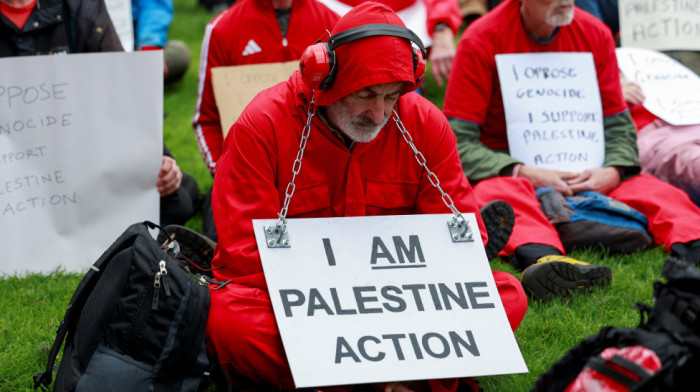
British PM Andy Burnham has rejected calls to reconsider the UK’s ban on Palestine Action, insisting that the decision was based on evidence and had undergone parliamentary scrutiny. He said on Wednesday that he would not comment further while legal proceedings remain ongoing.
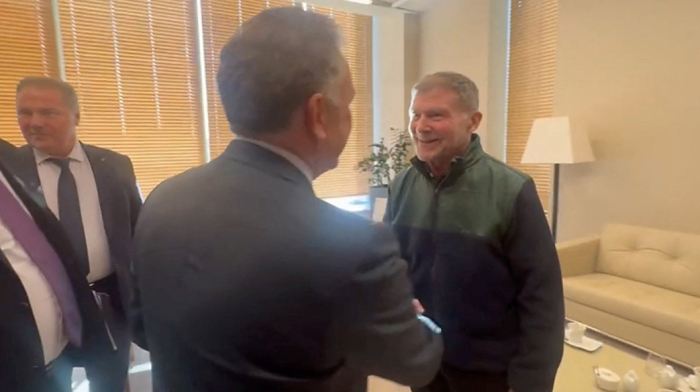
Russia has released Stephen Hubbard, a 74-year-old retired American teacher from Michigan held for more than four years after being detained by Russian forces in eastern Ukraine.
U.S. envoy Steve Witkoff is meeting Russian President Vladimir Putin in St. Petersburg, with discussions focused on the war in Ukraine and the prospects for progress in ongoing diplomatic efforts.
Download the AnewZ app
You can download the AnewZ application from Play Store and the App Store.












What is your opinion on this topic?
Leave the first comment