Global political and business leaders opened the World Economic Forum’s (WEF) 56th Annual Meeting. Dubbed "A Spirit of Dialogue," the event will see geopolitical tensions, economic uncertainty and the rapid rise of frontier technologies discussed.
Nearly 3,000 participants from governments, companies and civil society groups are attending the four-day event, which organisers say aims to provide a neutral platform for dialogue at a time of strained international cooperation.
The WEF's leaders say that given the current uncertainty, gathering together to map out a way forward in business and politics is crucial.
But U.S. President Donald Trump's recent Greenland takeover threats, Ukraine peace talks and looming tariffs could disrupt the agenda.
French President Emmanuel Macron, who has been pushing for a strong European response to Trump's tariffs threat, is expected to make a speech on Tuesday, as announced by the Elysée Palace.
Macron's speech will focus on outlining his vision on key economic and geopolitical challenges and highlight the priorities of France’s G7 presidency.
Artificial intelligence (AI) and other advanced technologies are also expected to dominate discussions, with Nvidia CEO Jensen Huang among the most prominent attendees.
Delegations from Europe, Asia and Latin America are due to outline national strategies for innovation, competitiveness and long-term growth.
This year’s meeting marks a leadership shift for the Forum, with new co-chairs taking over after founder Klaus Schwab stepped back from his role.
Organisers say the agenda focuses on how countries can operate in an increasingly contested landscape marked by shifting alliances, slow trade and persistent inflation. Labour disruptions driven by technology, pressure on public finances and climate-related risks are also central topics.
Away from the main programme, sideline meetings will draw senior officials and executives seeking clarity on policy directions and investment conditions.
Greenland tensions
European leaders are expected to raise concerns with U.S. President Donald Trump over Washington’s renewed interest in Greenland. The issue followed urgent talks in Brussels on Sunday (18 January), where European Union governments discussed potential responses to U.S. tariff threats, including €93 billion in retaliatory measures or the possible use of the bloc’s Anti-Coercion Instrument.
European Union officials say the matter is likely to be addressed in bilateral discussions at the Swiss resort.
However, according to Bloomberg reporting, Danish government officials have decided not to attend the World Economic Forum due to escalating tensions over Greenland.
“Danish representatives were invited this year, and any decisions regarding attendance are made by the government. We can confirm that the Danish government will not be represented at Davos this week,” the forum organizers said in a statement.
'Board of Peace' for Gaza
Diplomatic delegations are also watching for an expected announcement on the proposed Gaza “Board of Peace” and are expected to hold private discussions on the potential structure and scope of the plan. The initiative gained attention after Kazakhstan said it had agreed to join as a founding member.
Ukraine and Russia
Ukraine’s presence on the sidelines is set to centre on continued talks with U.S. officials over elements of a possible peace framework with Russia. Senior Ukrainian negotiators will build on discussions launched earlier in Washington, focusing on security guarantees, reconstruction priorities and energy resilience, while Ukraine House Davos 2026 will host parallel meetings aimed at broadening international support for long-term recovery.
Arrivals at Davos
Among the world leaders to arrive at the WEF are Nigerian Vice‑President Kashim Shettima.
U.S. President Donald Trump is expected to address the forum on Wednesday, leading a record‑large U.S. delegation to the event, which organisers say will see almost 400 top political leaders, including over 60 heads of state and government, converge in Davos over the coming days.
According to AnewZ’s Orkhan Amashov reporting from Davos, many analysts are already predicting some form of a J.D. Vance effect, reminiscent of the speech delivered a year ago at the Munich Security Conference, where the U.S. Vice President criticised European civilisation and U.S. allies in Europe. Observers suggest Trump could deliver a Davos speech in a similar vein.
Amashov also noted that the forum is highly representative, with about 3,000 participants from 100 countries, including roughly 400 top political leaders, among whom 65 are heads of state and government. They will spend the four-day forum discussing the world’s most pressing issues.
In addition, around 100 entrepreneurs, including leaders of major tech businesses, are attending.
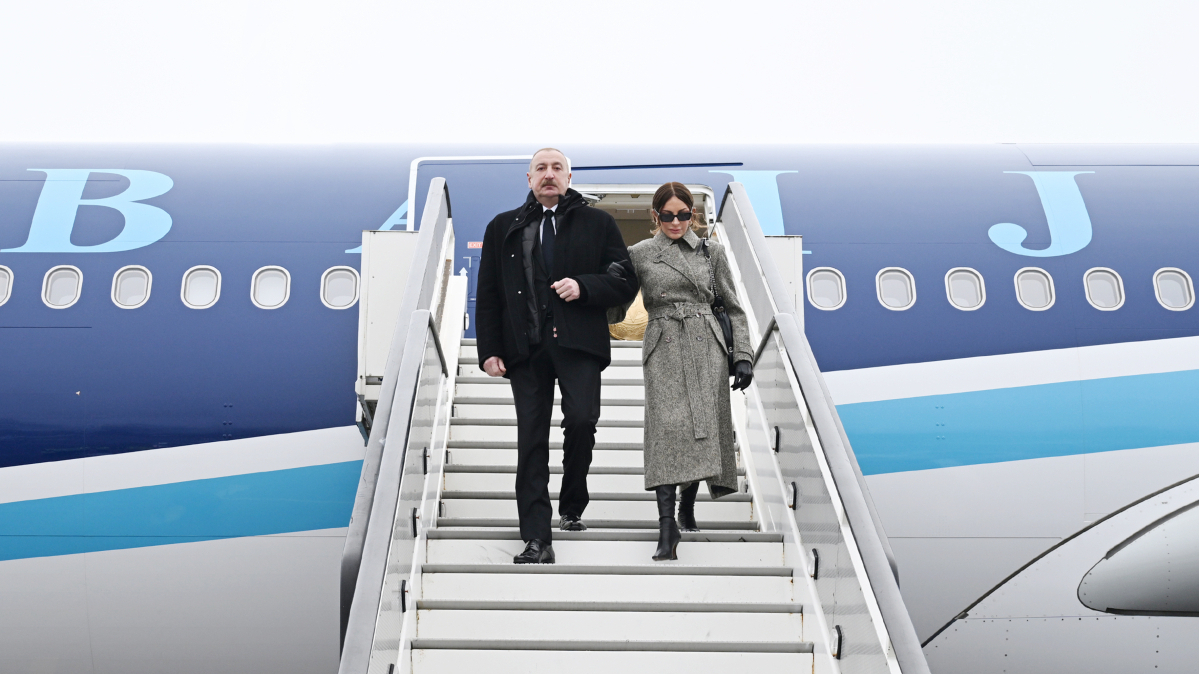
Azerbaijan’s President Ilham Aliyev and First Lady Mehriban Aliyeva have also arrived in Switzerland.
President Aliyev has already held several meetings with global CEOs and entrepreneurs at their request, media report.
Other confirmed attendees include French President Emmanuel Macron, European Commission President Ursula von der Leyen, German Chancellor Friedrich Merz, and Ukrainian President Volodymyr Zelenskyy.
Spain’s Prime Minister Pedro Sánchez has cancelled his planned trip to the Davos summit after a high-speed train crash killed at least 39 people. He announced three days of national mourning and vowed that an investigation would uncover the cause of the collision.
Billionaire wealth and global inequality
A new Oxfam report released to coincide with the Davos meeting said billionaire wealth rose 16% last year to $18.3 trillion, the fastest pace in five years and an increase that has widened economic and political divides.
The group said soaring valuations in AI companies and policy choices under Trump helped drive the surge, which has pushed the global billionaire population above 3,000.
Oxfam warned that extreme concentration of wealth is eroding democratic stability, noting research indicating billionaires are thousands of times more likely than ordinary citizens to hold political office.
The charity urged governments to adopt national inequality reduction plans, raise taxes on extreme wealth and strengthen limits on political influence as global poverty and food insecurity intensify.










What is your opinion on this topic?
Leave the first comment