Protests broke out in Pakistan and Iraq on Sunday after Iranian state media confirmed that Supreme Leader Ayatollah Ali Khamenei had been killed in joint U.S.–Israeli strikes. At least nine people were reported dead in clashes near the U.S. consulate in Karachi.
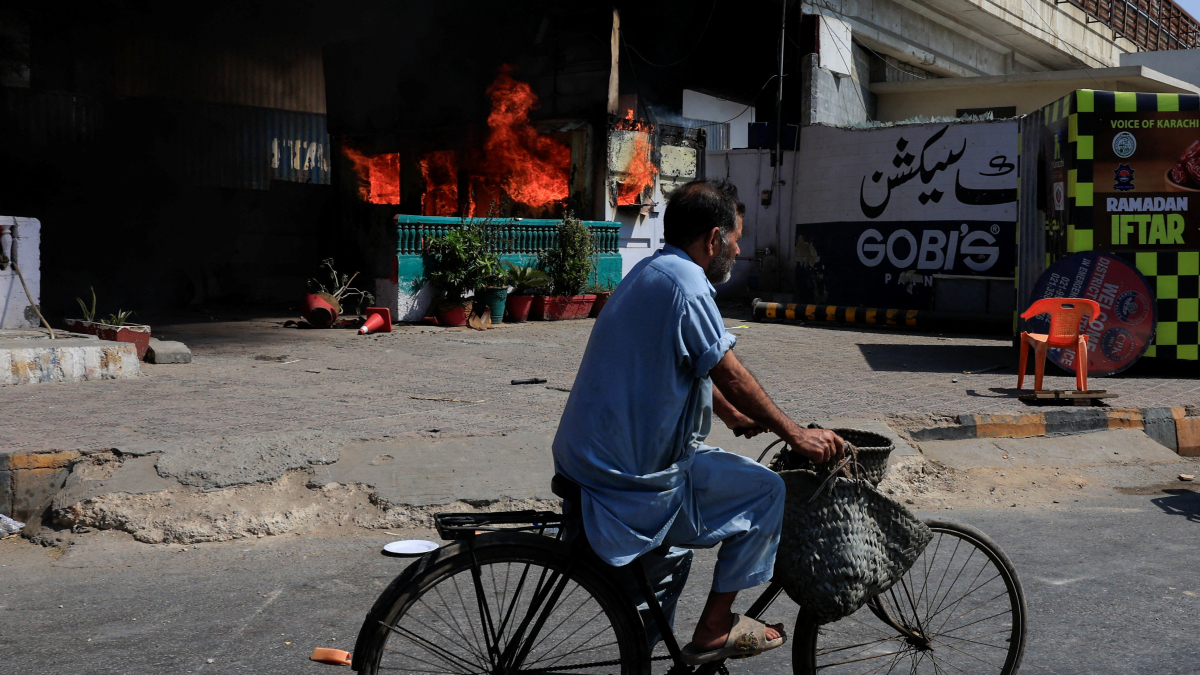
In Pakistan’s southern city of Karachi, hundreds of demonstrators gathered outside the U.S. consulate on Mai Kolachi Road in the early hours of Sunday. Police said protesters breached the outer wall of the compound and set a vehicle on fire near the main gate.
Security forces fired tear gas and gunfire was heard in surrounding streets as authorities moved to disperse the crowd.
Police surgeon Dr Summaiya Syed said nine bodies had been brought to Karachi’s Civil Hospital following the clashes. Earlier accounts from local welfare officials cited slightly different casualty figures. Authorities did not immediately provide a consolidated breakdown of the causes of death.
Reuters reported that gunfire and tear gas were used around the compound. The U.S. Consulate in Karachi and the U.S. Embassy in Islamabad did not immediately respond to requests for comment.
Demonstrations spread across Pakistan
Large demonstrations were also reported elsewhere in Pakistan.
In the northern region of Gilgit-Baltistan, protesters set fire to a United Nations office building in Skardu, according to local government spokesperson Shabbir Mir, who said no casualties were reported there.
In Lahore, hundreds gathered outside the U.S. consulate, where some protesters attempted to approach security gates before being stopped by police. Authorities said the situation was brought under control without significant violence.
In Islamabad, police blocked roads leading to the diplomatic enclave, which houses foreign embassies and parliament, as a precaution.
Protesters gather in Baghdad
In Iraq, pro-Iran demonstrators gathered near the Green Zone in Baghdad, where the U.S. Embassy is located. There were no immediate reports of casualties in the Iraqi capital.
Pakistan and Iraq both have large Shiite Muslim populations, and the demonstrations followed news of Khamenei’s death.
Authorities in both countries have not released comprehensive official tallies of injuries or property damage. Independent verification of all details remains limited as events continue to unfold.
State authorities declared 40 days of national mourning. However, videos emerging despite widespread communications disruptions showed scenes of both grief and celebration.
In several neighbourhoods of Tehran and other major cities, groups gathered late into the night, with some chanting for freedom, honking car horns and setting off fireworks. In other areas, supporters of the late leader expressed sorrow on social media and at smaller religious gatherings.
Telecommunications outages across much of the country made it difficult to assess public sentiment fully. Footage verified by international media outlets showed crowds dancing in parts of Tehran, Shiraz, Isfahan and other western cities, while others described a subdued atmosphere amid uncertainty about what comes next.
With protests spreading beyond Iran’s borders and tensions escalating across the region, the situation remains fluid.












What is your opinion on this topic?
Leave the first comment