U.S. President Donald Trump said Washington would “work something out” with NATO allies on Tuesday, defending his approach to the alliance while renewing his push for U.S. control of Greenland amid rising tensions with Europe.
Appearing alongside White House press secretary Karoline Leavitt as a ‘special guest’, Trump marked the one-year anniversary of his second term by claiming his administration had achieved more than any previous government, particularly on defence and foreign policy.
Trump said he had forced NATO members to significantly increase defence spending, arguing the alliance had failed to meet its commitments before his leadership.
"Nobody’s done more for NATO than I have," Trump said. "Getting them to go up to 5% of GDP was something that nobody thought was possible. They weren’t paying at two per cent. Now they’re paying."
He said NATO countries were purchasing large amounts of military equipment, much of it from the United States, adding that how those weapons were later used was a decision for individual governments.
"They’re buying a lot of things from us and they’re giving them, I guess, to Ukraine. That’s up to them," he said.
Trump questioned whether NATO allies would come to Washington’s defence if the United States were attacked, while insisting the alliance had become stronger under his leadership.
"I know we’ll come to their rescue, but I just really do question whether or not they’ll come to ours," he said, adding that without the United States, NATO was "not very strong".
Despite the criticism, Trump said talks with allies were ongoing and expressed confidence that an outcome acceptable to both sides could be reached.
"I think that we will work something out where NATO is going to be very happy and we’re going to be very happy," he said. "But we need it for security purposes."
Trump said he would not attend a proposed G7 emergency meeting in Paris, questioning French President Emmanuel Macron’s political future.
He said Macron "is not going to be there very long", despite describing him as a friend, and dismissed the idea of travelling to France after receiving a message from Macron suggesting a meeting on the margins of the World Economic Forum in Davos.
Trump on Davos meetings and Greenland
Speaking at the White House briefing, President Donald Trump said the United States has scheduled multiple meetings on Greenland during the World Economic Forum in Davos, expressing confidence that discussions would lead to a positive outcome. He said European countries were unlikely to abandon major investment commitments to the U.S. even if Washington moved ahead with Greenland-related measures, adding that allies “need that agreement very badly”.
Trump also suggested alternative tools could be used if the Supreme Court rules against his use of tariffs, saying the current approach was the “strongest” and “least complicated”. He reiterated his view that an agreement could be reached with NATO over Greenland, arguing the alliance depends heavily on U.S. leadership, while dismissing concerns that his stance could trigger a broader rupture within NATO.
Later on Tuesday evening, the White House said Trump was returning to Joint Base Andrews in Maryland to change aircraft after the crew of Air Force One identified a “minor electrical issue” shortly after takeoff for Switzerland.
Europe and transatlantic friction
The briefing came as friction continues between Washington and European allies over Trump’s insistence that the United States should acquire Greenland, a position firmly rejected by European leaders and NATO partners.
Asked about opposition from Greenlanders, Trump said he had not spoken to them directly.
"When I do, I’m sure they’ll be thrilled," he said.
Trump also suggested he was unconcerned about the impact of the dispute on NATO unity, saying "something’s going to happen that’s going to be very good for everybody".
Ahead of the briefing, Trump took to social media to argue that NATO would not exist without his leadership, saying the alliance would be in the "ash heap of history" if it were not for him. He also accused the United Kingdom of acting with what he called "great stupidity" on national security over the handing over of the Chagos Islands to Mauritius.
European leaders have rejected Trump’s claims, insisting Greenland’s sovereignty is not negotiable.
Tariffs, Supreme Court case and Harvard
Turning to domestic issues, Trump said his administration may be close to reaching an agreement with Harvard University, as part of broader efforts targeting U.S. universities over campus protests and institutional policies.
"I hear we have a deal, but who the hell knows with them,"Trump said, criticising Harvard’s leadership and accusing the university of tolerating antisemitism.
Trump also addressed an ongoing Supreme Court of the United States case that could have major financial consequences for the government, as justices consider the legality of tariffs imposed under emergency powers.
"I don’t know what the Supreme Court’s gonna do," Trump said, warning that an adverse ruling could force Washington to repay hundreds of billions of dollars collected through tariffs.
"We’ve taken in hundreds of billions of dollars, and if we lose that case, it’s possible we’re going to have to do the best we can in paying it back," he said. "I don’t know how that’s going to be done very easily without hurting a lot of people."
Trump argued the tariffs were lawful and directly linked to national security.
"We have tremendous national security because of tariffs," he said.
Iran, Venezuela and Middle East remarks
On Iran, Trump said U.S. pressure had led Tehran to halt planned executions, but he declined to rule out military action.
Trump said Iranian authorities had intended to hang 837 people but decided against it after the U.S. signalled it would be a "very bad day" if the executions went ahead. He said the mass hangings had been taken "off the table", while adding that future developments remained uncertain.
"Is the military option off the table? No," Trump said. "I can’t tell you what’s going to happen in the future." Trump also spoke positively about Venezuela, saying cooperation with Caracas was improving and helping lower oil prices.
"We’ve done very well with Venezuela," he said, adding that the United States had imported large volumes of Venezuelan oil. He praised Venezuelan opposition figure María Corina Machado, suggesting she could play a role in future engagement with Washington.
"I felt so strongly against Venezuela, now I’m loving Venezuela," Trump said, calling Machado "an unbelievably nice woman". The comments followed Machado’s recent visit to the White House, where she presented Trump with her Nobel Peace Prize medal.
Trump also said he had spoken directly with the Syrian president about prisons holding what he described as some of the world’s most dangerous militants, saying the leader was "strong" and "tough".
Azerbaijan, Armenia and Russia
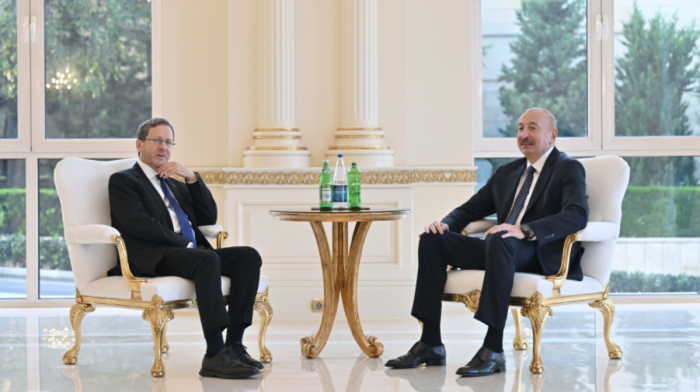
Turning to the South Caucasus, Trump claimed credit for helping to resolve the long-running conflict between Azerbaijan and Armenia, saying Vladimir Putin had expressed surprise at the outcome.
"Putin told me, I cannot believe you settled that war," Trump said, adding that Russia had worked on the issue for a decade without success.
Trump described hosting the leaders of both countries at the Oval Office, saying talks that began with sharp accusations shifted tone and ended on a conciliatory note.
Wider diplomatic context
Earlier on Tuesday, U.S. House Speaker Mike Johnson addressed the British parliament, becoming the first sitting House speaker to do so. Johnson said his visit was intended to reassure allies and ease tensions.
"I told the president that I felt that my mission here today was to encourage our friends and help to calm the waters," Johnson told lawmakers in London.
The White House said the briefing was also intended to highlight the administration’s record in office, but Trump faced repeated questions on NATO, Greenland and relations with European partners as the transatlantic rift continues to widen.
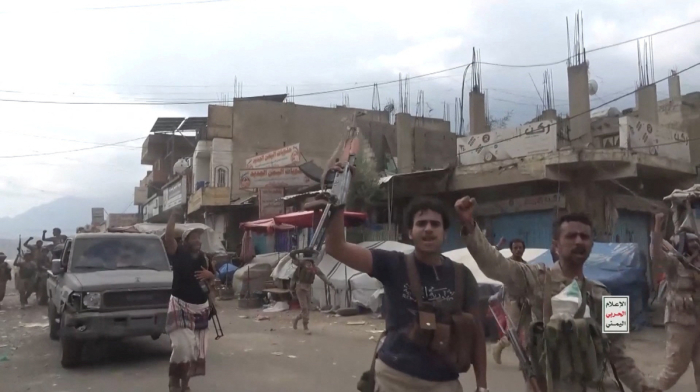
Yemen’s Houthis have claimed responsibility for the recent drone and missile strikes on Saudi Aramco facilities in Dhahran and Riyadh and at King Khalid International Airport in Saudi Arabia, vowing to carry out more attacks in the coming days.
The Saudi-led coalition in Yemen said late Monday that it intercepted and destroyed two ballistic missiles launched by the Houthi group toward Khamis Mushait in southwestern Saudi Arabia.
Thousands of young Georgians leave the country each year in search of better economic opportunities, with many moving west.As questions grow over Georgia’s European path, AnewZ spoke to people who have emigrated about what it would take for them to return.
Ukrainian President Volodymyr Zelenskyy says Russia hit at least six energy targets in deadly strikes across Ukraine, showing Moscow is unwilling to accept the energy ceasefire announced by U.S. President Donald Trump.
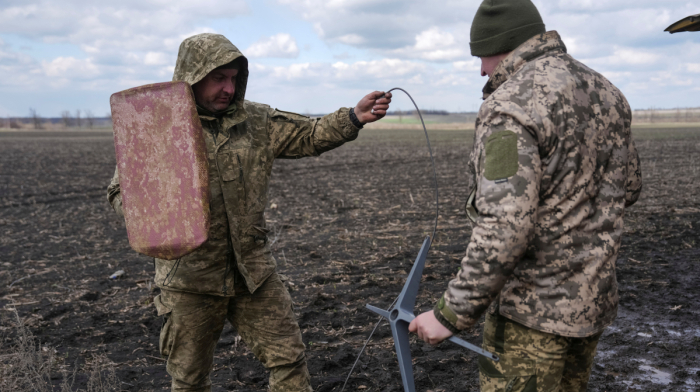
Ukraine's soldiers have had their access to Starlink satellite internet restricted. Kyiv's troops use the terminals, made by Elon Musk's SpaceX, to pilot drones. A source in Ukraine's Defence Ministry said the restrictions would make it harder for Kyiv's army to down Russian drones.
Ukraine's soldiers have had their access to Starlink satellite internet restricted. Kyiv's troops use the terminals, made by Elon Musk's SpaceX, to pilot drones. A source in Ukraine's Defence Ministry said the restrictions would make it harder for Kyiv's army to down Russian drones.
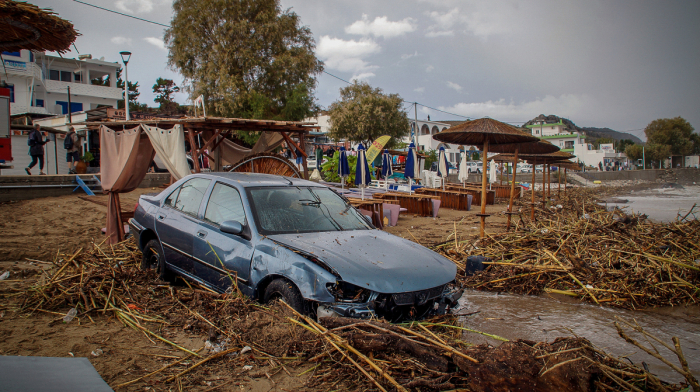
A 62-year-old man died on Wednesday after floodwaters swept his car into the sea on the Greek island of Rhodes, as torrential rain flooded roads, stranded vehicles and disrupted transport across the island.
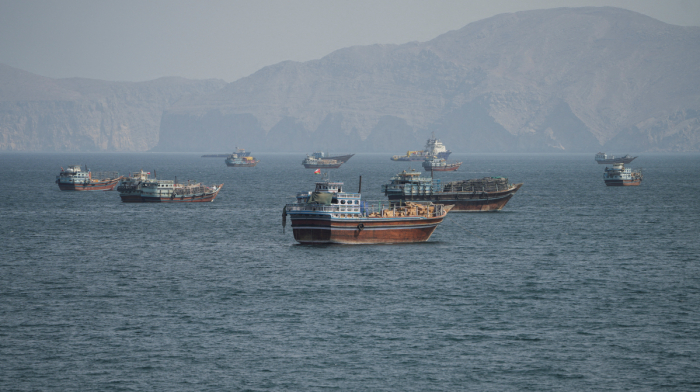
A failure by the U.S. and Iran to reach an agreement on a UN-backed fertiliser shipping plan for the Strait of Hormuz within weeks could trigger a food security crisis in parts of Asia and Africa, a senior UN official has warned.
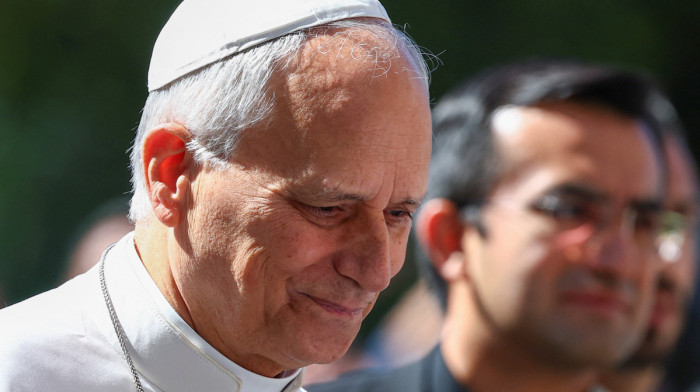
Pope Leo has been diagnosed with lung adenocarcinoma, the most common type of lung cancer, after surgeons removed the lower lobe of his right lung. The Vatican says the tumour was detected during a routine health check, but its stage and whether it has spread remain unknown.
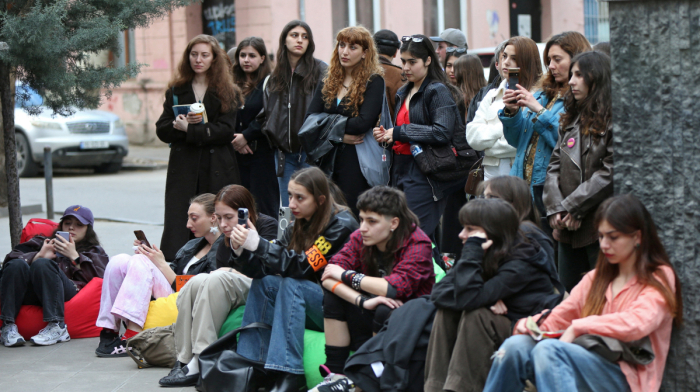
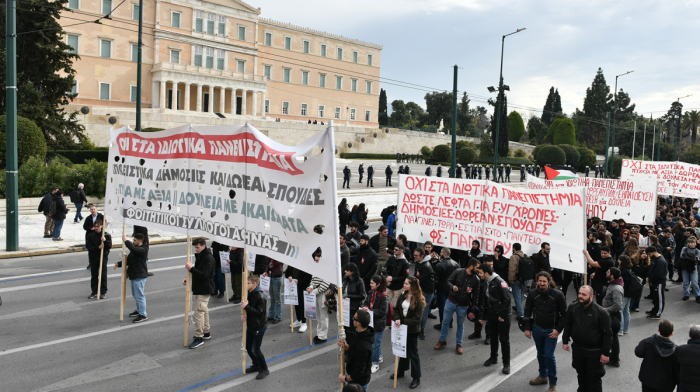
Greek students braved heavy rain to pitch tents outside parliament in Athens on Tuesday, demanding affordable housing and more education funding as rising living costs put university places beyond the reach of some students.
Download the AnewZ app
You can download the AnewZ application from Play Store and the App Store.










What is your opinion on this topic?
Leave the first comment