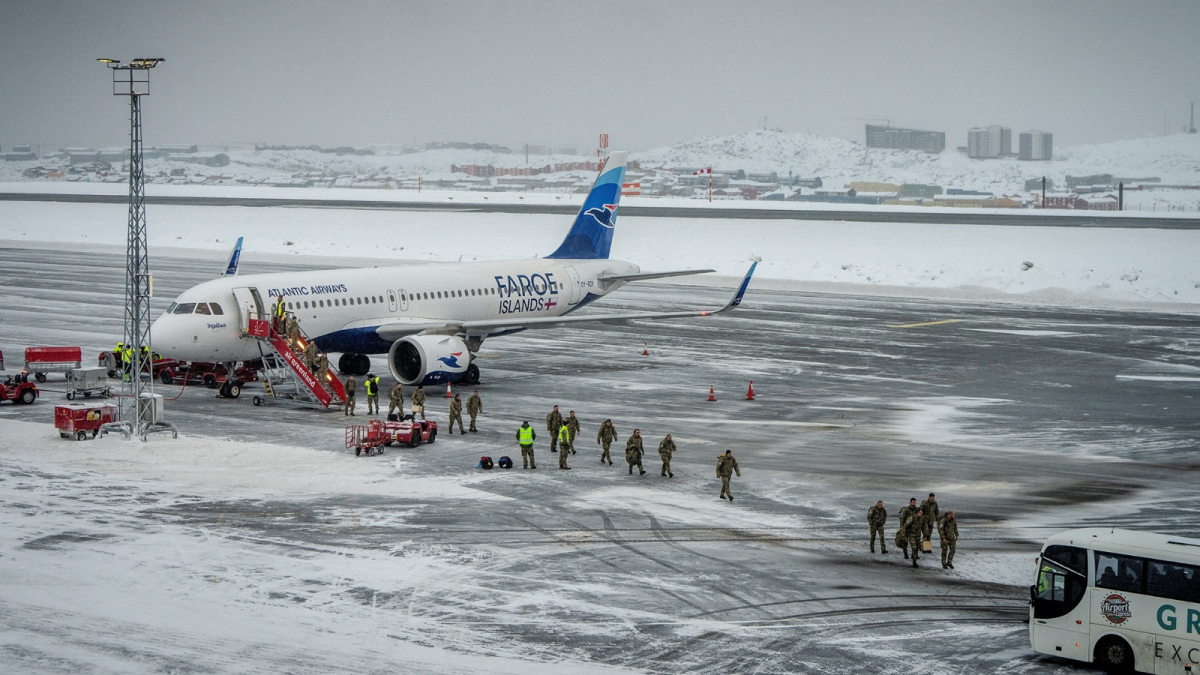
The United States’ renewed push over Greenland is exposing deeper strains in transatlantic relations, as analysts warn Washington’s approach reflects long-standing unilateral tendencies that could test NATO unity and Europe’s influence.
Speaking to AnewZ’s Inside Politics programme, Senior Editor at Issue Insight, John Kavulich said Washington’s approach reflects decades of selective interpretation of international law by major powers.
“It’s not new; it’s a continuation,” he said, arguing that states have long “massaged” legal frameworks to suit their own interests when challenged. In that sense, Kavulich noted, the current standoff fits a familiar pattern rather than a sudden shift.
Trump, he added, has simply “turbocharged” this behaviour, showing little concern for reputational costs so long as U.S. economic strength, military power and market dominance remain decisive tools of leverage.
From this perspective, analysts say, pressure tactics such as tariffs, sanctions and visa restrictions are seen in Washington as effective instruments rather than liabilities.
The implications, however, extend well beyond diplomacy. Ivani Vassoler, a professor at State University, warned that the Greenland dispute could have serious consequences for NATO cohesion at a sensitive moment for the alliance.
“Denmark is a NATO member, and many European allies are deeply uncomfortable with what they perceive as a threat coming from the United States itself,” she said.
According to Vassoler, such unease risks undermining collective defence priorities and could spill over into financial markets, particularly as uncertainty grows over how far the dispute might escalate.
She also pointed to signs of domestic unease in Washington, noting that several Republican senators have voiced opposition to any notion of forcibly taking control of Greenland.
With President Trump expected to raise the issue during his visit to Europe for the World Economic Forum in Davos, analysts say the episode may become a broader test of how far U.S. power can stretch within the transatlantic system before resistance hardens, both among allies abroad and within the United States itself.













What is your opinion on this topic?
Leave the first comment