In a move reinforcing the "Fortress America" doctrine that has rattled global markets, the United States plans to reduce personnel within critical NATO command centres.
The Pentagon has reportedly initiated a quiet withdrawal of personnel from critical transatlantic command structures, stripping staff from intelligence and special operations units just as President Donald Trump escalates his territorial dispute with Denmark and prepares to address the World Economic Forum in Davos.
Three sources familiar with the decision confirmed that the United States intends to eliminate approximately 200 positions from key NATO entities. The move, communicated to select European capitals this week, is likely to be interpreted as a concrete step toward the "dormant NATO" policy long feared by Brussels, transforming diplomatic rhetoric into operational reality.
Under the new directive, the U.S. will cease to backfill positions as personnel rotate out, effectively halving the American presence at specific nerve centres. Affected bodies are said to include the UK-based NATO Intelligence Fusion Centre and the Allied Special Operations Forces Command in Brussels.
Significantly, the Portugal-based STRIKFORNATO, which oversees complex maritime operations, is also expected to see reductions. Sources indicated that while the specific operational rationale remains classified, the drawdown aligns with the Trump administration’s recently published national security document, which prioritises military resource consolidation within the Western Hemisphere.
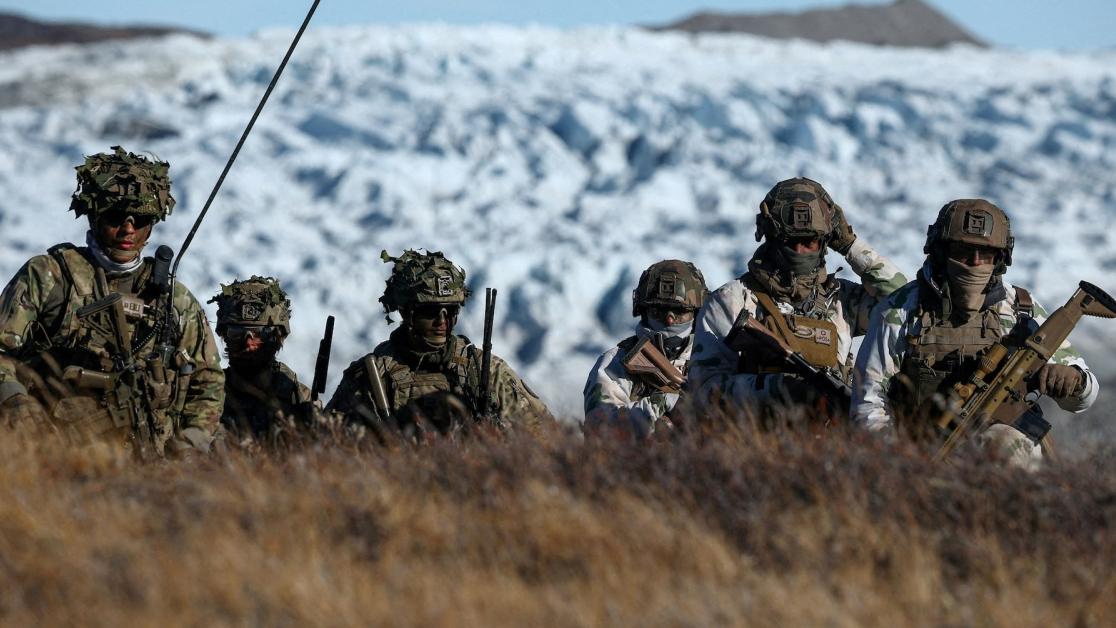
Reductions in staffing, though numerically small relative to the 80,000 U.S. troops stationed across the continent, carry immense symbolic weight. The drawdown lands as the 77-year-old alliance faces perhaps its most severe internal crisis.
The Washington Post first reported the decision.
President Trump has revived his campaign to acquire Greenland, an autonomous territory of Denmark, issuing ultimatums that have enraged Copenhagen and the wider European Union. Over the weekend, the White House threatened to impose punitive tariffs on NATO members starting 1 February, citing their support for Danish sovereignty as the catalyst.
Adding to the volatility, President Trump took to social media on Tuesday morning before his scheduled flight to Davos in Switzerland. He reposted a message explicitly identifying NATO as a threat to the United States, dismissing Russia and China as mere "boogeymen".
Capabilities facing erosion
European officials are scrambling to assess the operational impact of the cuts. Roughly 400 U.S. personnel are currently stationed within the affected entities; the new policy will reduce this number by nearly 50%.
Pentagon officials had previously warned diplomats in December that Europe would need to assume the majority of NATO’s conventional defence capabilities - ranging from intelligence gathering to missile defence - by 2027.
European leaders have dismissed this timeline as logistically impossible.
Official response remains muted
NATO authorities attempted to downplay the rift when approached for comment. "NATO and U.S. authorities are in close contact about our overall posture – to ensure NATO retains our robust capacity to deter and defend," an alliance official stated, noting that overall U.S. troop numbers in Europe remain higher than in previous decades.
However, the White House and the Pentagon declined to respond to requests for clarification. The silence from Washington serves only to amplify anxiety in European capitals, where retaliatory tariffs against the U.S. are now being actively weighed, threatening to turn a security crisis into a transatlantic trade war.















What is your opinion on this topic?
Leave the first comment