U.S. and Iran exchange threats - Tuesday, 10 March
Tensions in the region remained high on Tuesday (10 March), as the United States and Iran exchanged increasingly sharp warnings, including thr...
Representatives of Azerbaijan’s civil society have sent an open letter to U.S. Vice President JD Vance, urging support for the right of return of Western Azerbaijanis displaced from Armenia, ahead of his visit to Azerbaijan on 10 February.
In the letter addressed directly to JD Vance, the representatives said a lasting regional peace must address these humanitarian claims.
“Western Azerbaijanis harbor no territorial ambitions. Their goal is not to challenge sovereignty of Armenia, but to exercise the fundamental human right to return to one's roots in peace and dignity,” the letter said.
The authors also called on the U.S. administration to advocate for the protection and restoration of Azerbaijani cultural and religious heritage sites in Armenia.
The letter welcomed the Joint Declaration signed on 8 August, 2025, in Washington, describing it as a turning point toward lasting peace, and voiced support for the vision shared by Azerbaijani President Ilham Aliyev and U.S. President Donald Trump.
“Your leadership and moral clarity can ensure that the ‘Peace of 2025’ becomes a permanent reality for every family in the Caucasus,” the statement said.
The authors highlighted Azerbaijan’s long-standing commitment to interfaith harmony, religious freedom and cultural coexistence.
“We write to you as representatives of a nation that has, for centuries, served as a bridge between civilizations. This is a land where the call to prayer and the ringing of church bells harmonise in a spirit of true coexistence.”
They described religious diversity as a pillar of social stability and pointed to Azerbaijan’s efforts to protect religious heritage both at home and abroad.
The appeal comes as U.S. Vice President prepares to visit Azerbaijan as part of a regional trip from 9 to 11 February, which also includes Armenia.
According to the U.S. Embassy in Baku, the visit marks the highest-level visit from the United States to Azerbaijan in many years and reflects a shared commitment to expanding cooperation and advancing peace and stability in the South Caucasus.

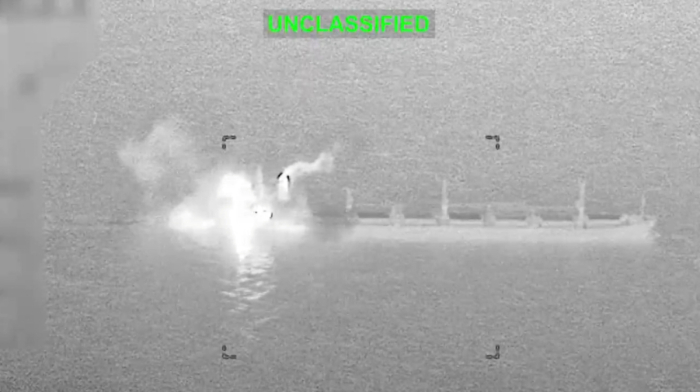
Tensions in the region remained high on Tuesday (10 March), as the United States and Iran exchanged increasingly sharp warnings, including threats over the strategic Strait of Hormuz, a critical artery for global oil supplies.
Global oil prices surpassed $119 a barrel on Monday (9 March, 2026), an almost four year high, as the Middle East conflict rumbled on.
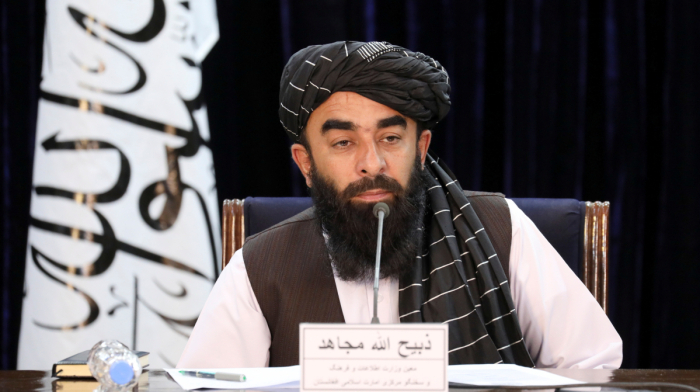
China has urged Afghanistan and Pakistan to resolve their dispute through dialogue after Chinese envoy Yue Xiaoyong met Afghan Foreign Minister Amir Khan Muttaqi, as fighting between the two neighbours entered its eleventh day.
Entry and exit across the state border between Azerbaijan and Iran for all types of cargo vehicles, including those in transit, will resume on 9 March, according to a statement by the Cabinet of Ministers of Azerbaijan.
Iran named Mojtaba Khamenei to succeed his father Ali Khamenei as supreme leader on Monday (9 March), signaling that hardliners remain firmly in charge, as the week-old U.S.-Israeli war with Iran pushed oil above $100 a barrel.
Iran and the U.S. exchanged threats on Tuesday, as U.S. Defense Secretary Pete Hegseth warned Tehran to expect the “most intense day" of attacks so far. Meanwhile, Iranian President Masoud Pezeshkian said “anyone who entertains the illusion of destroying Iran knows nothing of history."
The Strait of Hormuz has become a focal point of global concern as tensions rise following the conflict involving Iran, the United States and Israel. Tehran has threatened to block the strategic waterway, raising fears of disruption to global oil shipments and energy markets.
Reports of so-called “acid clouds” moving from Iran towards Central Asia are not supported by scientific data, national hydrometeorological services in Kazakhstan, Uzbekistan and Kyrgyzstan say, adding there is no threat to the region.
A senior delegation from the OSCE Parliamentary Assembly has been holding meetings with Georgian government officials, opposition leaders and security authorities this week, as international observers attempt to gauge the country’s political climate following last year’s contentious elections.
Turkish President Recep Tayyip Erdoğan has told Masoud Pezeshkian, his Iranian counterpart, that violations of Turkish airspace by Iran could not be justified “for any reason whatsoever.”
You can download the AnewZ application from Play Store and the App Store.
What is your opinion on this topic?
Leave the first comment