Europe heads into the Munich Security Conference, on Friday (13 February), amid deepening unease over U.S. policy, as President Donald Trump’s hard-line stance on defence, trade and territory fuels doubts about Washington’s long-term commitment to transatlantic security.
This year's meeting also comes against a backdrop of multiple conflicts, including war in Ukraine, Gaza and Sudan.
"I cannot remember a time when we had more simultaneous wars, crises, and conflicts of that dimension," Wolfgang Ischinger, the former German diplomat who heads the forum, told a gathering earlier this week.
The conference comes one year after U.S. Vice-President JD Vance delivered a speech at MSC criticising European migration and free speech policies and warning that the continent’s greatest threats may come from within.
The address shocked many in Europe and set the tone for a period in which U.S. foreign policy under President Donald Trump has challenged long-standing alliances.
Shift in U.S. messaging
Political analyst Nuno Wahnon Martins told AnewZ that U.S. Secretary of State Marco Rubio’s message at the MSC is likely to echo last year’s themes, though in a less confrontational tone than JD Vance, stressing that American taxpayers should not be expected to shoulder the cost of global security alone.
The latest U.S. National Security Strategy calls on Europe to “stand on its own feet” and take “primary responsibility for its own defence,” fuelling concerns that Washington may no longer fully underpin European security.
Meanwhile, Sir Alex Younger, former chief of the UK’s Secret Intelligence Service, MI6, told the press the UK still benefits from security, military and intelligence relationship with United States.
"You’ve got a continent of 500 million [Europe], asking a continent of 300 million [U.S.] to deal with a continent of 140 million [Russia]. It’s the wrong way around. So I believe that Europe should take more responsibility for its own defence," Younger stated.
Record attendance and key players
German Chancellor Friedrich Merz is set to open the conference, seeking to reinforce transatlantic ties while emphasising the need for a stronger European Union.
Around 70 heads of state and government and more than 140 ministers, including Chinese Foreign Minister Wang Yi, Ukrainian President Volodymyr Zelenskyy, French President Emmanuel Macron, British Prime Minister Keir Starmer and India's Foreign Minister Subrahmanyam Jaishankar are expected under tight security in Munich.
Christine Lagarde is due to be the first European Central Bank president to address the event, underlining how efforts to make Europe's economy more resilient are seen as part of the wider political stakes.
A large delegation from the U.S. Congress had also been expected to accompany Rubio but many pulled out to stay in Washington for a closely watched House vote on funding the Department of Homeland Security.
Russia is not sending a delegation and the forum withdrew invitations to Iranian officials after the Tehran government's countrywide crackdown on protests last month. Instead the son of the last Shah of Iran is expected to give a speech, while a large Iranian opposition rally is seen taking place in town.
NATO tensions and transatlantic recalibration
After threatening to annex Greenland, a move that critics warned could destabilise NATO-Trump appears to have stepped back under pressure, according to Claudia Major of the German Marshall Fund.
However, she noted that the broader structural shift in transatlantic relations remains.
Rubio’s planned visits to Hungary and Slovakia, both led by nationalist governments that frequently clash with the EU, underscore the evolving dynamics.
Major said the conference could offer European allies an opportunity to press Washington for continued support for Ukraine, particularly regarding security guarantees and ceasefire prospects.
“If there were progress on questions like these, then there would also be progress on the overarching issue: are we moving closer to a ceasefire that truly ends the war and does not plant the seeds for the next one?” she said.
'Wrecking-ball politics'
This year's Munich Security Report (a document published each February ahead of the conference) titled 'Under Destruction' warns of 'wrecking-ball politics' in the international order, identifying the U.S. as the country most prominently associated with this shift.
The report argues that Washington is challenging principles that have shaped international cooperation for decades, from multilateral institutions and rules-based trade to partnerships with democratic allies.
The report states that cautious reforms are increasingly giving way to radical restructuring aimed at dismantling existing systems. According to the MSC document, this shift has fostered “unsteady” relations with Europe, characterised by “reassurance, conditionality and coercion.”
The conference will also address the ongoing war in Ukraine, hybrid threats to Europe, and U.S. commitments in the Indo-Pacific.
U.S.-NATO relations
Despite concerns, U.S. Ambassador to NATO Matthew Whitaker rejected suggestions that Washington seeks to weaken the alliance.
“We’re trying to make NATO stronger, not to withdraw or reject NATO, but make it work like it was intended as an alliance of 32 strong and capable allies,” Whitaker said.
He also emphasised that European members must increase defence spending and meet NATO commitments.
Navigating uncertainty
As Europe grapples with uncertainty, some countries are pursuing dual-track approaches, maintaining U.S. engagement while boosting independent defence capabilities.
The MSC report highlights that while the upheaval presents risks, it may also create opportunities, including the emergence of new partnerships in trade, security and technology, potentially reducing Europe’s reliance on the United States.
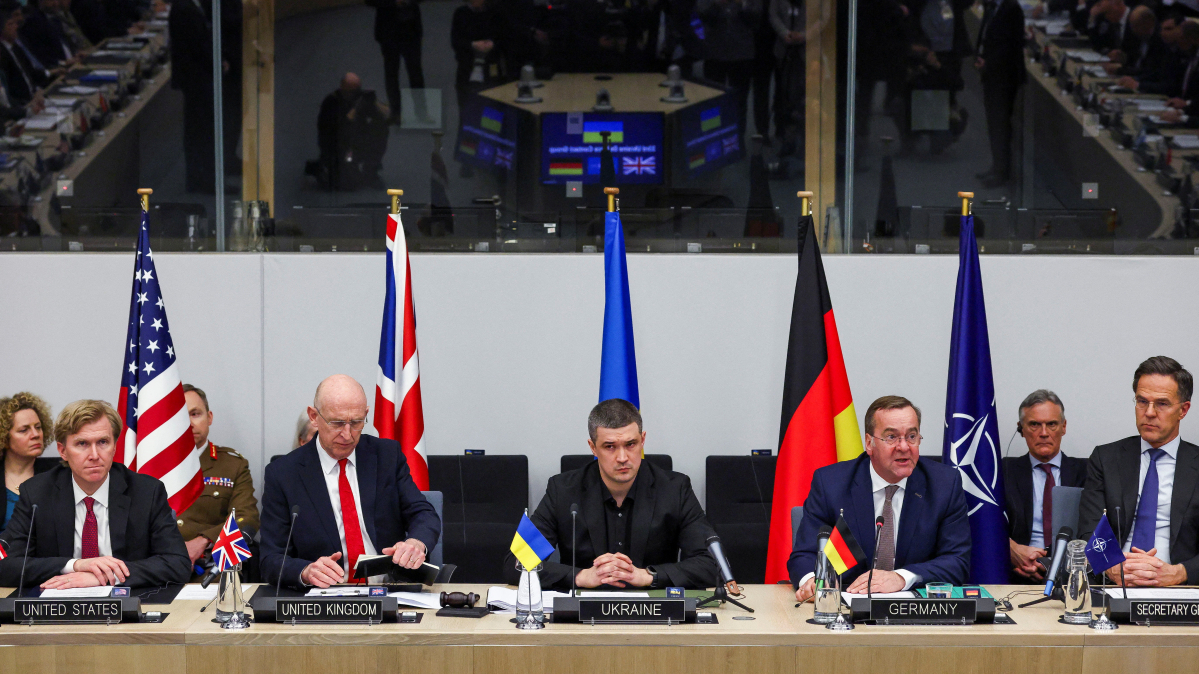
The Munich Security Conference promises to offer insight into how Europe, the U.S., and other global powers intend to navigate a rapidly shifting geopolitical environment, even as the stability of long-standing alliances remains in question.
AnewZ will provide comprehensive coverage and the latest developments from the Munich Security Conference.









What is your opinion on this topic?
Leave the first comment