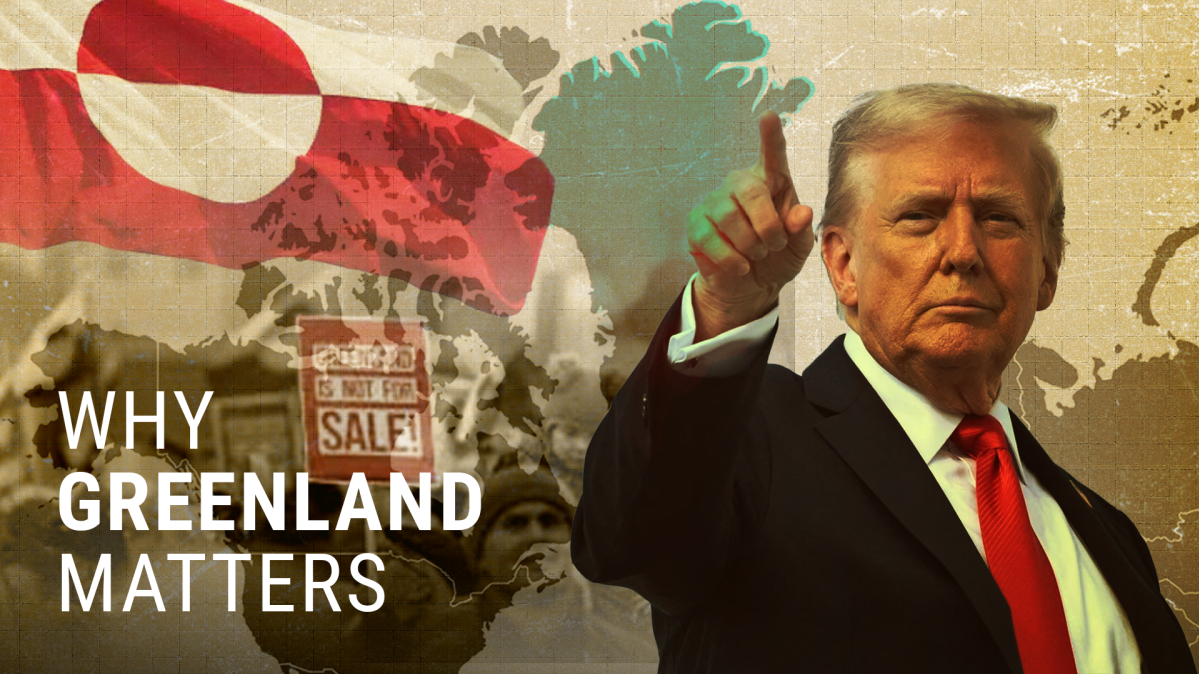
President Donald Trump has intensified his push for the United States to gain control or have a formal role in Greenland, calling the island vital for national security and asserting that Washington, D.C. must act to prevent strategic advances by Russia or China.
He's threatened tariffs on eight European countries opposing his takeover plans - Denmark, Sweden, France, Germany, the United Kingdom, Norway, the Netherlands and Finland - unless they agree to his bid to control Greenland, with duties set to rise from 10% to 25% in the absence of progress.
The U.S. President's move has provoked criticism from European leaders who consider it damaging to transatlantic ties. Denmark and Greenland have reiterated that the island is not for sale, cannot be annexed and that its political future belongs solely to Greenlanders.
There were protests in Copenhagen and Nuuk, and NATO members publicly backed Denmark’s sovereignty.
Speaking at a Plenary session of the European Parliament in Strasbourg, European Commission President Ursula von der Leyen said that U.S. threats of new tariffs over Greenland are "simply wrong."
European Council President, António Costa, echoed her concerns stating that further tariffs would damage transatlantic relations and violate existing agreements. He stressed the need for constructive engagement with the U.S., but made clear the EU would defend its interests against any form of coercion.
Costa concluded, "We cannot accept violations of international law anywhere, whether in Ukraine, Greenland, Latin America, Africa, or in Gaza."
It raises a central question: why is Greenland so strategically important to Washington that the United States is willing to risk damaging ties with its closest NATO partners?
Why Greenland is central to U.S. security and the wider Arctic competition
Greenland’s position on the shortest route between Europe and North America places it at the core of the U.S. early-warning and missile-detection system.
The 1951 defence agreement allows the United States to operate the permanent Pituffik Space Base, which provides surveillance across the Arctic and North Atlantic, including the Greenland-Iceland-Britain corridor that serves as a key transit zone for Russian submarines.
Although commercial shipping data shows limited Russian and Chinese activity close to Greenland’s coasts, broader submarine movements in Arctic waters underpin Washington’s view that the island is essential for monitoring northern approaches to the U.S. mainland.
The wider Arctic region has become more competitive as the United States, NATO allies, Russia and China expand their activities, heightening strategic interest in control of key routes and infrastructure.
Trump has argued that rival powers could strengthen their position if the U.S. does not act. “We are going to do something on Greenland whether they like it or not. Because if we don’t do it, Russia or China will take over Greenland, and we’re not going to have Russia or China as a neighbour,” he said.
Russia has rejected this characterisation, saying claims that Moscow and Beijing pose a threat to Greenland are a “myth” used to whip up hysteria.
China has also dismissed suggestions that it seeks influence in the region, saying it has “no intention of competing for influence with any country” and aims to act as a “positive, stabilising and constructive force”.
Denmark’s Foreign Minister Lars Løkke Rasmussen also rejected Trump’s claims that Copenhagen cannot protect Greenland, saying the island is not “plastered with Chinese investments” and that “there are no Chinese warships up and down along Greenland,” while adding that the U.S. is welcome to invest more on the island.
Defence stepped up
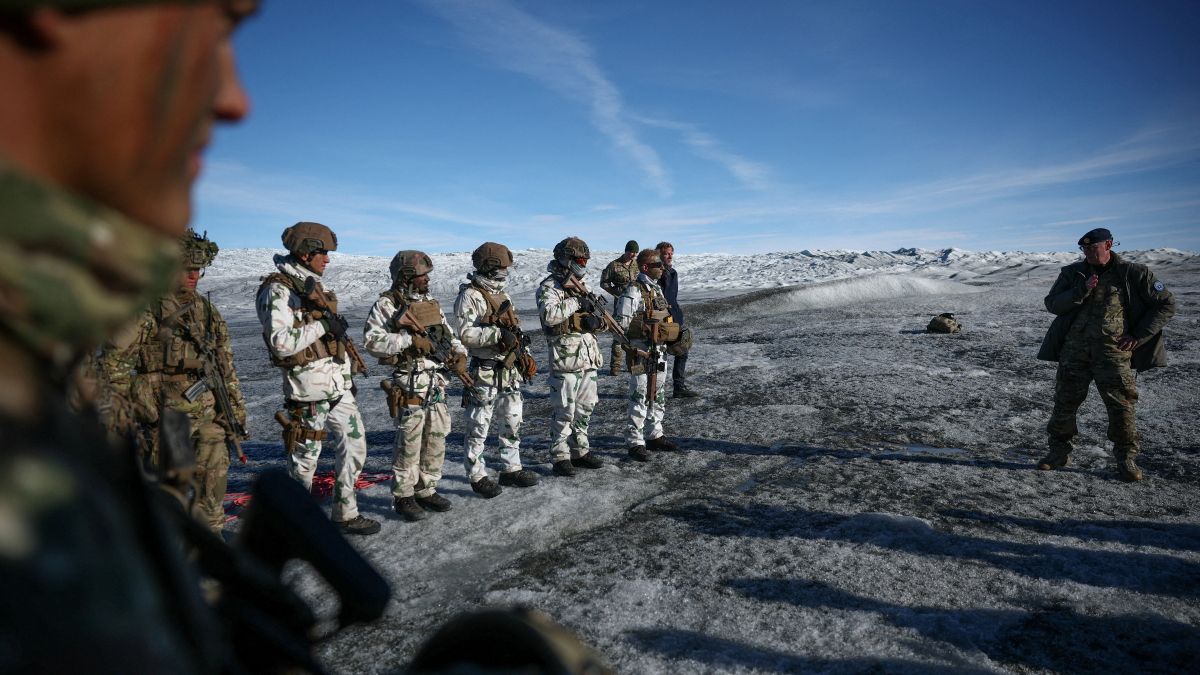
Denmark has moved to strengthen its defence posture in Greenland, offering the United States and NATO broader options for Arctic security.
Copenhagen has said it will expand its military footprint on the island and has discussed with Greenland the possibility of establishing a formal NATO mission in the Arctic, a proposal supported by the alliance's leadership.
Several European countries, including France, Germany, Norway, Sweden, the Netherlands, Finland and UK have already deployed military personnel to Greenland at Denmark’s request as a show of allied solidarity and to support plans for a more enduring NATO presence.
In response to “Denmark, Norway, Sweden, France, Germany, The United Kingdom, the Netherlands, and Finland have journeyed to Greenland, for purposes unknown,” President Trump posted on Truth Social.
Global warming: From fish to chips
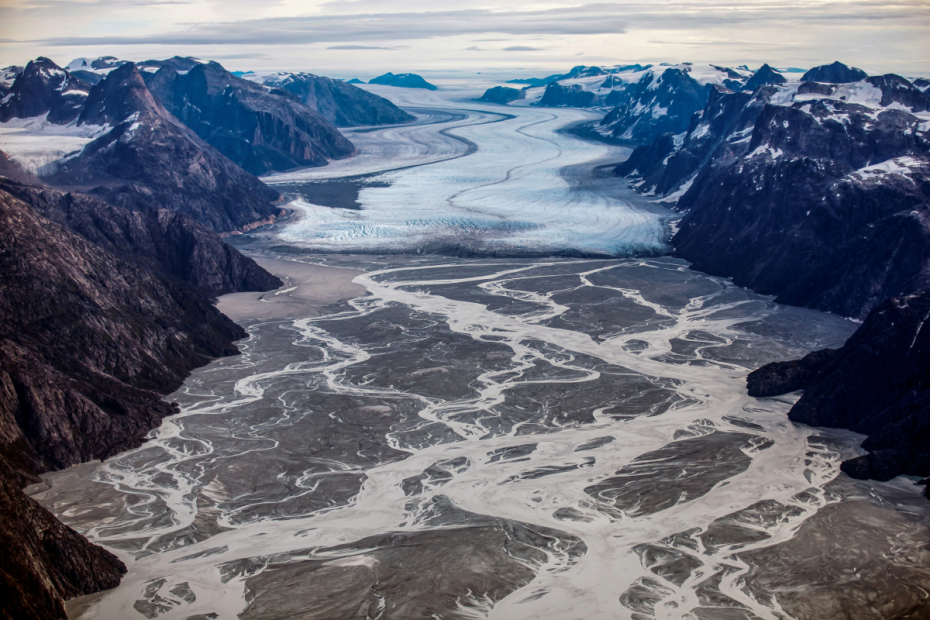
Greenland is warming faster than much of the planet, and the retreat of its ice sheet is reshaping both its economy and its long-term strategic value.
Scientists estimate the island has lost thousands of square kilometres of ice in recent decades, exposing terrain that was previously inaccessible and opening potential new Arctic shipping routes.
As melting accelerates, areas suitable for exploration and transport are expanding, increasing interest from governments and companies in what the island might yield economically once the ice retreats further.
These environmental changes are already influencing the sectors that define Greenland’s economy today - and the ones that may dominate it in the future.
Greenland's economy
For now, fishing remains the foundation of Greenland’s economy, accounting for more than 90% of exports and anchoring employment across its widely dispersed settlements.
The island’s fishing-based GDP was about $3.6 billion in 2023, according to Greenland’s central bank.
Danish subsidies, which cover roughly half of the public budget, provide essential support for healthcare, education and infrastructure, helping stabilise an economy deeply dependent on global seafood markets and vulnerable to fluctuations in fish stocks.
But as warming transforms the landscape and exposes new resources, attention is shifting to whether fishing alone can sustain Greenland in the decades ahead.
Beneath the ice lie resources that could alter Greenland’s economic profile in ways far beyond the fishing sector.
A Reuters analysis found that the island holds 25 of the 34 mineral types the European Commission classifies as critical raw materials, including rare earth elements used in defence systems, electric vehicles and components tied to AI chips.
The United States has shown increasing interest in these deposits; officials have discussed taking an equity stake in Critical Metals Corp, developer of the Tanbreez rare earth project, while companies explore supply arrangements and processing ventures aimed at securing non-Chinese sources of key minerals.
Although these deposits present long-term opportunities, major projects face regulatory, market and environmental barriers, and Greenlandic leaders warn that rapid economic reorientation could be risky without diversified, stable revenue.
Who are the Greenlanders?
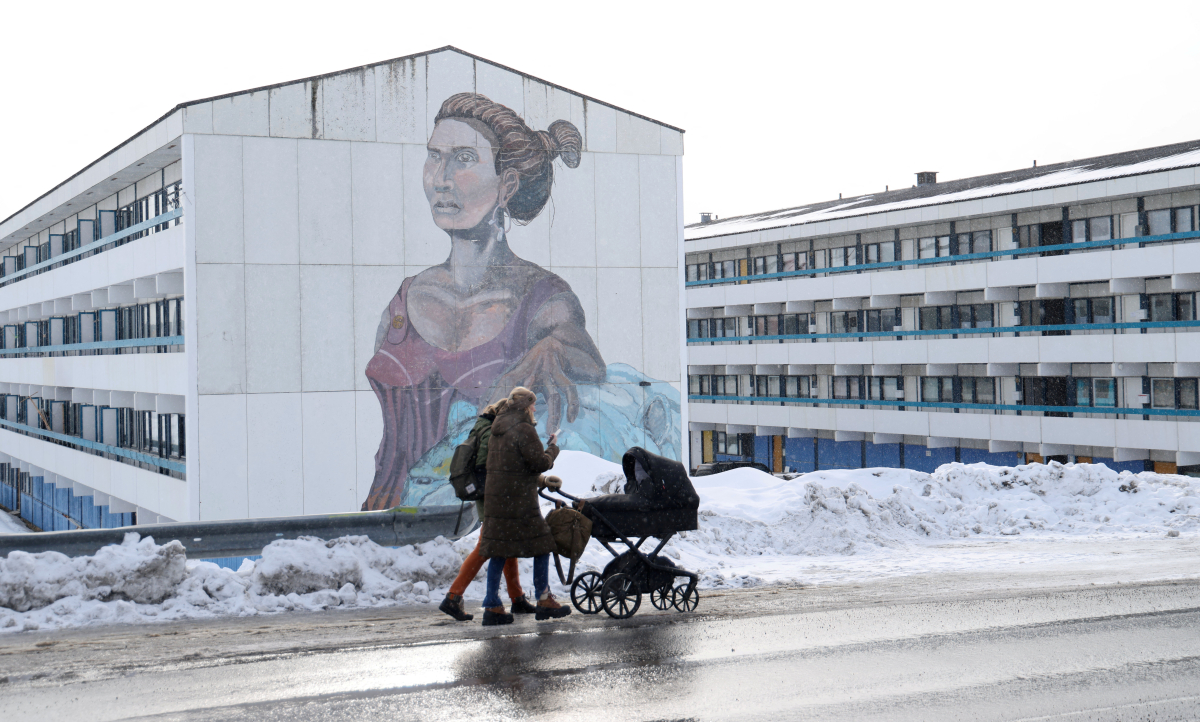
Around 90% of Greenland’s residents are Inuit, descended from groups that arrived from about 2,500 BC and adapted their culture to Arctic hunting and fishing.
Viking settlements appeared around 985 AD but disappeared by the 1400s, after which Inuit societies remained dominant.
Danish colonial rule began in 1721, and during World War II the United States assumed defence of Greenland after Germany occupied Denmark.
Historical grievances still shape relations with Copenhagen. Greenlanders were not consulted when the island became a formal Danish territory in 1953; the 1950s saw forced relocations of Inuit families, and between 1966 and 1991, thousands of Greenlandic girls and women were fitted with intrauterine devices (IUDs) without consent, a policy Denmark apologised for in 2025.
Greenland now has broad self-rule and the right to pursue independence through a referendum requiring Danish approval, but reliance on fishing and Danish subsidies tempers the debate, even as renewed U.S. interest and wider Arctic competition bring fresh attention to the island’s future.














What is your opinion on this topic?
Leave the first comment