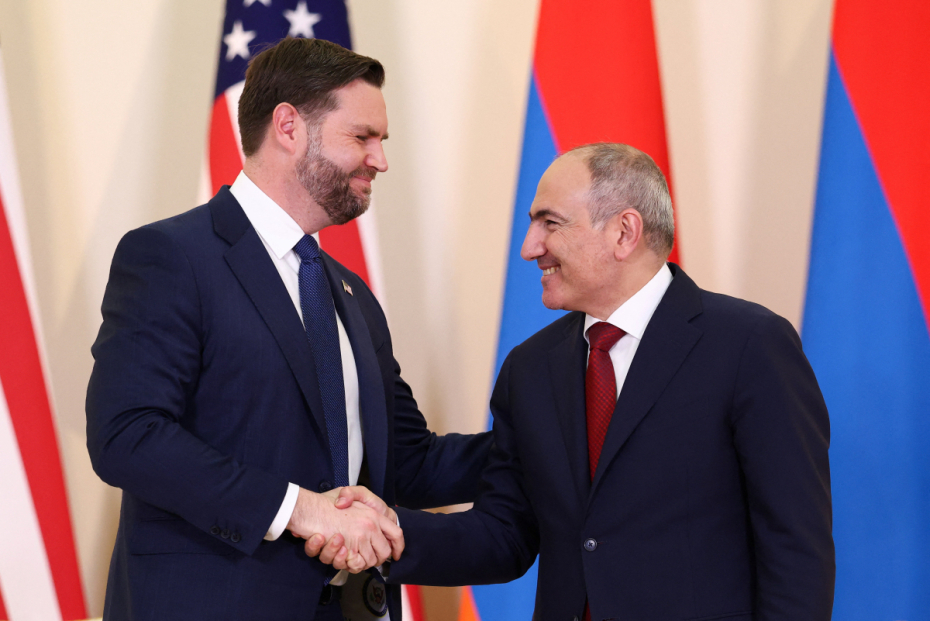
JD Vance arrived in Armenia on Monday (9 February), becoming the first sitting U.S. Vice President to visit the country, as Yerevan and Washington agreed to cooperate in the civil nuclear sector in a bid to deepen engagement in the South Caucasus.
During his two-day visit to the region, U.S. Vice President said lasting peace in the South Caucasus depends on forward-looking leadership, stressing that long-standing disputes can only be resolved through dialogue and the implementation of existing commitments.
Speaking alongside Armenian Prime Minister Nikol Pashinyan, Vance said Washington supports peaceful protesters in Iran and noted that future steps on U.S.-Iran negotiations would be determined by U.S. President Donald Trump.
“Our president has stated that we stand with peaceful protesters in Iran and support them,” Vance said.
Nuclear cooperation marks new stage in energy partnership
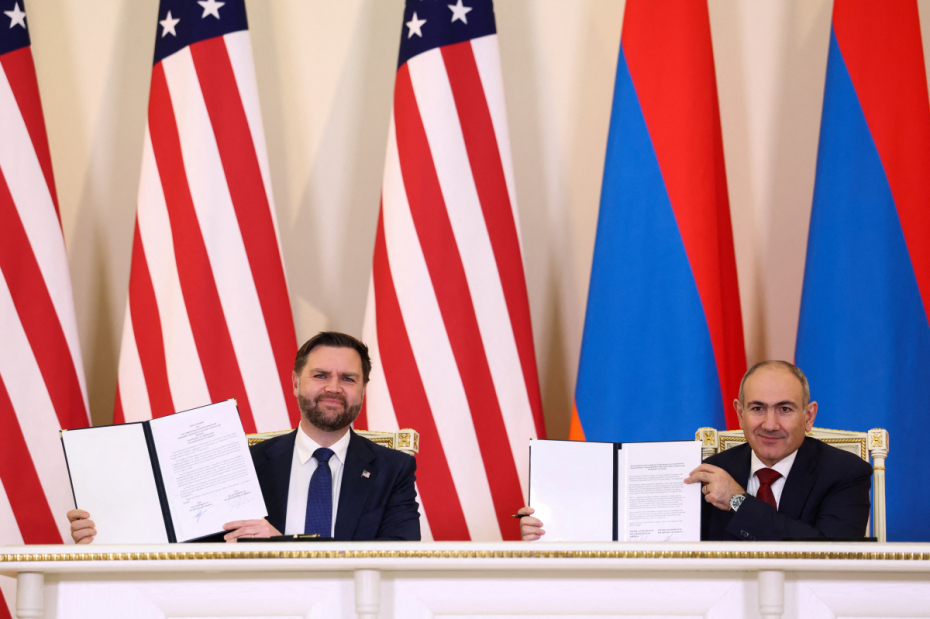
Armenia and the United States signed a joint statement on cooperation in the peaceful use of nuclear energy, completing negotiations on a so-called 123 Agreement that allows Washington to license nuclear technology and equipment to partner countries.
Vance said the agreement would enable up to $5 billion in initial U.S. exports to Armenia, with an additional $4 billion in longer-term fuel and maintenance contracts.
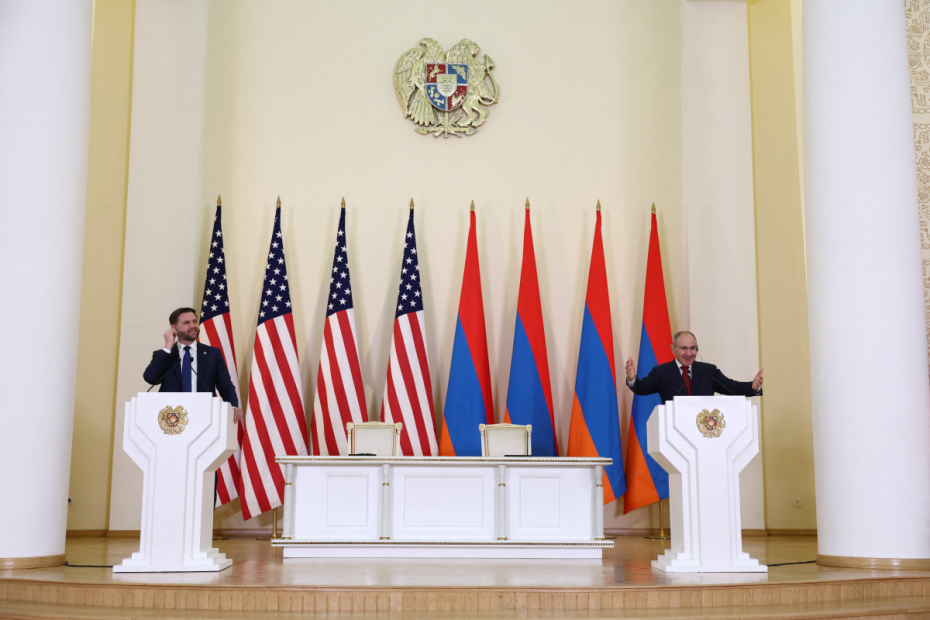
"This agreement will open a new chapter in the deepening energy partnership between Armenia and the United States," Pashinyan said at a joint press conference with Vance.
Long dependent on Russia and Iran for energy supplies, Armenia is reviewing proposals from U.S., Russian, Chinese, French and South Korean companies to replace its ageing Metsamor nuclear power plant.
Defence cooperation and regional diplomacy
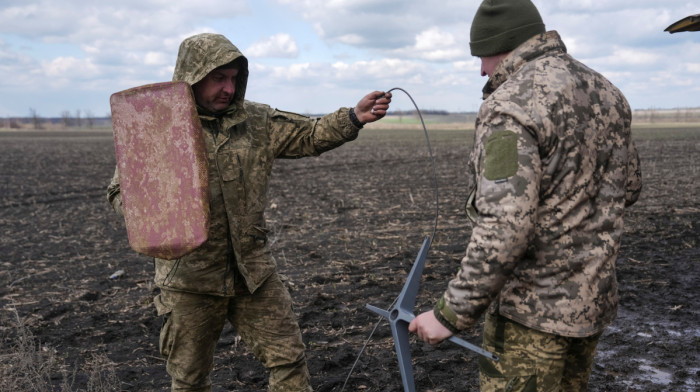
During the visit, Pashinyan announced Armenia would purchase V-BAT reconnaissance drones from the United States through the Foreign Military Sales programme. Vance said the roughly $11 million deal would support Armenia’s security and regional stability while contributing to investment and jobs in the U.S. defence sector.
Vance also met Armenian President Vahagn Khachaturyan, who welcomed the visit as a sign of strong bilateral ties and highlighted the importance of achieving lasting peace in the region.
The trip comes six months after Armenian and Azerbaijani leaders signed a White House-brokered agreement seen as the first step toward ending nearly four decades of conflict.
TRIPP corridor, Azerbaijan and a new stage of U.S. engagement
The visit also included announcements of expanded economic engagement under the Trump Route for International Peace and Prosperity (TRIPP) initiative.
The TRIPP corridor, which envisages new or upgraded rail links, oil and gas pipelines and fibre-optic cables, aims to transform the South Caucasus by boosting connectivity, trade and energy cooperation across the region.
Vance is expected to continue his regional diplomacy with a visit to Azerbaijan, where discussions are likely to focus on implementing the peace framework, economic connectivity and long-term stability.
For Azerbaijan, relations with Washington are increasingly centred on energy cooperation, transit routes and a formal strategic partnership.
Associate Professor Orkan Valiyev described TRIPP as a major economic turning point, calling it “a great initiative that came from Azerbaijan” and noting that U.S. involvement has elevated the project’s strategic weight.
"This is a great achievement that the United States is involved in this project," he says, adding that Vice President JD Vance’s visit represents "another huge step for the future of the entire region."
According to Valiyev, the current phase marks a shift from traditional diplomacy toward economic integration, signalling a new stage in Washington’s engagement with the South Caucasus beyond conflict management alone.
Together, these parallel tracks highlight Washington’s expanding role in the South Caucasus as the region gains strategic importance beyond conflict management alone.












What is your opinion on this topic?
Leave the first comment