Trump threatens further strikes against Iran: All the latest news on the Middle East conflict on Saturday
U.S. President Donald Trump warned Iran to expect further strikes on Saturday (7 March). In a post on social media, he said Iran would be '...
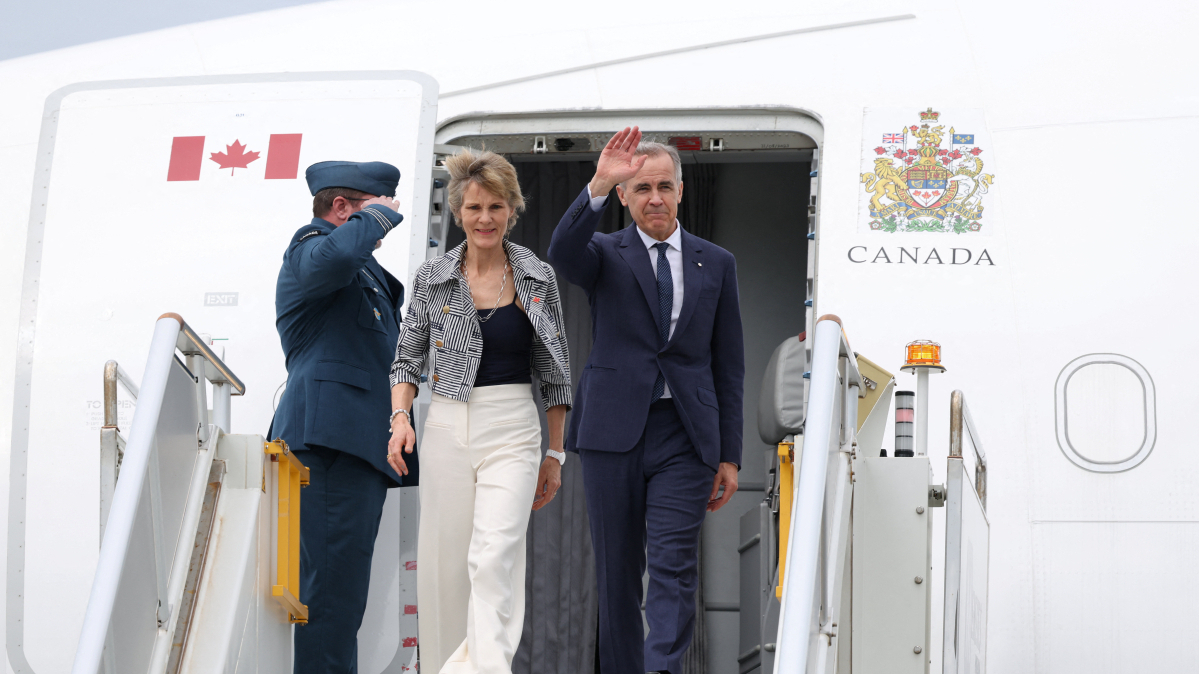
Canadian Prime Minister Mark Carney arrived in Australia on Tuesday (3 March), aiming to bolster relations between the two so-called "middle powers" amid what he has called a "rupture" in world order.
The leaders of both nations, close allies of the United States, are meeting as war escalates in the Middle East, and will look to strengthen ties as top producers of critical minerals.
Carney is on a multi-leg trip across the Asia-Pacific region also taking in Japan and India, where he signed trade deals and reset relations with New Delhi after a year-long spat over Sikh separatism.
Canada and Australia have warmer ties, with the two nations expected to deepen cooperation in areas such as defence and maritime security, critical minerals, trade and artificial intelligence (AI), Carney's office said ahead of the visit.
Carney is set to address Australia's parliament and meet Prime Minister Anthony Albanese, who described Canada last week as one of Australia's "closest friends, built on generations of trust", and urged closer ties to promote national interests.
Western nations seek to build their own stockpiles of critical minerals, key for production of semiconductors and defence applications, as China, the world's dominant producer, tightens supply.
"There's a lot Canada and Australia can do together on critical minerals as producer nations," Australian Resources Minister Madeline King said on Monday, when asked about Carney's visit.
"Middle powers" needed to work more closely together, Carney said last month in a widely publicised speech at the World Economic Forum in Davos.
"Middle powers must act together because if we're not at the table, we're on the menu," he said.
In a speech on Wednesday at the Lowy Institute think tank in Sydney, Carney is expected to press his point further, outlining shifts in the global order and the opportunities they offer middle powers such as Canada and Australia.

Officials in Azerbaijan have said they have stopped terror attacks in Azerbaijan including on an Israeli Embassy, the Baku-Tbilisi-Ceyhan pipeline and a Synagogue. Tensions between regional and global powers escalate. Military activity, security alerts and travel disruptions continue.
U.S. President Donald Trump warned Iran to expect further strikes on Saturday (7 March). In a post on social media, he said Iran would be 'hit very hard'. His comments came a week into the conflict with Iran, which has spread across the Middle East.
Lebanon's Hezbollah warned Israeli residents to evacuate towns within 5 km (3.11 miles) of the border between the countries in a message posted on its Telegram channel in Hebrew early on Friday.
The Israeli military says it has destroyed an underground bunker beneath Iran’s leadership complex in Tehran that it claims was built for former supreme leader Ali Khamenei.
The Azerbaijani State Security Service has said it has stopped Iran committing terror attacks against four targets in the country: Baku-Tbilisi-Ceyhan pipeline, the Israeli Embassy in Azerbaijan, a leader of the Mountain Jews religious community and the "Ashkenazi" synagogue.
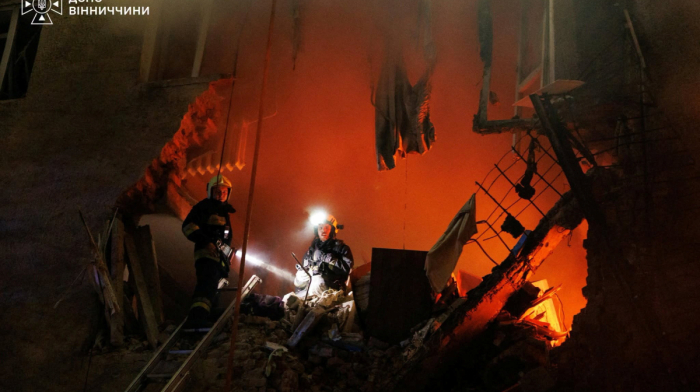
Russian attacks on Ukraine’s second largest city in the early hours of Saturday (7 March) killed 10 people, including two children. Kharkiv mayor, Ihor Terekov, said 10 residents died after a Russian ballistic missile hit a five storey apartment block in the city.
A 35-year-old former rapper is on track to become Nepal’s next prime minister. Early counting in the elections on Friday (7 March) showed Balendra Shah’s Rastriya Swatantra Party (RSP) was leading in around 100 seats, far ahead of rivals.
Newly released FBI records summarising interviews with an unidentified woman contain allegations that U.S. President Donald Trump attempted to force her to perform a sexual act when she was a teenager, according to documents published by the U.S. Justice Department.
Australia’s move to ban social media access for children under 16 has intensified a global debate, as governments around the world weigh tougher rules amid growing concerns over mental health, safety and screen addiction.
Indonesia will restrict access to social media platforms for children under 16, its communications and digital ministry said on Friday (6 March), becoming the latest country to introduce online guardrails aimed at reducing the risks of addiction and cyberbullying.
You can download the AnewZ application from Play Store and the App Store.
What is your opinion on this topic?
Leave the first comment