Historic border agreements in 2025 brought renewed hopes of stability to the Fergana Valley, easing long-running tensions between Kyrgyzstan, Tajikistan and Uzbekistan.
However, renewed clashes along the Kyrgyz-Tajik frontier have underlined the region’s fragility and the difficulty of sustaining lasting peace.
The state border between Kyrgyzstan and Tajikistan had remained closed since May 2021 following a deadly armed confrontation.
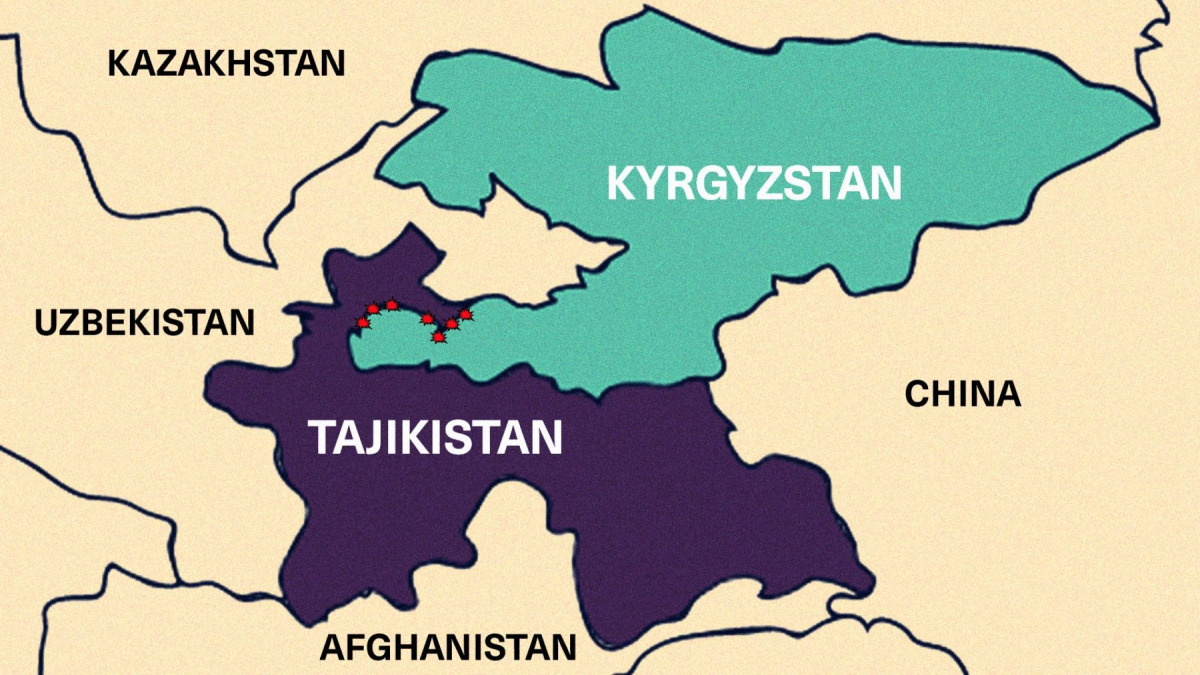
Their nearly 980-kilometre frontier has long been a source of instability in the Fergana Valley, a densely populated region where borders, enclaves and shared resources intersect.
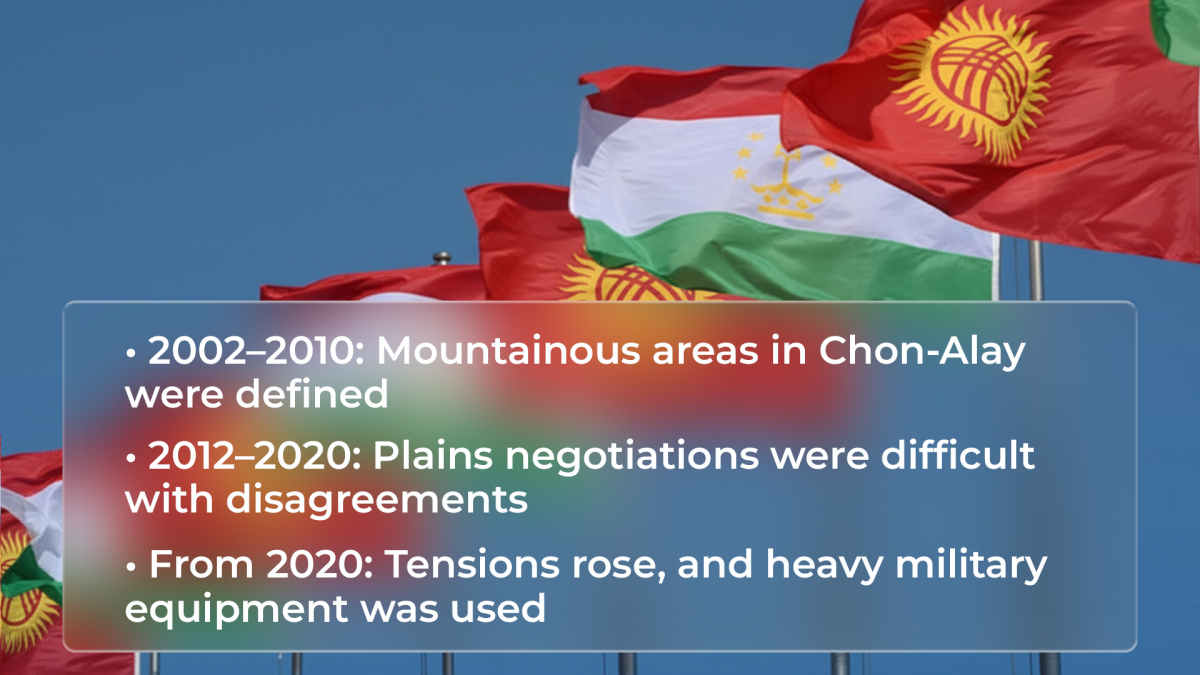
Since the collapse of the Soviet Union, large sections of the border remained undefined. Formal negotiations on delimitation, the process of defining and mapping a state border, began in December 2002 but progressed slowly for years.
A breakthrough came on 13 March, when Kyrgyzstan and Tajikistan announced an end to their long-running border dispute.
In the Fergana Valley, where unclear boundaries had fuelled repeated tensions and disrupted daily life, the agreement was seen as a turning point for local communities.
By 2011, the two sides had agreed on 519 kilometres of the border, with a further 486 kilometres settled over the following three years.
The final delimitation resolved one of Central Asia’s most persistent sources of conflict and was widely viewed as a significant step towards regional cooperation.
Yet the path to agreement was marked by violence.
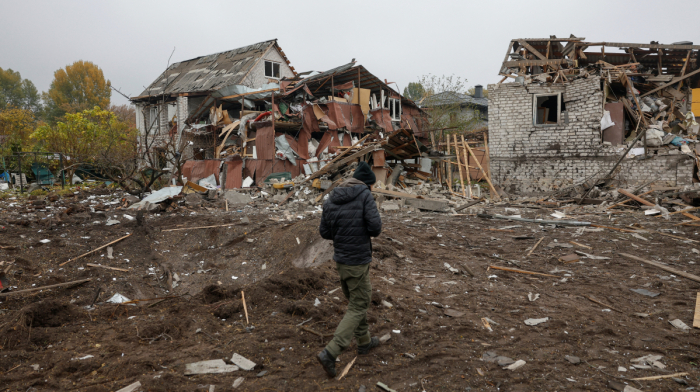
From 2019 onwards, border escalations became more frequent and severe. Clashes in spring 2021 left 55 people dead, around 300 injured and caused extensive damage to homes.
In September 2022, renewed fighting killed about 100 people and forced more than 150 residents to flee, disrupting transport links and trade.
From conflict to cooperation
One of the most contentious issues was which historical maps should underpin the delimitation process.
Kyrgyzstan relied primarily on records from 1955–1959, while Tajikistan favoured maps dating from 1924–1927. Negotiations unfolded in several phases, reflecting the political sensitivity of the process.
On 31 March, the presidents of Kyrgyzstan, Tajikistan and Uzbekistan met in the Tajik city of Khujand, where they signed the ‘Agreement on the Junction Point of the State Borders of the Three Countries’.
The deal removed a major obstacle to broader regional cooperation.
Under the agreement, borders were adjusted, the Vorukh enclave was reduced, the village of Dostuk was transferred to Tajikistan, irrigation systems were designated for shared use and new transport routes were planned.
Supporters say clearer borders have helped restore trust, reduce disputes and ease movement and trade across the region. New roads and air links have strengthened economic ties, offering a measure of optimism for the Fergana Valley.
While challenges remain, analysts say the political will shown in 2025 has laid the groundwork for improved stability in one of Central Asia’s most sensitive regions.
















What is your opinion on this topic?
Leave the first comment