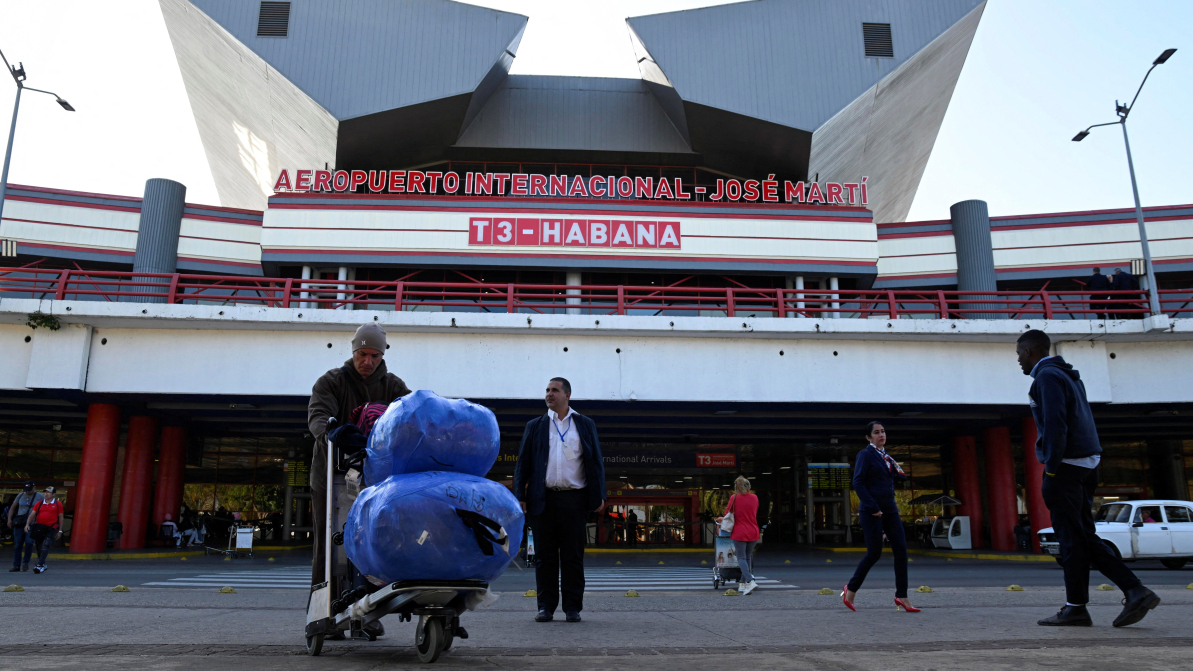
Cuban aviation authorities have warned airlines of jet fuel shortages at nine airports, including Havana’s José Martí International Airport, from 10 February to 11 March, as a worsening energy crisis, intensified by U.S. sanctions, hits the country.
The notices, published by the Cuban government on Sunday (8 February), mean flights to the island may face delays, refuelling stops or cancellations.
Air Canada announced it would suspend services to Cuba while carrying out “ferry flights” to return around 3,000 passengers, while Spanish carriers Iberia and Air Europa said flights from Madrid would require a stop in the Dominican Republic for refuelling.
American Airlines, Delta and Aeromexico said they could continue flights by carrying sufficient fuel for return journeys.
Political pressure from U.S. President Donald Trump has effectively cut Cuba off from its main petroleum suppliers, Venezuela and Mexico.
In late January, Trump signed an executive order imposing tariffs on goods from countries that sell or provide oil to Cuba, further intensifying the fuel shortage.
The fuel shortage adds to a broader austerity effort on the island.
Local impact
Cuban authorities have reduced bank operating hours, curtailed public transport, postponed cultural and sporting events and limited fuel distribution to 20 litres per person, payable in U.S. dollars rather than Cuban pesos.
The public bus network in Havana has effectively shut down, leaving many residents stranded amid power outages lasting up to 10 hours.
President Miguel Díaz-Canel addressed the nation on Thursday (5 February), acknowledging the severity of the energy crisis and warning that further measures would be required to manage limited resources.
The government said it is prioritising critical services, including hospitals, limiting hospital stays and non-urgent surgeries.
Health Minister José Angel Portal Miranda said: “The measures aim to significantly preserve these essential services, reorganise capabilities, concentrate resources where they are most needed and ensure the continuity of services to the population.”
Cuba’s tourism industry, which generated around $3 billion annually and welcomed over 754,000 Canadian visitors in 2025, has also been hit.
Airlines rerouting flights and logistical challenges threaten both short regional trips and long-haul routes from countries including Russia and Canada, a crucial pillar of the economy.
Global reaction
The crisis has drawn international attention.
Mexican President Claudia Sheinbaum said: “This sanction being imposed on countries that sell oil to Cuba is very unfair, very unfair. It’s not right, because sanctions that affect the people are not right. One may agree or disagree with the regime in Cuba but the people should never be harmed.”
Mexico shipped more than 800 tons of humanitarian aid to Cuba on Sunday and pledged further support.
Meanwhile, Russia, a long-time ally, described the situation as “truly critical.”
Kremlin spokesman Dmitry Peskov accused the U.S. of implementing a “chokehold” on Cuba and said Moscow was in “intensive contact with our Cuban friends through diplomatic and other channels” to provide assistance.
Dialogue prospects
Deputy Foreign Minister Carlos Fernández de Cossío said the Cuban government is ready for “meaningful” dialogue with the U.S. but will not discuss regime change.
Meanwhile, U.S. President Trump stated that Cuba could avoid a complete cutoff by striking “a deal” with the United States, potentially requiring the return of property confiscated from Cuban exiles.
The energy emergency echoes hardships experienced during Cuba’s 1990s Special Period, with shortages of fuel, food, medicine and electricity. Airlines, tourists and residents now face growing uncertainty over daily life, transport, and the ability to sustain economic activity across the island.














What is your opinion on this topic?
Leave the first comment