Four people were killed and six detained after armed Cuban exiles aboard a Florida-registered speedboat were intercepted at sea on Wednesday, drawing swift reactions from Washington, Havana and Moscow.
Cuban authorities said heavily armed Cuban nationals attempted to infiltrate the country on Wednesday (25 February) using the vessel, triggering an exchange of gunfire off the coast. Four people were killed and six others wounded before being taken into Cuban custody.
A U.S. official in Washington said at least two of those aboard were U.S. citizens, including one who died and another who was receiving treatment in Cuba. Others may have been legal U.S. residents, the official added.
According to the same official, the boat's owner reported that an employee stole the vessel.
Rising tensions
The confrontation came at a tense moment in U.S.-Cuban relations. President Donald Trump has tightened sanctions since the U.S. capture of Venezuelan President Nicolas Maduro, a longtime Cuban ally, on 3 January.
The United States has moved to intercept oil shipments bound for Cuba, targeting vessels linked to operators such as Mexico’s state energy company Pemex. Washington has warned governments involved that they could face tariffs if they fail to comply.
Trump has said that “Cuba will be failing pretty soon”, noting that Venezuela - once the island’s main supplier - has not recently sent oil or financial support.
The Trump administration maintains that its measures are designed to increase pressure for political change in Cuba. White House press secretary Karoline Leavitt said it was in Cuba’s “best interest to make very dramatic changes very soon”.
The U.S. Treasury Department said on 25 February that it would allow companies to seek licences to resell Venezuelan oil to Cuba’s private sector, a step that could help ease the island’s acute fuel shortage.
Havana said it had been in communication with U.S. officials from the outset and noted signs of cooperation, even as it blamed Washington for allowing anti-Castro groups to operate freely.
Fernando de Cossio, a senior foreign ministry official, said Cuba had repeatedly warned the U.S. about “an increase in violent and terrorist plans and actions against Cuba” by groups and individuals on U.S. territory, arguing that Washington had failed to act.
“Anti-Cuban groups operating in the United States resort to terrorism as an expression of their hatred of Cuba and the impunity they believe they enjoy,” he said in a prepared statement.
Suspects identified
Cuba said the suspects arrived from the U.S. wearing camouflage and carrying assault rifles, handguns, homemade explosives, ballistic vests and telescopic sights.
It added that two of the assailants had been wanted in connection with earlier alleged plots. Amijail Sanchez Gonzalez and Leordan Cruz Gomez, both 47 and Cuban-born U.S. residents, were on a 2025 list of suspects designated by Cuba as terrorists.
Sanchez was accused of involvement in a plot against a municipal court and a Communist Party organisation in Havana, while Cruz was suspected of arms trafficking linked to a planned attack on a military unit in Matanzas.
The group’s arrival comes against the backdrop of a long history in which some Cuban exiles in Miami have advocated the overthrow of the island’s Communist government. Exile paramilitary groups have previously attempted sabotage missions.
The other wounded survivors were identified as Cristian Ernesto Acosta Guevara, Conrado Galindo Serrior, Jose Manuel Rodriguez Castello and Roberto Alvarez Avila.
Galindo had been briefly detained in Cuba on at least one previous occasion, according to the Cuban Commission for Human Rights and National Reconciliation, an inactive body that once documented allegations of repression.
Cuba identified the four dead as Pavel Alling Peña, Michael Ortega Casanova, Ledian Padron Guevara and Hector Duani Cruz Correa. It said Rolando Roberto Ascorra Consuegra had initially been wrongly named and was not involved.
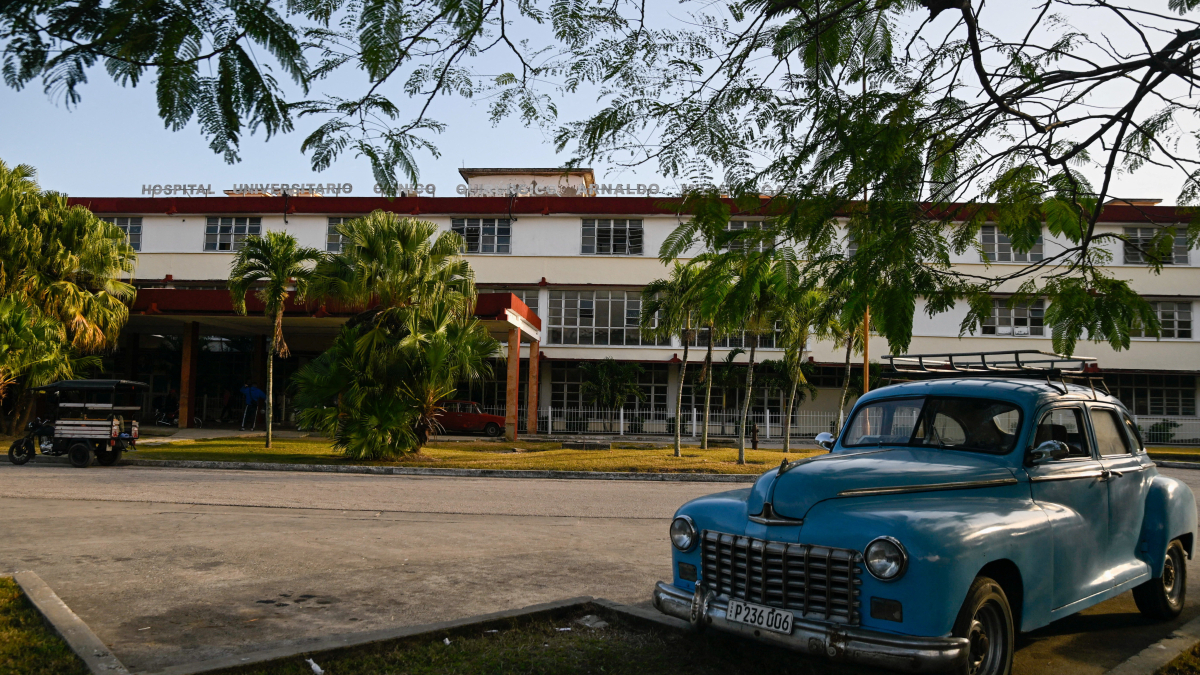
The six survivors were taken to the Arnaldo Milian Castro Provincial Clinical Surgical Hospital in Santa Clara, about 250 km east of Havana and close to where the incident occurred, roughly one nautical mile off the coast.
The hospital was under heavy guard on Thursday, with Interior Ministry troops entering and leaving the premises. Security personnel confirmed the suspects were held there but offered no further details.
Reactions
U.S. Secretary of State Marco Rubio said Washington would conduct its own investigation, noting that “a lot of the information out there is what the Cubans have provided” and that the U.S. would “verify that independently”.
He said the embassy in Havana was seeking access to the survivors to confirm whether any were U.S. citizens or residents, adding that officials still did not know “who has possession of the vessel.”
Rubio stressed it was not a U.S. operation and that no American personnel were involved.
Cuban President Miguel Diaz-Canel said his government would respond firmly to any attempt to undermine the country’s stability as it confronts an acute oil shortage following U.S. pressure on fuel supplies.
“Cuba will defend itself with determination and firmness against any terrorist and mercenary aggression that seeks to affect its sovereignty and national stability,” he wrote on X.
Russia also weighed in on the confrontation.
Russian Foreign Ministry spokeswoman Maria Zakharova said the speedboat incident off Cuba’s northern coast was “an aggressive provocation by the United States aimed at escalating the situation and detonating a conflict,” according to state-owned TASS.
She was speaking after Havana reported that four exiles were killed and six others wounded when the Florida-registered vessel opened fire on a Cuban patrol during already heightened tensions with the United States.












What is your opinion on this topic?
Leave the first comment