As Cuba’s government prepares for American aggression, residents say economic hardship worries them more than the threat of war. Tensions between Cuba and the U.S. have escalated sharply this year, as Washington steps up sanctions and threatens regime change.
The measures have deepened fuel shortages and prolonged blackouts across the country, disrupting transport, tourism and daily life, even as many Cubans say the latest geopolitical standoff feels like a familiar chapter in a decades-long conflict with Washington.
While Washington has for years pursued regime change in Cuba, many analysts believe the risk is now higher. The capture and forcible removal of Venezuelan President Nicolas Maduro earlier this year signaled that the Trump administration is willing to use force against regional adversaries, raising concerns that Cuba – Caracas’ closest political and economic ally – could be the next target.
U.S. President Donald Trump has warned Cuba to “make a deal” with its northern neighbor before it is “too late.” Secretary of State Marco Rubio also told a Senate hearing that the White House “would love to see the regime there change.”
Liz Oliva Fernandez, a Cuban journalist with the Havana-based media outlet Belly of the Beast, told Anadolu that many Cubans feel “anxious, frustrated and irritated” by the threats.
Washington has no right to “decide which state or government should collapse,” she said.
Severe fuel blockade deepens economic crisis
On 29 January, Trump signed an executive order imposing tariffs on any country that supplies Cuba with oil. The measures most affected Mexico, the country’s main supplier after Venezuela, which had initially pledged to continue shipments but later halted exports amid US pressure.
The impact on Cuba’s energy supply has been severe. By late January, the island had received just 84,900 barrels of oil all year from a single Mexican shipment early in the month, according to energy consultancy Kpler.
That amounts to just over 3,000 barrels per day, down sharply from an average of about 37,000 barrels per day from all suppliers in 2025.
Cuban President Miguel Diaz-Canel has described the measures as an “energy blockade,” warning they are disrupting transportation, hospitals, schools, tourism and food production.
Aviation authorities have also warned airlines that there is insufficient jet fuel available on the island, while the already fragile power grid is facing even deeper strain. Rolling blackouts were common before the latest sanctions, but outages have now intensified.
Satellite imagery analysis cited by Bloomberg shows that nighttime light levels in major eastern cities such as Santiago de Cuba and Holguin have dropped by as much as 50% compared with historical averages.
The fuel crisis is also hitting the tourism sector. Canada, Cuba’s largest source of visitors, has seen its leading airline suspend flights until at least May due to the lack of jet fuel, repatriating around 3,000 tourists. Russian officials have also said they are preparing to halt flights and evacuate travelers in the coming days.
Andy Martinez Gonzalez, a chef and resident of the Cuban capital, told Anadolu that the economic situation “is becoming ever more critical” as blackouts caused by electricity shortages now last between “12 and 20 hours a day.”
He added that, although Cubans are divided on the question of whether the U.S. will attack Cuba, the reality of continued economic hardship remains a more pressing issue to the average Cuban than the distant, albeit threatening, rhetoric of a foreign power.
Preparing for war
The Cuban government, however, is taking the military threats seriously. Authorities recently declared a “state of preparation for war” in response to what they described as the risk of a possible U.S. operation against the island.
Officials warned that the country was ready “to defend the homeland to the last drop of blood,” while the Cuban Revolutionary Armed Forces (FAR) began wartime preparations.
In response to the rising tensions, Pope Leo XIV called for peace between the two nations, “inviting all responsible parties to promote a sincere and effective dialogue, in order to avoid violence.”
A Cuban Foreign Ministry official, speaking on condition of anonymity because they were not authorized to talk to the press, told Anadolu that they agreed with the pope’s appeal.
“But there is one party that doesn’t agree,” the official said, referring to the U.S.
Since the Cuban Revolution of 1959, relations between Cuba and the U.S. have been characterized by the specter of American-backed invasion, regime change, assassinations or economic suffocation. As a result, for many on the island, the threat of war is nothing new.
Jordy Falcon, a Cuban property developer in Havana, said he was generally unperturbed by the military preparations on the island.
Falcon told Anadolu that Cubans were born into “a militarized country 90 miles away from the common enemy” and have “been preparing for war their whole lives.”
However, he added that the latest threats have created a sense among some Cubans that the country’s prolonged economic crisis cannot continue indefinitely.
It is “unsustainable” and “unbearable,” he said, adding that it “will have to end soon, in one way or another.”
Cuba’s efforts to shore up support
Falcon’s speculations about the imminence of change on the island are backed by reports such as one by The Wall Street Journal that said the U.S. intends to enact some form of regime change in Cuba by the end of 2026.
Havana, meanwhile, is seeking to diversify its economic partners after losing most of its subsidized oil supplies from Venezuela.
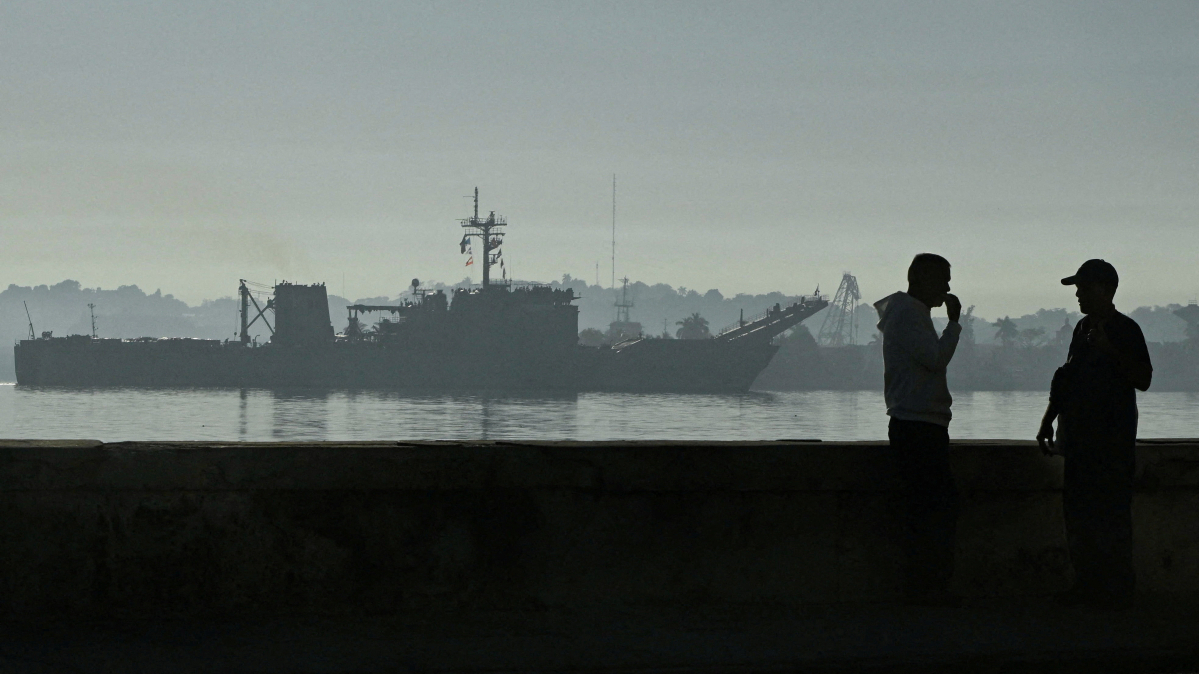
Mexico had pledged to continue supplying crude, but shipments were later halted. Instead, two Mexican Navy vessels delivered humanitarian aid this week, while President Claudia Sheinbaum said diplomatic efforts were underway to resume oil exports.
Havana has also turned to more distant partners. Both Russia and China – founding members of the BRICS bloc that Cuba has joined – have signaled political support.
Russia’s Interior Minister Vladimir Kolokoltsev visited the island on Jan. 20 to strengthen bilateral ties. This week, Russian media reported that Moscow is preparing to send fuel shipments, noting that the last delivery was in February 2025.
Meanwhile, China approved an emergency aid package of $80 million and has donated 60,000 tons of rice. The Asian giant has also pledged to “provide Cuba with as much support and assistance as possible.”
However, Anna Ayuso, a senior research fellow at the Barcelona Centre for International Affairs (CIDOB), downplayed the significance of the current Russo-Chinese-Cuban alliance because of the reality that the country is quickly running out of oil.
She told Anadolu that, although Cuba can count on “both Russian and Chinese diplomatic and political support,” she believes that “neither country is willing to directly confront the U.S. oil blockade” by sending oil in sufficient quantities to compensate for the latest American sanctions.
“There will be cooperation in the field of intelligence,” she said, adding that China is strengthening surveillance capabilities on the island and Russia is helping Cuba prepare defensively in case of conflict.
But she noted that such cooperation is largely symbolic, stemming from a desire to see Cuba continue to resist American pressure and remain a nuisance for the North American superpower.
On the ground, Fernandez holds a similarly muted view of potential Russian and Chinese aid.
The journalist said that food donations or other similar diplomatic outreach “will not solve the problem.”
“What Cuba needs more than aid from Russia and China … is for the U.S. to leave us alone – to not do anything, not to help, but not to get in our way. To forget we exist.”
But continued pressure from Washington appears likely. The highest-ranking U.S. diplomat in Cuba, Mike Hammer, reportedly told other diplomats that the long-standing embargo could tighten even further.
“The Cubans have complained for years about the blockade,” he said, according to reports. “But now there is going to be a real blockade.”










What is your opinion on this topic?
Leave the first comment