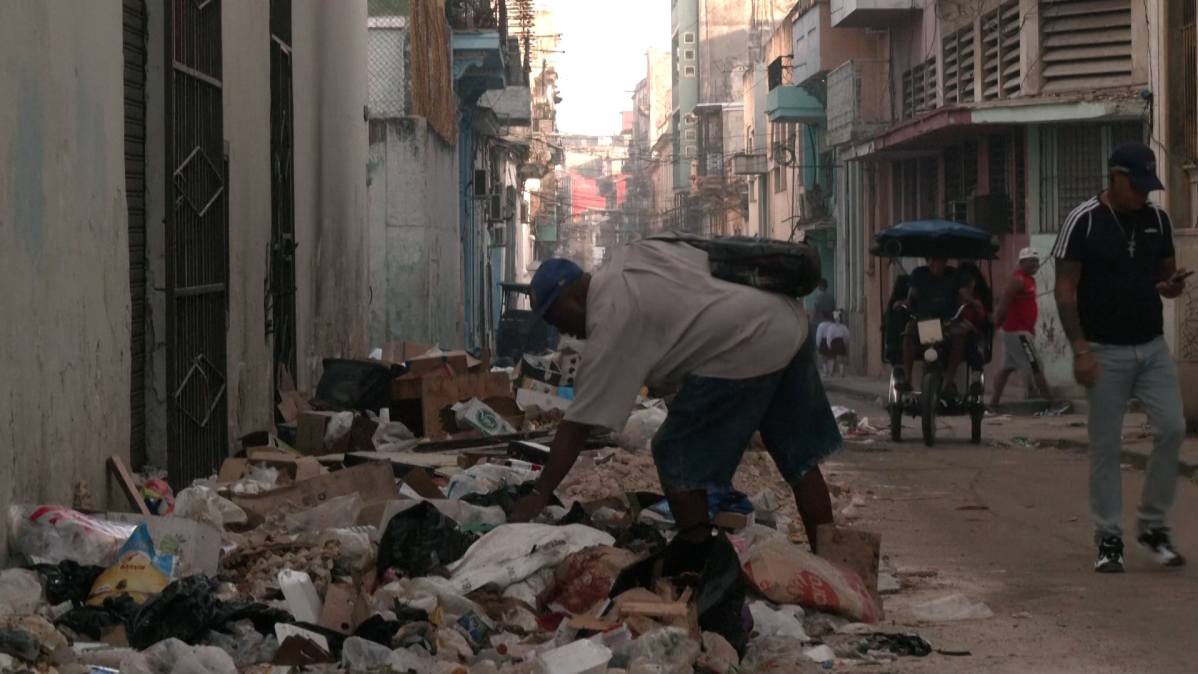
Cuba’s fuel crisis has turned into a waste crisis, with rubbish piling up on most street corners in Havana as many collection trucks lack enough petrol to operate.
Waste was seen accumulating across Havana as Cuba grapples with worsening fuel shortages that have crippled rubbish collection, residents and media reported.
Cuba is facing supply problems after the United States moved to choke off its oil supplies. The country has long relied on Venezuela for much of its jet fuel, but it has not received crude or refined products from its closest ally since mid-December, when Washington moved to block Venezuelan exports. Mexico has also halted shipments after the U.S. threatened tariffs against countries supplying fuel to Cuba.
U.S. President Donald Trump on Monday called Cuba a “failed nation” as the oil embargo continues to strain the country’s economy and airport operations.
“Cuba is now a failed nation. They don't even have jet fuels to get their airplanes to take off,” Trump said.
“We're talking to Cuba right now… and they should absolutely make a deal. Because it's really a humanitarian threat,” he said.
He added that while talks were ongoing, “there's an embargo, there's no money, there's no oil, there's no nothing.”
Asked whether he would consider a Venezuela-style operation if negotiations failed, Trump declined to answer directly but said such an operation “wouldn't be a very tough operation.”
The U.S. administration argues the measures are intended to increase pressure for political change in Cuba.
The United Nations has repeatedly called for an end to the U.S. embargo, while leaders in Mexico and Venezuela have warned that blocking fuel supplies could have serious humanitarian consequences.
Meanwhile, the fuel shortages are disrupting essential services across Havana.
Pro-government outlet Cubadebate reported earlier in February that the capital is operating at only between 37% and 44% of its technical capacity to collect waste. Of 106 rubbish vehicles, only 44 remain in operation, quoting a Cuban official.
Cuban media say other towns are also seeing a pile up of rubbish, and residents have taken to social media to warn about public health risks.
Havana resident Ileana Calderon said the volume of waste has increased because of the oil problem and suggested authorities find alternative solutions - including mobilising unemployed youth or prisoners - to help with collection. She warned that without action, viruses would continue to spread.
Dominga Puga said the waste issue began even before the fuel crisis but has now become “serious” and “very critical,” cautioning that the accumulation of rubbish creates conditions for disease. She urged officials to intervene urgently, adding that collection now stretches from five days to a week because there are not enough resources to operate the trucks.
Jose Ramon Cruz, another resident, said the problem affects the entire city.
“Here in Havana, it's everywhere. I don't know what the energy problem is, whether it's a problem with oil or something else, but that's how it is, all over the city,” he said, adding that more than 10 days had passed since a garbage truck last collected waste in his area.











What is your opinion on this topic?
Leave the first comment