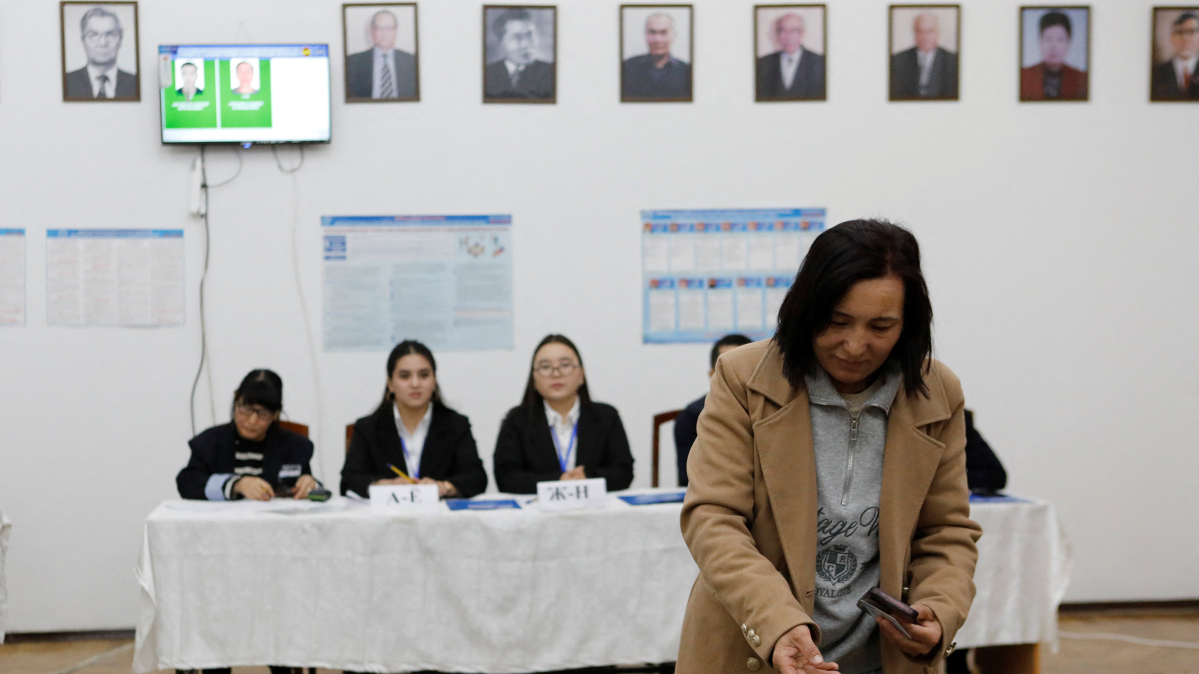
Kyrgyzstan recorded the largest increase in women’s representation in parliament worldwide in 2025, according to a new report by the Inter-Parliamentary Union.
The study found that the share of women in Kyrgyzstan’s parliament rose by 12.9 percentage points, the biggest increase among the 49 countries where parliamentary elections or renewals took place in 2025. The report analysed changes across 62 parliamentary chambers worldwide.
Gender representation in Kyrgyzstan’s Parliament
Kyrgyzstan’s parliament, the Jogorku Kenesh, has 90 seats, including 30 held by women and 60 by men. Women now account for about one-third of all lawmakers, placing the country among the stronger performers in Central Asia for female political representation.
The relatively high share is partly linked to electoral gender quota requirements designed to ensure women are included on parliamentary candidate lists.
Global representation grows slowly
Despite gradual progress, women remain underrepresented in political institutions globally. As of 1 January 2026, women held 27.5% of parliamentary seats worldwide, compared with 27.2% a year earlier.
According to the Inter-Parliamentary Union, the pace of growth in women’s representation has slowed for the second consecutive year and remains the slowest since 2017.
After Kyrgyzstan, the largest increases were recorded in Saint Vincent and the Grenadines, where women’s representation rose by 12.3 percentage points, and in the upper chamber of Saint Lucia’s parliament, where it increased by 9.1 percentage points.
Several countries achieved historic levels of female representation following elections in 2025. In Australia, women secured 46% of parliamentary seats, the highest level in the country’s history. In the Czech Republic, the share of women in the lower chamber rose from 25% to about one-third of lawmakers.
Meanwhile, Ecuador reached a record level with 45% female representation in its National Assembly.
Japan also marked a milestone in 2025 when a woman became the country’s prime minister for the first time. After elections in July, women’s representation in the upper house of Japan’s parliament rose to 29.4%, another national record.
Significant international differences
Regional differences remain significant. Countries in the Americas currently have the highest levels of representation, with women holding 35.6% of parliamentary seats on average.
Four countries in the region - Bolivia, Cuba, Nicaragua and Mexico - have reached gender parity or have more women than men in their parliaments. Outside the Americas, similar levels of representation have been achieved in Rwanda, Andorra and the United Arab Emirates.
By contrast, the Middle East and North Africa region has the lowest level of representation, where women hold only 16.2% of parliamentary seats on average. In Oman, Tuvalu and Yemen, women hold no seats at all in national parliaments.
The report also highlights persistent challenges faced by women in politics. Research by the Inter-Parliamentary Union found that 76% of women parliamentarians in the Asia-Pacific region reported experiencing psychological violence during their political careers.
The Inter-Parliamentary Union, founded in 1889, brings together 183 national parliaments and 15 regional parliamentary organisations and works to promote democracy and protect the rights of parliamentarians worldwide.












What is your opinion on this topic?
Leave the first comment