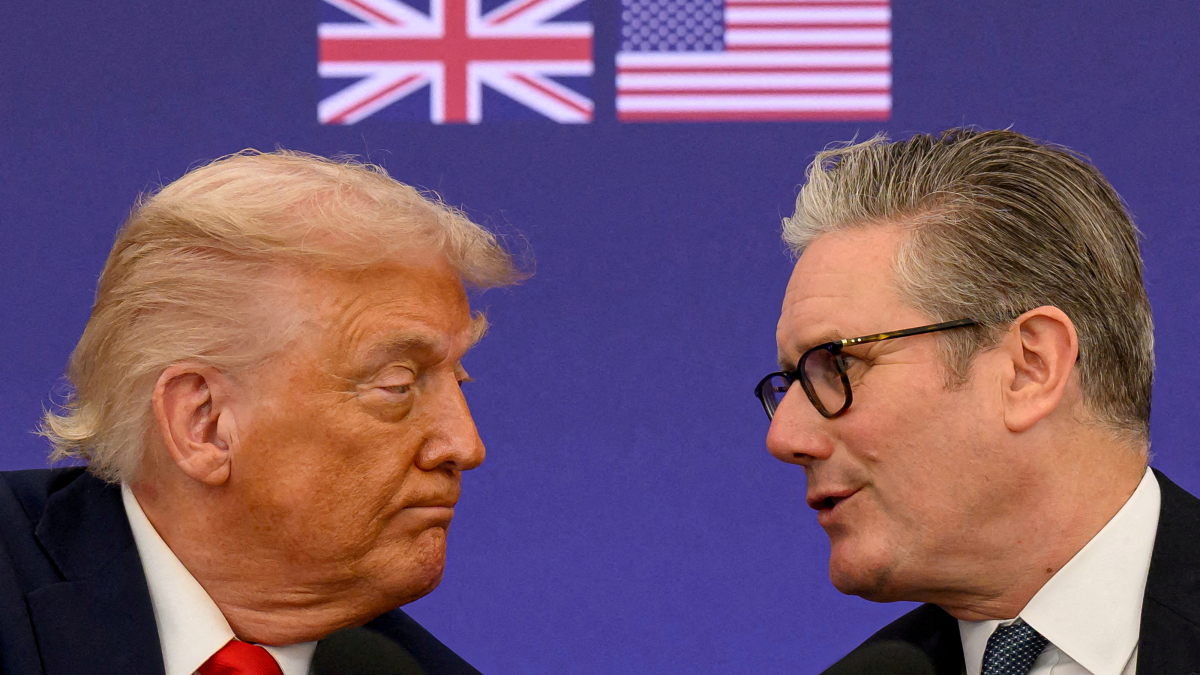
U.S. President Donald Trump and UK Prime Minister Keir Starmer spoke by phone on Sunday as tensions between Washington and Westminster deepened over the conflict involving Iran. The call came less than a day after Trump criticised Britain’s response to U.S. strikes on Iranian targets.
According to Downing Street, the two leaders discussed the escalating situation in the Middle East and military cooperation between the United States and the United Kingdom, including the use of British airbases for regional defence operations. Starmer also expressed condolences over the deaths of several U.S. service members killed during the ongoing crisis.
The call followed a week of sharp criticism from Trump, who accused the British government of failing to support the U.S. campaign against Iran strongly enough. The U.S. president said he was “not happy with the UK” and suggested Britain had tried to join the conflict only after Washington had already secured victory.
Trump also criticised Starmer personally, saying the British leader was “no Winston Churchill”, as tensions between the two allies became increasingly public.
The dispute began after Britain declined to take part in the initial U.S.-led strikes on Iranian targets. The British government said any decision to join military action must have a clear legal basis and a defined strategy.
Despite refusing to participate in the wider offensive campaign, Westminster later approved the limited use of British airbases for defensive operations supporting allied forces in the region. British fighter jets have also been deployed to intercept Iranian missiles and drones targeting allied countries.
Speaking on Sunday, UK Foreign Secretary Yvette Cooper defended the prime minister’s approach, saying Starmer was right to prioritise Britain’s interests.
She said that while the United States remains one of the UK’s closest allies, the two countries will not necessarily agree on every foreign policy decision. Cooper added that Britain would continue providing defensive support when Iranian attacks threaten partner countries where British citizens are living.















What is your opinion on this topic?
Leave the first comment