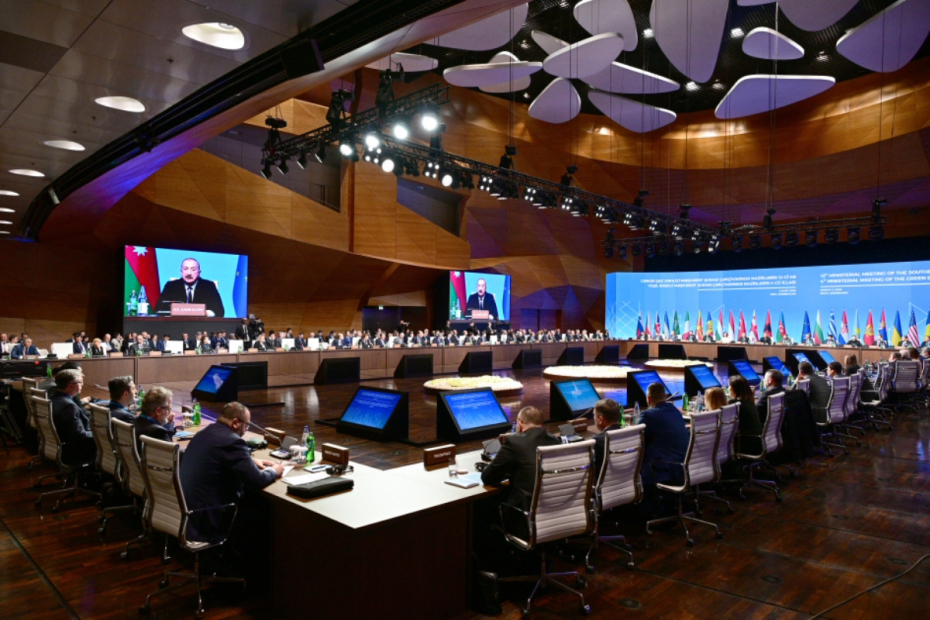
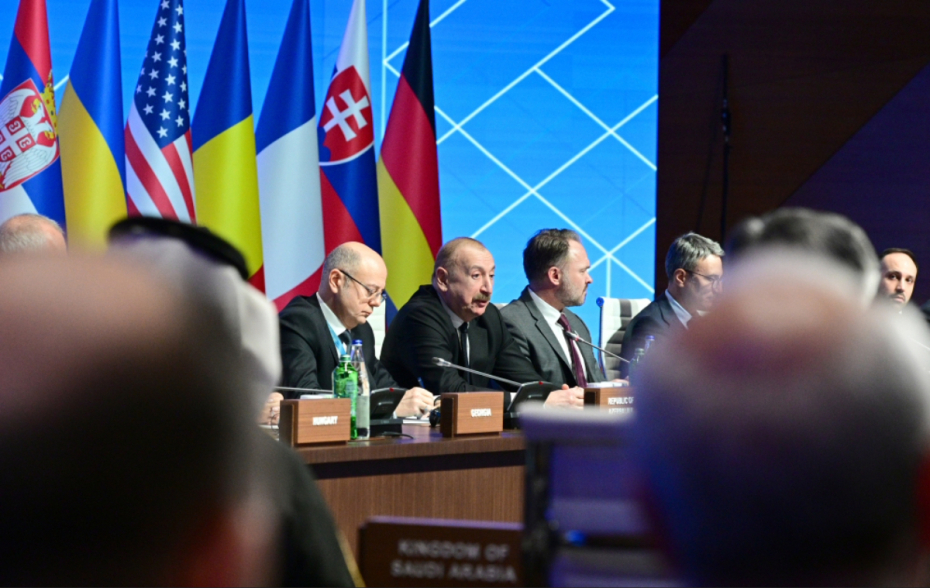
Azerbaijan’s President Ilham Aliyev highlighted the country’s expanding gas exports to Europe and its renewable energy ambitions during the Southern Gas Corridor Advisory Council’s 12th Ministerial Meeting and the Green Energy Advisory Council’s 4th Ministerial Meeting in Baku on Tuesday (3 March).
The gathering brought together representatives from 27 countries, including Azerbaijan and the European Union, as well as 11 international financial institutions and 49 energy companies. Ministers, deputy ministers and other senior officials attended the meeting.
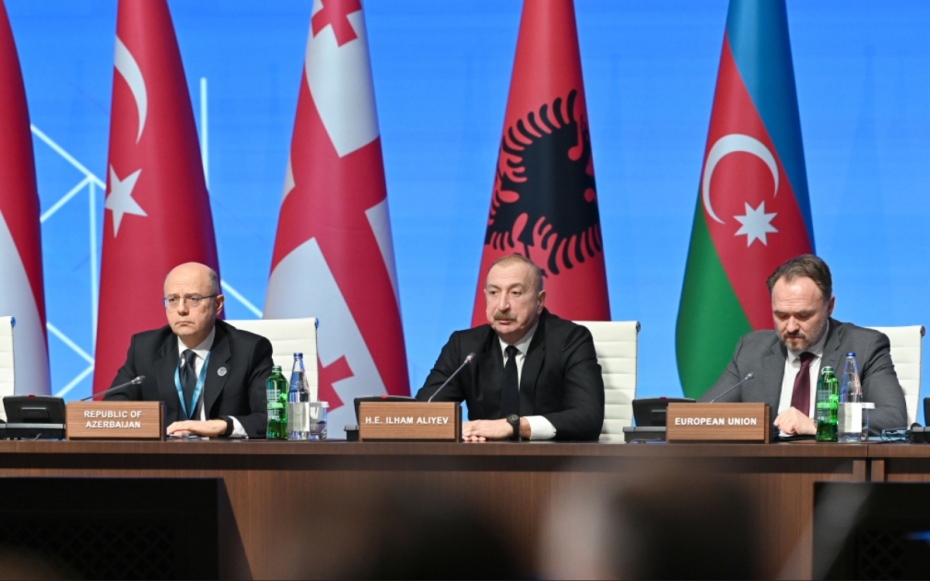
Azerbaijan’s Energy Minister Parviz Shahbazov said the Southern Gas Corridor and Azerbaijani gas continue to play a vital role in energy security and supply stability through diversification.
Azerbaijan’s growing gas exports
In his keynote address, President Aliyev outlined Azerbaijan’s progress in energy production and exports, while also highlighting the country’s plans to expand renewable energy capacity.
Aliyev said Azerbaijani gas now flows to 16 countries, including 10 EU member states. According to the president, Azerbaijan currently ranks first in the world for the number of countries supplied with gas via pipelines.
On green energy, Aliyev said ongoing projects are expected to generate between six and eight gigawatts of energy from alternative sources by 2032.
Aliyev also highlighted the domestic benefits of renewable energy.
“So this, of course, is a big asset. We need to export it and we need to use this electricity for domestic purposes to substitute natural gas, which we are using so far to produce electricity. This will also provide conditions for growing economy and expanding industry, including our plans with respect to communication sector, AI, data centres, which are already in the pipeline,” Aliyev said.
The meetings were co-chaired by Azerbaijan’s energy minister and the European Commissioner for Energy and Housing, Dan Jørgensen.
Jørgensen described Azerbaijan as a key partner in Europe’s energy security.
“To replace Russian energy, we turned to our most trusted and reliable partners. And Azerbaijan was chief amongst these. Since then, we have significantly increased natural gas deliveries through the Southern Gas Corridor," he said.
"Since late 2020, the Trans-Adriatic Pipeline has already delivered more than 50 billion cubic meters of Caspian gas to Europe.”
Mahammad Mamadov, a research fellow at the Topchubasov Centre, told AnewZ that recent developments have highlighted Azerbaijan’s strategic importance.
He said supply disruptions in the Persian Gulf have underscored the EU’s reliance on stable pipeline gas supplies, strengthening Azerbaijan’s geopolitical role.
Mamadov pointed to two issues likely to gain importance. First, Azerbaijan is seeking EU investment to expand the pipeline capacity of the Southern Gas Corridor. Second, Baku is looking for support to increase oil and gas production from its Caspian Sea reserves.
He added that discussions between the EU and Azerbaijan have been ongoing since 2022 but have so far produced limited results. However, current regional tensions could accelerate progress.
"After what we see right now in the Persian Gulf, there will be further, more positive developments in those discussions between the EU and Baku."
Energy security challenges amid Middle East tensions
Kostis Geropoulos, energy and security expert, said the ongoing conflict in the Middle East has exposed vulnerabilities in global energy supply chains. He noted that while Europe and other regions are watching the situation closely, the current crisis shows the critical importance of stable pipeline gas.
Geropoulos added that European energy planners face renewed urgency. With Azerbaijan and Norway the only major exporters of pipeline gas to Europe, the continent must rely on these stable sources rather than solely on liquefied natural gas (LNG), even as U.S. LNG is being sought to help replace Russian supplies.
“This disruption in the Gulf shows why pipeline gas is so important, it provides a steady source of supply that cannot be quickly replaced,” he said.
Against that backdrop, President Ilham Aliyev used the meeting in Baku to highlight Azerbaijan’s growing role as a reliable supplier of energy to Europe.
Upcoming gas production projects
Aliyev outlined upcoming gas projects that will further expand Azerbaijan’s production.
“This year, we expect the beginning of production from the ACG deep gas field. In two or three years, we expect the beginning of the full-phase development of the Absheron field, which will increase gas production from Absheron three times. We also expect the beginning of gas production from the second phase of the Umid field," he said.
"In 2028 we expect the beginning of production from a new phase of Shah Deniz. All these gas production profiles will allow us, at the maximum level of production, to reach an additional 10 to 15 billion cubic metres of gas.”
Azerbaijan as an energy transit hub
Aliyev underlined Azerbaijan’s role as a regional energy transit hub.
“We provide important oil transit for Kazakhstan and Turkmenistan, and year after year, the volume of oil transported through our system is growing. We are capable and have the infrastructure to receive more oil from the eastern shores of the Caspian,” he said.
The president added that Azerbaijan is expanding its presence in the European energy market.
“We have already started to supply two more countries in Europe - Germany and Austria. Today, 10 members of the EU receive gas from Azerbaijan and in the coming years, with new production from Azerbaijani fields, we may increase the output.”
The Saudi-led coalition in Yemen said late Monday that it intercepted and destroyed two ballistic missiles launched by the Houthi group toward Khamis Mushait in southwestern Saudi Arabia.
Yemen’s Houthis have claimed responsibility for the recent drone and missile strikes on Saudi Aramco facilities in Dhahran and Riyadh and at King Khalid International Airport in Saudi Arabia, vowing to carry out more attacks in the coming days.
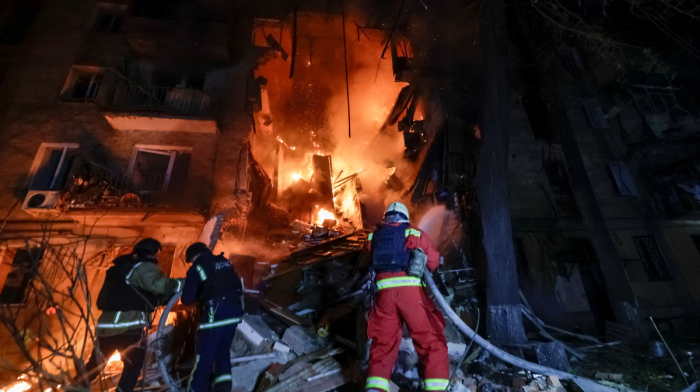
Ukrainian President Volodymyr Zelenskyy says Russia hit at least six energy targets in deadly strikes across Ukraine, showing Moscow is unwilling to accept the energy ceasefire announced by U.S. President Donald Trump.
Thousands of young Georgians leave the country each year in search of better economic opportunities, with many moving west.As questions grow over Georgia’s European path, AnewZ spoke to people who have emigrated about what it would take for them to return.
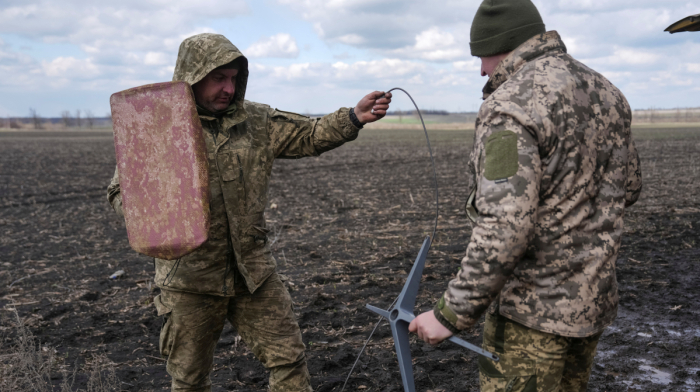
Ukraine's soldiers have had their access to Starlink satellite internet restricted. Kyiv's troops use the terminals, made by Elon Musk's SpaceX, to pilot drones. A source in Ukraine's Defence Ministry said the restrictions would make it harder for Kyiv's army to down Russian drones.
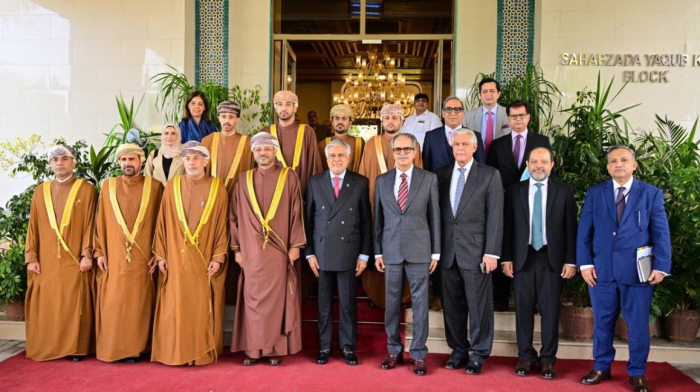
Pakistan and Oman called for restraint and diplomacy on Wednesday as they discussed the U.S.-Iran conflict, Houthi attacks on Saudi Arabia and threats to vital Gulf shipping routes, with Muscat praising Islamabad’s mediation efforts.
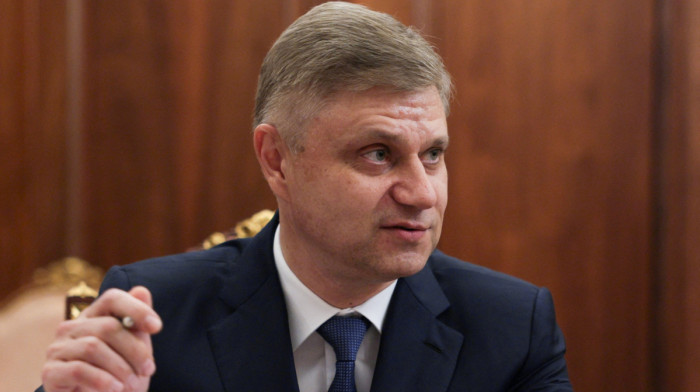
Armenia and Russia have agreed to establish a joint working group to tackle railway infrastructure problems as Yerevan considers changes to Russian management and pushes ahead with plans to restore regional transport links.
Yemen’s Houthis have claimed responsibility for the recent drone and missile strikes on Saudi Aramco facilities in Dhahran and Riyadh and at King Khalid International Airport in Saudi Arabia, vowing to carry out more attacks in the coming days.
The Saudi-led coalition in Yemen said late Monday that it intercepted and destroyed two ballistic missiles launched by the Houthi group toward Khamis Mushait in southwestern Saudi Arabia.
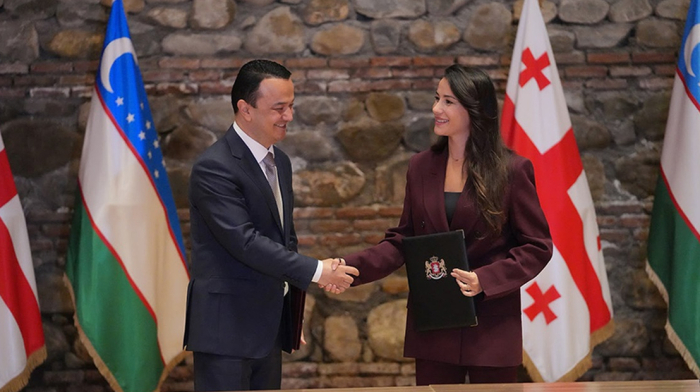
Georgia and Uzbekistan are aiming to nearly quadruple annual trade to $1 billion, up from $267.6 million in 2025, as the two countries seek to strengthen economic ties and expand transport links.
Download the AnewZ app
You can download the AnewZ application from Play Store and the App Store.












What is your opinion on this topic?
Leave the first comment