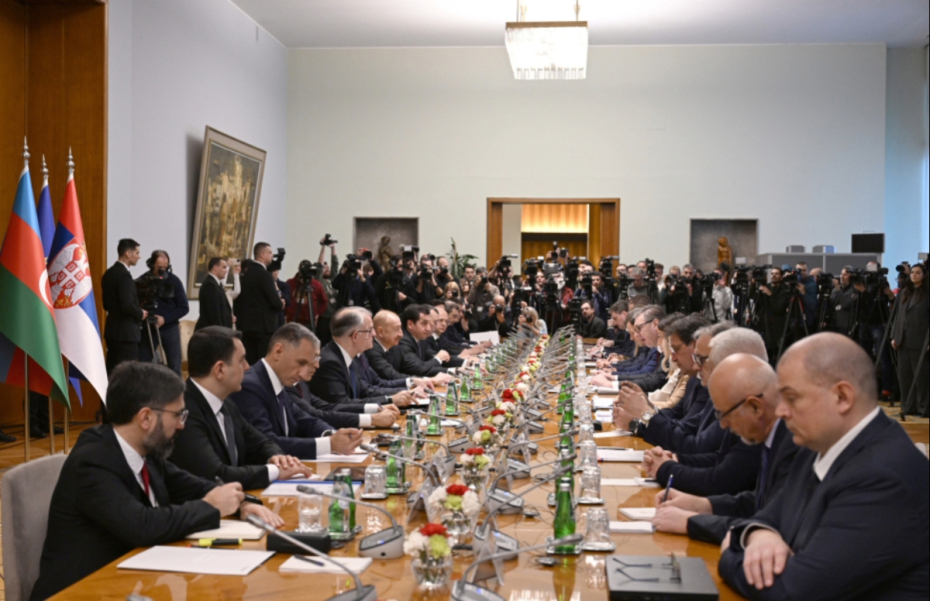
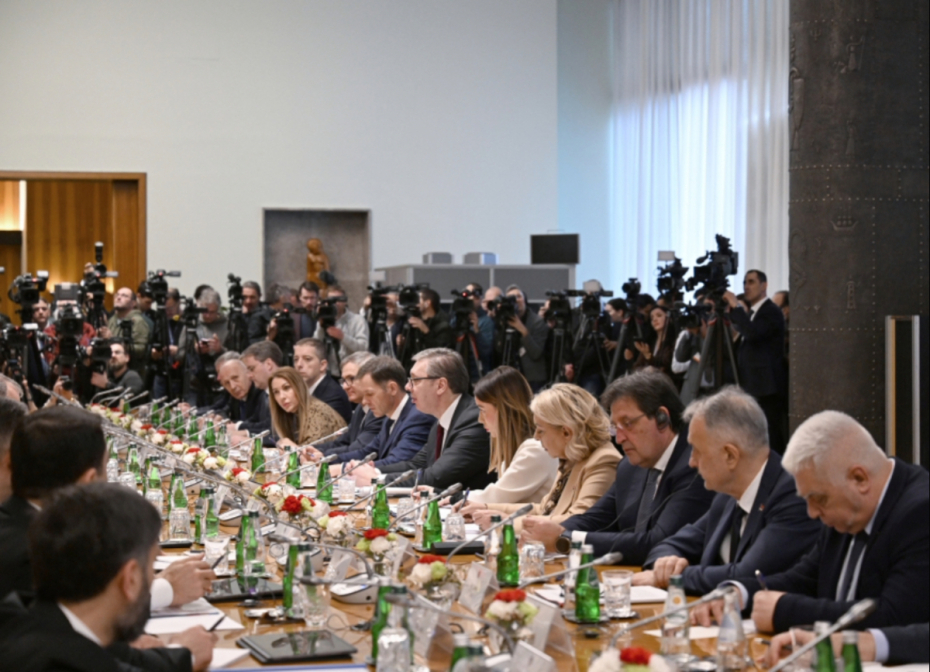
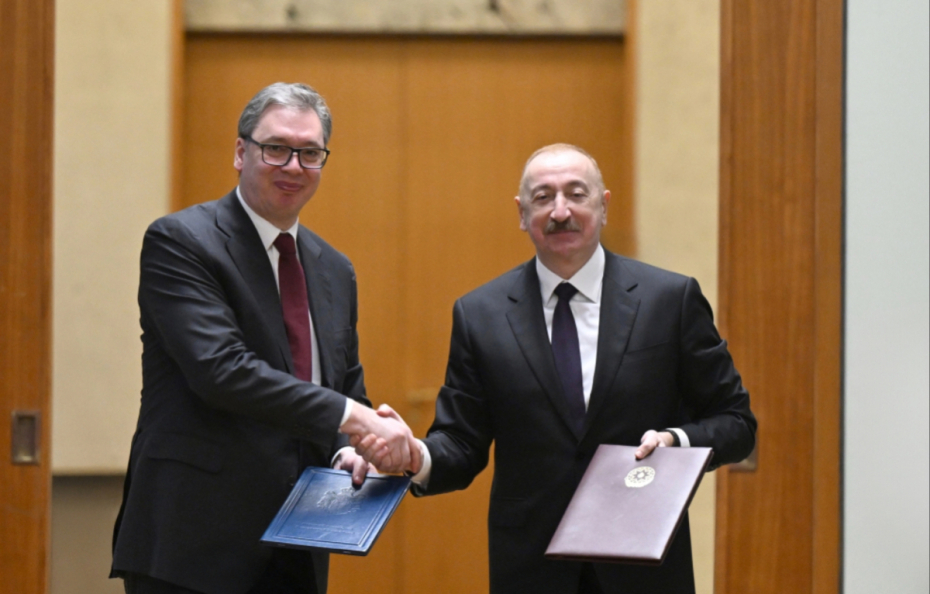
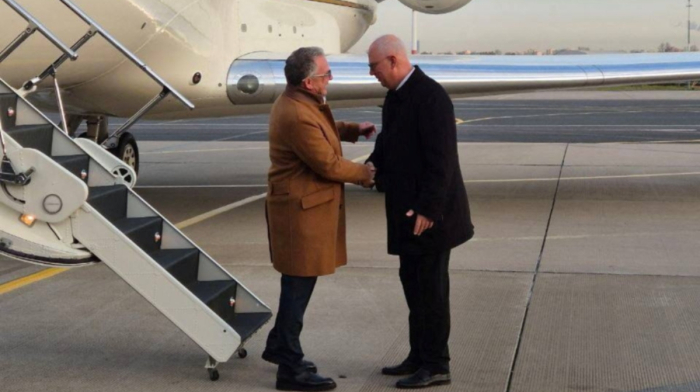
Azerbaijani President Ilham Aliyev and Serbian President Aleksandar Vučić reaffirmed their countries’ strategic partnership in Belgrade on Sunday (15 February), signing a series of cooperation agreements.
Speaking alongside Vučić, Ilham Aliyev praised Serbia’s progress, stating: “Under your leadership, Serbia is developing successfully, has earned great respect on the international stage, and has implemented significant reforms in the economic and social spheres.”
Addressing energy cooperation, Aliyev said: “Our relations in the energy sector are now developing in a multifaceted format. A short while ago, we began exporting natural gas to Serbia, and today we have decided that we will increase the volume of those exports.”
“By converting the gas to be exported to Serbia into electricity, we will achieve the production of clean electricity. This will create opportunities both for the Serbian market and for future exports.”
“Serbia and Azerbaijan, two friendly countries always stand by each other,” Aliyev said. He also congratulated Vučić and the Serbian people on the national holiday marked that day.
Vučić, for his part, emphasised the strength of bilateral ties and security cooperation.
“I would like Azerbaijanis to visit Serbia frequently. Comfort, peace, and complete security are fully ensured,” he said, adding: “Security in both countries is at the highest level, and our direct contacts with the Azerbaijani people are also very important.”
He noted that “the establishment of such relations demonstrates that your country and our country share many common values,” and said the two leaders had exchanged views on “very important issues, including matters related to Europe and the entire world.”
During the visit, a formal ceremony was held for the exchange of multiple bilateral documents in the presence of the two presidents.
The agreements covered cooperation in food security, construction and operation of a gas-turbine power plant in Serbia, coordination between the two countries’ economy ministries, collaboration in media and communications, cultural cooperation for 2026–2030, sports partnership, and cooperation in health insurance systems.
The first meeting of the Strategic Partnership Council between Azerbaijan and Serbia was also held, underscoring the institutional framework guiding the expanding partnership between the two countries.
Expansion of gas supplies from Azerbaijan
The expansion of gas supplies comes as Serbia continues efforts to diversify its energy sources. The country has historically relied heavily on Russian gas, and the commissioning of the Bulgaria–Serbia interconnector in late 2023 enabled Azerbaijani gas to reach the Serbian market via the Southern Gas Corridor. Initial deliveries began in early 2024 under a supply agreement between SOCAR and Srbijagas, marking Azerbaijan’s entry into Serbia’s energy mix.
For Azerbaijan, the increased volumes further consolidate its role as a growing supplier to Southeast Europe, as Baku expands its presence in European energy markets.









What is your opinion on this topic?
Leave the first comment