The AnewZ Opinion section provides a platform for independent voices to share expert perspectives on global and regional issues. The views expressed are solely those of the authors and do not represent the official position of AnewZ
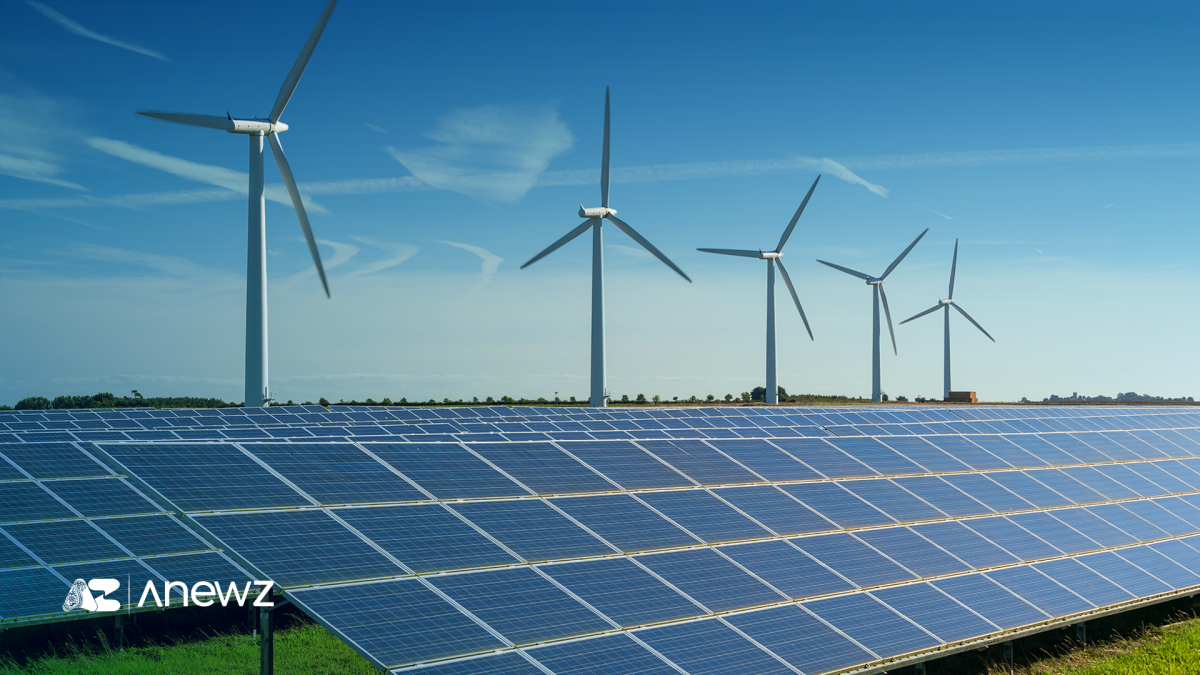
As Europe accelerates its energy transition, Azerbaijan is emerging as a pivotal supplier of renewable electricity. Through a growing network of green energy corridors, Baku could reshape energy security in the Balkans and beyond.
As the world increasingly tuns towards clean energy sources, Azerbaijan is determined to follow this trend. As an oil and gas producer and exporter, Baku has long been aware of the volatility of global energy markets, which requires constant adaptation to current and future energy shifts.
Investment in regional and domestic green energy projects enables Azerbaijan to leverage its geographical location, acting as an integral green link between Europe and Asia.
In recent years, Azerbaijan has intensified its green energy diplomacy, with electricity exports at the centre of several ambitious cross-regional projects currently under development. These initiatives have the potential to create an effective green energy corridor connecting Central Asia, the South Caucasus and Europe.
This evolving corridor could influence energy dynamics not only across Europe more broadly, but particularly in the Balkan states, where demand for secure and sustainable energy, including electricity, has increased significantly.
Exporting renewable energy to Europe
Strengthening ties through clean energy has become one of the key pillars of Azerbaijan’s foreign policy. The country has been actively involved in developing a network of green corridors designed to export renewable electricity westward from the Caspian region to Türkiye and Europe, including several Balkan states. In particular, Romania, Bulgaria and Serbia could become significant beneficiaries of this renewable initiative.
Such developments could bring greater stability to the Balkan energy market through diversification and decarbonisation strategies, paving the way for a more resilient energy supply in South-Eastern Europe.
Although not without significant geopolitical and infrastructural challenges, the planned green energy interconnectors involving Azerbaijan and several Balkan states represent a promising path in regional energy diplomacy.
In today’s uncertain world, marked by rising geopolitical tensions and a deepening climate crisis, renewable-based regional projects have become increasingly attractive and worthy of investment.
What exactly is a green energy corridor?
The Green Energy Corridor is not a single project, but rather a network of interconnected renewable energy initiatives involving multiple countries. Within this framework, Azerbaijan acts as a central link in the production, export and transmission of electricity generated from clean sources in the Caspian and Central Asia regions to Europe.
Currently, the corridor comprises four planned interconnectors, some of which directly involve Balkan states, with potential extensions to additional countries across the region:
Caspian–Black Sea–Europe Green Energy Corridor
The Caspian–Black Sea–Europe Green Energy Corridor, initially branded as the Black Sea Submarine Cable, represents one of the most ambitious renewable energy projects and the earliest initiative within the broader green corridor framework. In 2022, Azerbaijan, Georgia, Romania and Hungary signed an agreement on the development and implementation of the project, marking the first step towards launching a green energy corridor to Europe.
This project includes Azerbaijan’s offshore wind farms as a primary energy source, with electricity transmitted via a high-voltage direct current (HVDC) cable to Georgia. From there, it would continue through a subsea cable beneath the Black Sea to Romania and Hungary. The cable’s estimated capacity of 1,000–1,300 MW of renewable electricity has the potential to position Azerbaijan as a major gateway for clean power to European markets.
Feasibility studies are in their final stages, and the European Commission has expressed readiness to provide financial support for the implementation process, covering approximately 65 per cent of the total cost. Taken together, these factors indicate strong potential for success.
From a geopolitical perspective, the project enhances Azerbaijan’s influence in Europe by enabling it to supply renewable energy that supports diversification efforts. It is also important for Azerbaijan’s expanding diplomatic outreach in the Balkan region, particularly as Bulgaria has expressed interest in joining the initiative, and there are viable proposals to include Serbia as well.
Central Asia–Azerbaijan Green Energy Corridor
The concept of including Central Asia in a planned green corridor materialised during the COP29 climate conference. At the event, the leaders of Azerbaijan, Kazakhstan and Uzbekistan signed a strategic partnership agreement on the development and transmission of green energy. The participating states are currently discussing a broader interconnected corridor that would link this initiative with the Caspian–Black Sea route.
This cross-regional clean energy project has the potential to harness abundant renewable energy sources from Central Asia and convert them into electricity transmitted through Azerbaijan to Europe.
Through this interlinked corridor, Azerbaijan remains at the centre of the renewable energy transmission process and an indispensable component of a wider multinational project. The initiative has begun attracting interest from numerous European countries, including several Balkan states, either as end users or as transit countries.
Azerbaijan–Türkiye and Azerbaijan–Georgia–Türkiye–Bulgaria Green Energy Corridors
Baku serves as both the starting point and the primary exporter of green energy in two additional planned corridors: Azerbaijan–Türkiye and Azerbaijan–Georgia–Türkiye–Bulgaria. Over time, these corridors may merge.
There are two possible routes for the Azerbaijan–Türkiye corridor. The first, and preferred, option involves direct exports from Nakhchivan to Türkiye. The second route originates at the Jabrayil hub in mainland Azerbaijan, passes through the Zangezur Corridor to Nakhchivan, and then continues to Türkiye.
The Azerbaijan–Georgia–Türkiye–Bulgaria interconnector begins in Azerbaijan and follows a land route through Georgia and Türkiye to Bulgaria. This project could support Bulgaria’s ambition to become an energy hub in the Balkan region and an important green transit route for Europe.
Moreover, this corridor could merge with the Nakhchivan–Türkiye route within Türkiye’s territory, creating a stronger network of green energy transit routes and contributing to a more comprehensive green energy corridor.
Azerbaijan’s Renewable Outreach in the Balkans
The planned green energy corridor, encompassing all proposed routes and interconnectors, could directly or indirectly influence energy dynamics across the Balkan region. From a strategic and economic standpoint, the project would be highly beneficial for South-Eastern Europe, where energy prices are generally high. Additional supply could help stabilise prices, offering a clear advantage to Balkan states.
The Trans-Balkan electricity corridor is an important EU-supported infrastructure project linking Serbia, Montenegro, and Bosnia and Herzegovina through high-voltage power lines and substations. There is also ongoing discussion about the possibility of connecting it to a future Black Sea subsea corridor. If realised, this connection could pave the way for deeper Azerbaijani energy engagement in the Western Balkans, complementing its gas diplomacy.
For Azerbaijan, expanding its clean energy footprint across the Balkans serves several geopolitical objectives. Green energy complements Azerbaijan’s established role as a reliable alternative energy partner through conventional resources, enhancing its overall influence in the region.
The green energy corridor also enables Azerbaijan to respond to Europe’s growing demand for renewables and to ensure continuity of energy supply as reliance on fossil fuels declines. In addition, it strengthens Azerbaijan’s diplomatic leverage not only in Balkan capitals but also in Brussels, where the country is increasingly viewed as a contributor to Europe’s energy security and energy transition goals.
Vision vs Challenges
The implementation of the green energy corridor faces significant challenges, ranging from technical, regulatory and financial constraints to geopolitical and cybersecurity risks.
From a technical and logistical perspective, the project is highly demanding, requiring specialised submarine cables produced by a limited number of manufacturers, as well as a small fleet of vessels capable of cable installation.
Given the involvement of multiple countries and regions, regulatory issues may present a major obstacle, particularly due to differences in grid standards between EU and non-EU systems. Financially, the project requires substantial capital investment, while returns are likely to materialise only in the long term.
Furthermore, the corridor is exposed to geopolitical and security risks, as it traverses regions with diverse political environments that may generate tensions over border and security issues. Its passage through the Black Sea adds further complexity, as does the risk of cyber-attacks associated with digital infrastructure and remote monitoring systems.
Nevertheless, the rapid growth of AI and electric vehicles is driving increased investment in renewable electricity worldwide. While challenges may delay implementation, global industrial trends are forcing greater regional cooperation in clean energy. Politics will also play a crucial role in determining the success of projects such as the green energy corridor.
Azerbaijan recognises that substantial diplomatic efforts will be necessary for the corridor to materialise. Strengthening cooperation between the South Caucasus and the Balkans, as well as engaging both directly involved countries and those that may join the broader vision, will be essential.
There is also strong strategic interest among many Balkan states in participating in the corridor, as it offers integration into modern energy diplomacy, enhanced energy stability, and potential geopolitical autonomy. Participation would allow these states to act not only as end consumers but also as transit countries supplying other European markets.















What is your opinion on this topic?
Leave the first comment