The AnewZ Opinion section provides a platform for independent voices to share expert perspectives on global and regional issues. The views expressed are solely those of the authors and do not represent the official position of AnewZ
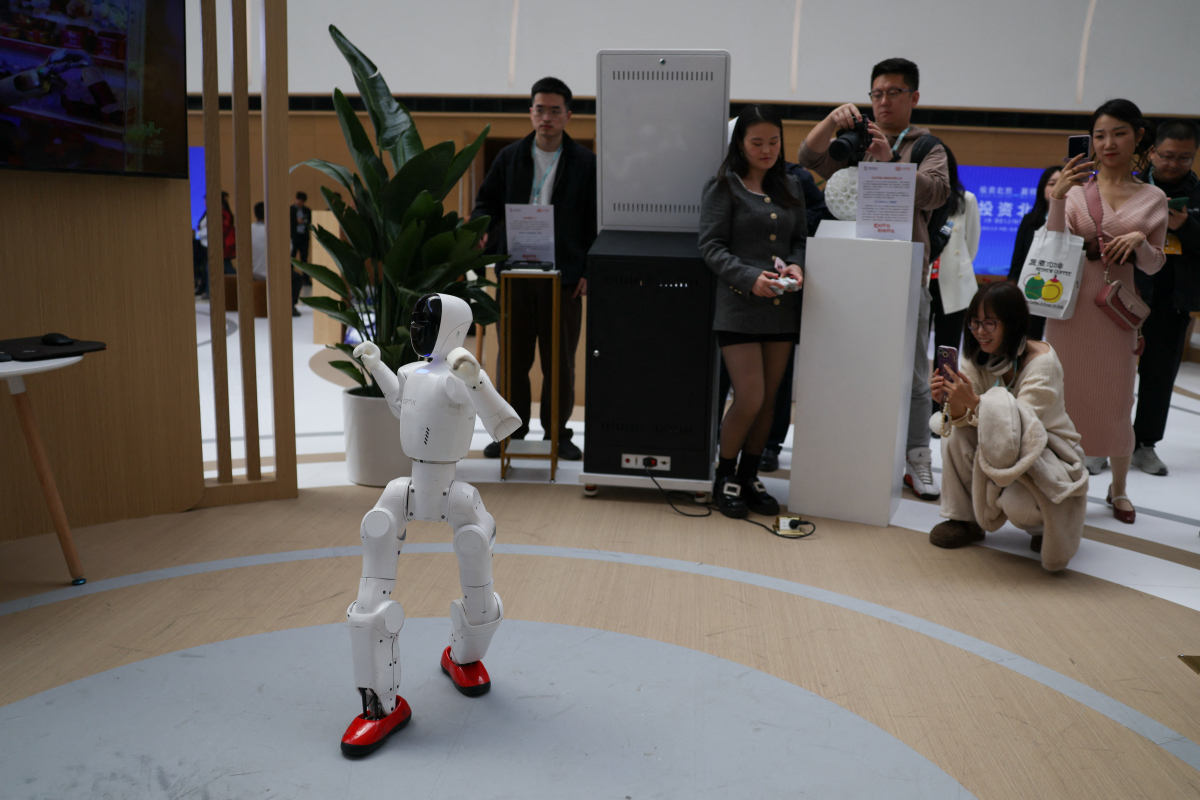
Humanoid robots have often been viewed as novelties, be it mechanical performers dancing at the 2026 Spring Festival Gala in Beijing, or sparring for applause at the 2026 Consumer Electronics Show (CES) in Las Vegas.
Now comes a more consequential question: is the dream of embodied intelligence finally ready to step off the stage and into everyday life?
From the stage to assembly Lines
For decades, the humanoid robot was the holy grail of robotics, somehow technologically mesmerising but commercially elusive. However, 2025 marked a year of rapid acceleration for China’s humanoid robotics sector. In a press conference held by the State Council Information Office earlier this year, Zhang Yunming, Vice Minister, Ministry of Industry and Information Technology, revealed a staggering statistic - China now boasts more than 140 humanoid robot manufacturers, with more than 330 humanoid robot models unveiled in the past year alone.
The shift is most visible in the shipment data. The Omdia Market Radar, General-purpose Embodied Intelligent Robots, highlighted an historic milestone in 2026 - Shanghai-based AgiBot has officially surpassed all global competitors to become the world's top shipper of humanoid robots.
With 5,168 units delivered in 2025, AgiBot secured a 39% global market share. Combined with Unitree Robotics (32%) and UBTECH (7%), Chinese firms now control nearly 80% of the still-emerging global market.
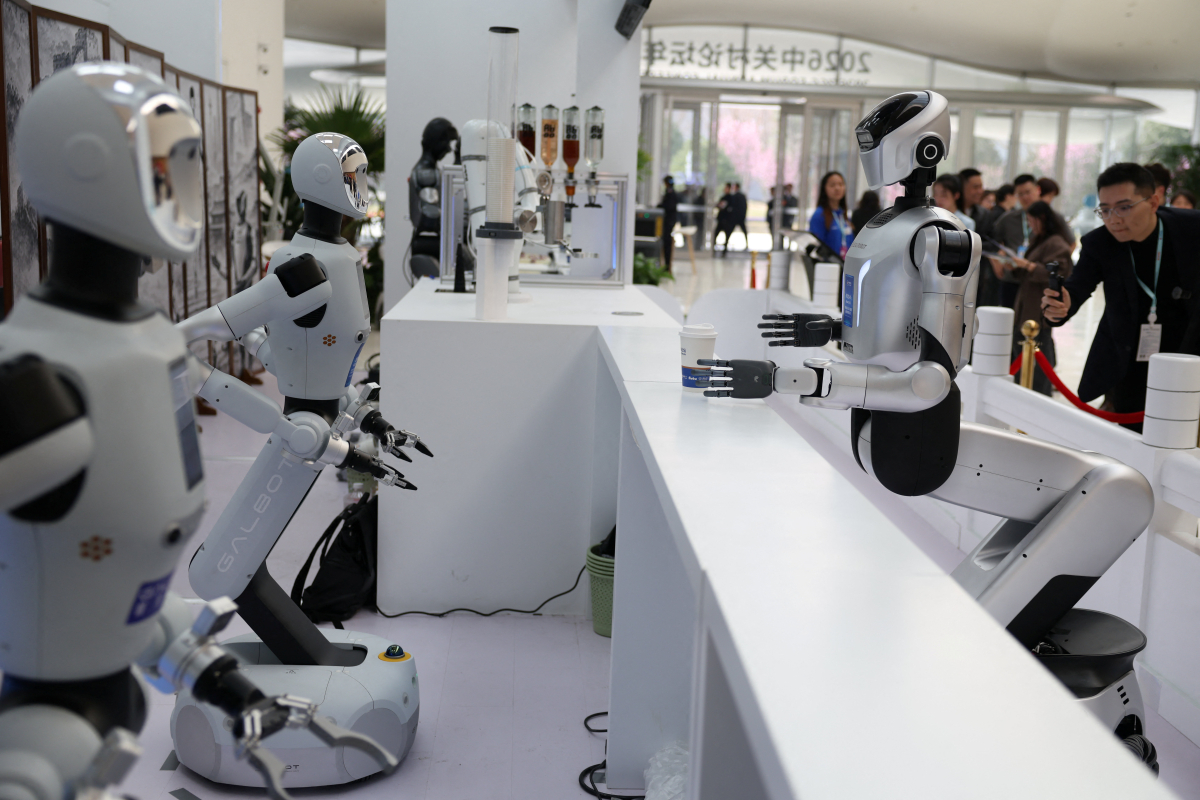
“Our robots have moved beyond standing and walking,” Zhang Yunming stated. “They are transitioning from moving on stages and running in competitions to working in homes and performing tasks in factories.”
'Full-Stack' Supply Chain Advantage
Why has China been able to scale so rapidly?
While artificial intelligence (AI) provides the 'brain', the 'body' requires mechanical precision that has historically been the industry's primary bottleneck. Leveraging a long-established foundation in electronic information and mechanical manufacturing supply chains, enterprises can swiftly integrate cutting-edge algorithms into physical hardware.
“In 2025, the global humanoid robot market expanded rapidly, with China vendors taking a leading position supported by a comprehensive industrial supply chain,” noted Lily Li, research manager, IDC China Robotics and Embodied Intelligence.
This high-efficiency transformation from design to mass production follows a trajectory similar to the development of the electric vehicle (EV) industry, providing a robust framework for the large-scale application of embodied intelligence. Companies such as JL MAG Rare-Earth Co. Ltd. and China Northern Rare Earth (Group) High-Tech Co. Ltd. have become pivotal players, providing the high-performance magnetic materials essential for the high-torque motors that drive robotic limbs. In their 2025 earnings forecasts, JL MAG predicted net profit growth of up to 127%-161%, largely attributed to the delivery of motors for embodied robots and low-altitude aircraft.
Similarly, Victory Giant Technology has successfully moved specialised PCB products into the production and sales phase for humanoid leaders. This cluster effect allows Chinese robot makers to iterate on designs quickly, significantly lowering the Total Cost of Ownership (TCO) for end-users.
From cautious bets to massive scale
The financial sector has responded with unprecedented fervor. Data from the venture capital database ITjuzi reveals an explosive growth trajectory for China's embodied intelligence sector over the past five years.
From 2021 to 2023, the industry was in an early accumulation phase, characterised by only dozens of annual investment events and low-level funding fluctuations. However, 2024 marked the start of a steep climb, with the number of deals doubling to 103 and total funding rising to 9.355 billion yuan as the prospect of commercial deployment began to attract institutional capital.
The momentum reached a fever pitch in 2025, partly ignited by the high-profile appearance of Unitree Robotics at the Spring Festival Gala, triggering a surge in both investor and public interest. Consequently, investment events skyrocketed to 325, and total funding leaped to 39.832 billion yuan, representing a staggering 216% and 326% year-on-year growth, respectively.
In the first twenty days of 2026 alone, eighteen humanoid robot-related stocks saw net inflows exceeding 100 million yuan each. This momentum is further underscored by Zhejiang Humanoid Robot Innovation Center Co.Ltd. which recently secured a 450 million yuan Pre-A round, totaling 2.2 billion yuan raised in just 18 months. Deng Weidong, General Manager of China Merchants Innovation Technology, pointed out that such partnerships aim to leverage industrial resources to “accelerate technological iteration and commercial deployment” for the sector.
On the ground: curiosity and caution
Beyond industry data and investment figures, robotics is also reshaping how people imagine future work and daily life.
Muhammad Asghar, a Pakistani journalist who recently visited several Chinese cities, recalled seeing “a football match being played between two teams of robots,” calling it “a wonderful scene.” During another visit to a factory in Jiangsu province, he said he was surprised to see a vocational training centre where robots were being trained and tested.
Despite global debates about automation, he does not believe robots will replace humans. “Humans will remain just as important,” he said, noting that robots are mainly used for difficult or dangerous tasks.
Chinese delegates attending the annual Two Sessions echoed a similar sentiment. Hong Kong deputy to the nation’s top legislature Cally Kwong Mei-wan said robots can help drive industrial upgrading, but emphasised they must be “used well and properly managed.” NPC deputy Ruan Xiangyan, director of the Department of Gynecological Endocrinology at Beijing Obstetrics and Gynecology Hospital, noted that robots could play an important supporting role in healthcare, while stressing they cannot replace doctors in medical diagnosis and treatment.
Trillion-Yuan Horizon
China’s policy direction also points to continued support for robotics and other frontier technologies. According to a government work report submitted on 5 March to the country’s top legislature for deliberation, China will nurture emerging industries and industries of the future. A draft outline of the 15th Five-Year Plan (2026–2030), also submitted the same day, states that China will accelerate the development of strategic emerging sectors, including next-generation information technology, new energy, new materials, intelligent connected new energy vehicles, robotics, biomedicine, high-end equipment, and aviation and aerospace.
Looking ahead, the market scale of China's embodied intelligence industry is expected to reach 400 billion yuan (about $56.5 billion) in 2030 and exceed 1 trillion yuan in 2035, according to a report titled China Development Report 2025 by the Development Research Center of the State Council.
Market research firm IDC is even more bullish, estimating that user spending on embodied intelligent robots in China exceeded $1.4 billion in 2025 and is projected to skyrocket to $77 billion by 2030, representing a staggering compound annual growth rate (CAGR) of 94%.
The bright lights of the 2026 CES in Las Vegas were just the beginning. The real story is unfolding across the burgeoning industrial clusters of the Yangtze River Delta and the Pearl River Delta. From the automated assembly lines in Shanghai and Hangzhou to the manufacturing hubs of Shenzhen and Dongguan, robots are rolling off production floors as partners moving in, ready to lend a helping hand.
Author: Qaiser Nawab is Chairman of the Belt and Road Initiative for Sustainable Development (BRISD), an international platform focused on fostering cooperation and innovation across Asia, Africa, and Latin America.





























What is your opinion on this topic?
Leave the first comment