The AnewZ Opinion section provides a platform for independent voices to share expert perspectives on global and regional issues. The views expressed are solely those of the authors and do not represent the official position of AnewZ
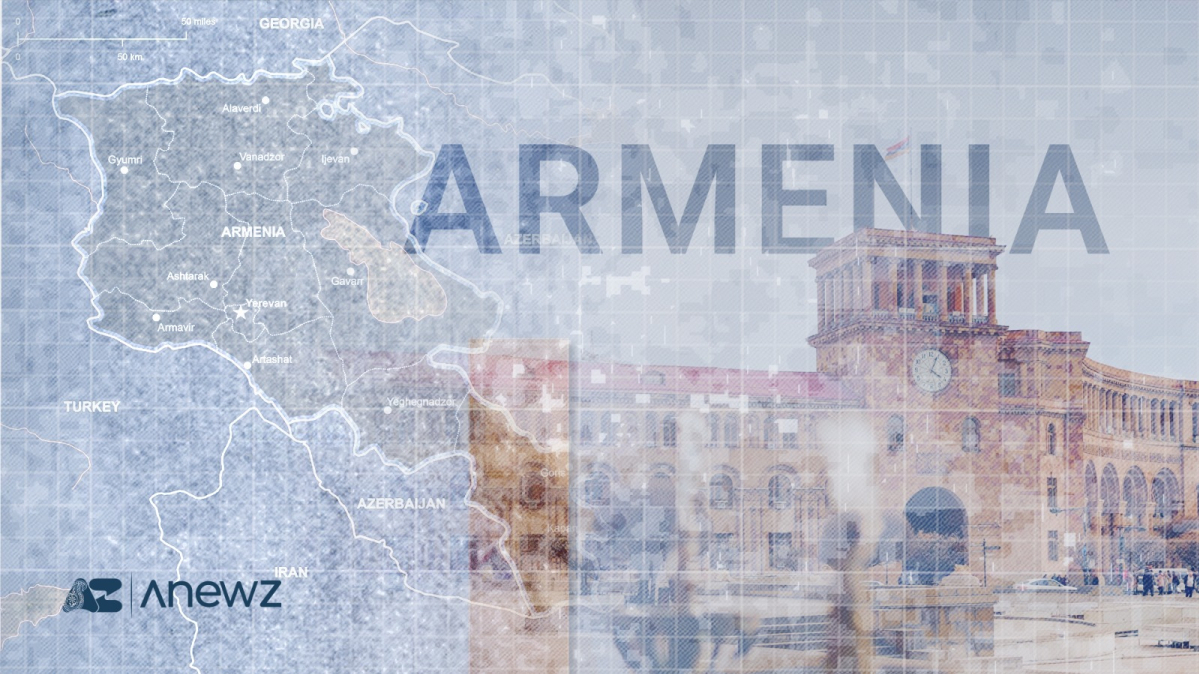
Armenia - Russia’s nominal ally in the Collective Security Treaty Organization (CSTO) - appears to be accelerating its “divorce” from Moscow. While still part of the bloc and the Eurasian Economic Union (EAEU), Yerevan is deepening ties with the West and former adversaries Azerbaijan and Türkiye.
Following the Second Garabagh War between Armenia and Azerbaijan in 2020, Yerevan began distancing itself from the Kremlin, dissatisfied with Moscow’s stance on the conflict. Armenian authorities reportedly expected Russia, as well as the CSTO, to openly side with the landlocked nation. That did not happen. Armenia suffered a military defeat and in 2023 Azerbaijan resolved the conflict fully in its favour.
Armenian leaders appear to have concluded they cannot rely on Russia as an ally. In 2024, Yerevan officially froze its participation in the CSTO, while Prime Minister Nikol Pashinyan skipped several summits of the Commonwealth of Independent States (CIS) in Russia. This sent a clear political message to the Kremlin that relations would not return to their pre-war state.
Turning westward
At the same time, Yerevan began developing closer ties with the West. In May 2024, while Russia was engaged in war against NATO-backed Ukraine, Armenia participated in military drills in Moldova organised by the U.S.-led alliance. In January 2025, Yerevan and Washington signed a “historic” Strategic Partnership Charter, focusing on economic cooperation, security and defence, democratic development, and people-to-people ties.
Three months later, Armenian President Vahagn Khachaturyan signed legislation launching the South Caucasus nation’s process of joining the European Union. However, this does not mean Armenia will join the 27-nation bloc anytime soon, if at all. The country remains part of the Russian-led Eurasian Economic Union, which constrains its EU ambitions.
As Russian President Vladimir Putin told Pashinyan in Moscow on 1 April, “simultaneous membership in the Customs Union with the European Union and the EAEU is impossible”.
“It is simply untenable by definition. The issue is not even a political one; it is purely economic,” Putin stressed.
Pashinyan responded that Yerevan would continue pursuing both EU and EAEU agendas “as long as it is possible”. As he emphasised, when a decision becomes unavoidable, “the citizens of the Republic of Armenia will take that decision.”
A delicate balancing act
In the foreseeable future, Armenia is likely to remain in the EAEU while gradually seeking closer integration with the EU. With Brussels allocating funds to make Armenia “more resilient” to Russian influence, pro-EU sentiment is expected to grow, while relations with Moscow may deteriorate. If Armenians are eventually asked to choose between the EAEU and the EU, they are likely to favour the latter.
Fully aware of this, Putin appears to be trying to preserve at least remnants of Russia’s influence. By noting that Moscow has “many friends in Armenia” and that there are “many political forces that are pro-Russian,” he signalled that Russia could seek to influence the parliamentary elections scheduled for 7 June.
He also invoked energy leverage, reminding Pashinyan that Armenia pays $177.5 per 1,000 cubic metres for Russian natural gas, while European countries pay around $600. The implication was clear: a shift towards the EU could bring higher prices, with serious economic consequences.
Shifting economic ties
Although Armenia remains economically dependent on Russia, trade turnover between the two countries fell by 38 per cent in 2025. At the same time, Armenia began importing fuel from Azerbaijan, which, according to Pashinyan, reduced petrol prices by up to 15 per cent. Yerevan is also seeking to open its land border to Turkish goods, which could further reduce trade with Russia.
If relations with Baku and Ankara continue to normalise, Azerbaijan and Türkiye - rather than Russia - could become Armenia’s main economic and energy partners in the foreseeable future. Given the South Caucasus has traditionally fallen within Moscow’s geopolitical orbit, such a shift would represent a major setback for the Kremlin.
Russia’s remaining leverage
To avoid - or at least delay - this outcome, Russia is likely to rely on its remaining levers: nuclear energy and railway logistics.
Yet even here, Pashinyan is attempting to maintain balance. While negotiating the possible construction of new nuclear power units with Russia’s state nuclear corporation Rosatom, Yerevan has also reached a civil nuclear energy agreement with the United States.
“We do not hide the fact that we are discussing these matters not only with Russian partners, but also with others, as we are seeking the most advantageous proposal for the Republic of Armenia,” Pashinyan said.
The Kremlin will therefore need to compete to retain its dominant position in Armenia’s nuclear sector. A similar dynamic applies to railways. Under a 2008 agreement, Armenia granted Russian Railways (RZD) a 30-year concession to operate its network, with an option for a 10-year extension.
As part of efforts to deepen ties with Türkiye and Azerbaijan, Yerevan is pressing RZD to rehabilitate key railway sections. These include the stretch from the Armenia-Türkiye border near Akhurik to the existing network, the Yeraskh section near the Armenia-Nakhchivan border, and lines in the Tavush region up to Ijevan, near the Azerbaijani border.
An uncertain future
With a clear understanding of Yerevan’s ambitions, the Kremlin appears to be taking steps to slow or obstruct them in order to preserve its remaining leverage. However, in the wake of declining Russian influence across the post-Soviet space following Putin’s “special military operation” in Ukraine, maintaining even this reduced foothold in Armenia may prove increasingly difficult.











What is your opinion on this topic?
Leave the first comment