The United States has announced an additional $38 million to support efforts to contain the Ebola outbreak in the Democratic Republic of Congo, as health officials warn that the virus could spread further without stronger action.
The new funding brings total U.S. support for the response to more than $200 million, according to the State Department.
Officials said the money would support ongoing efforts to tackle the outbreak. Details on how the latest funding would be used were not immediately released.
The State Department said it was working with the U.S. Centers for Disease Control and Prevention, as well as authorities in the DRC and neighbouring Uganda, to support a rapid response.
Health officials warn of growing threat
The outbreak has become a growing regional concern.
On Friday, the CDC published three scientific reports on the situation, saying they were intended to help mobilise international support and resources.
The reports came after the World Health Organization declared the outbreak a public health emergency of international concern on 17 May.
According to the DRC’s health ministry, 452 confirmed Ebola cases and 82 deaths have been recorded so far.
Health officials also reported 71 new cases within 24 hours on Friday, warning that the virus was spreading quickly within communities.
For the DRC, the challenge is not only medical.
It is also logistical.
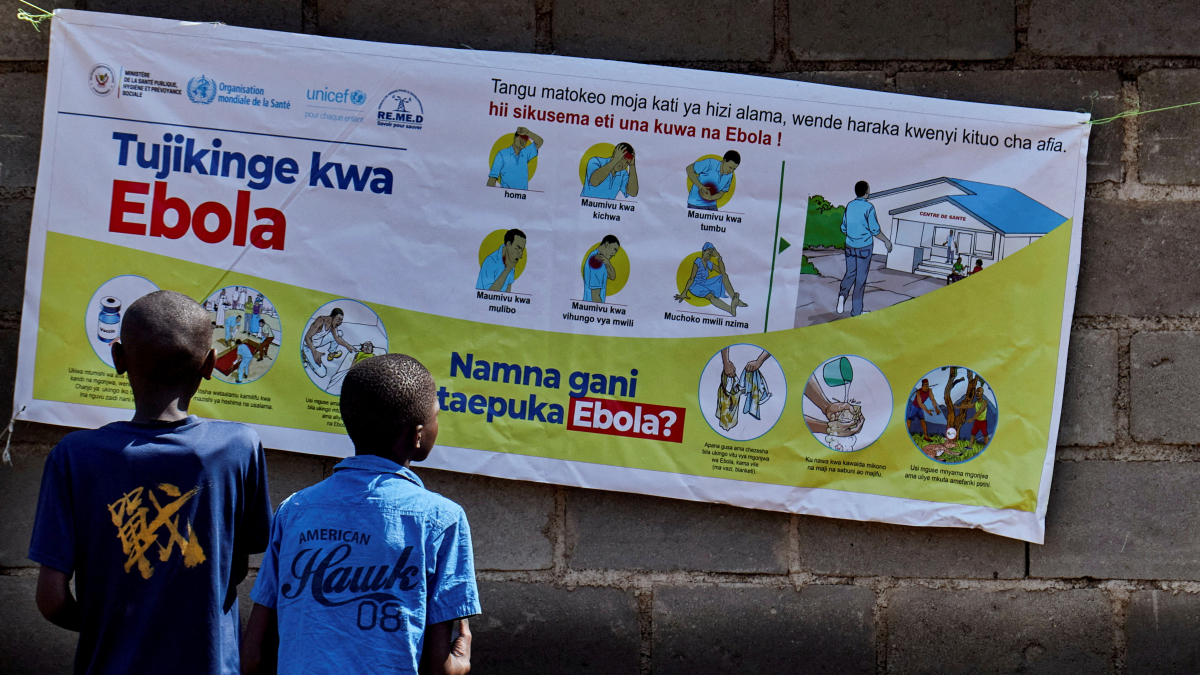
Containing Ebola depends on speed, trust and access. Patients must be identified quickly. Contacts must be traced. Communities must be informed before fear and misinformation spread faster than the disease itself.
The latest U.S. funding is aimed at strengthening that response.
But officials have warned that without broader international support, the outbreak could become harder to contain.
Fears outbreak could become one of the largest on record
CDC experts said modelling suggests the outbreak could grow significantly if efforts to isolate infected patients and stop transmission are not strengthened.
The agency warned that, under some scenarios, the outbreak could rival or even exceed the scale of the 2014-2016 Ebola crisis in West Africa, which killed more than 11,000 people.
Jason Asher, director of the CDC's Center for Forecasting and Outbreak Analytics, said some projections showed the outbreak could become one of the largest ever documented if containment measures remain limited.
The CDC currently has around 30 staff members based in the DRC and about 100 in Uganda. Additional specialists have also been deployed in recent weeks.
U.S. tightens measures to prevent cases entering country
The outbreak has prompted stricter measures by U.S. authorities aimed at preventing Ebola from reaching American soil.
Last week, U.S. Secretary of State Marco Rubio said he would not allow Ebola cases to enter the United States.
The U.S. government has said citizens exposed to the virus but not showing symptoms would be quarantined at a facility under construction in Kenya. If they later develop symptoms, they would be transferred to another country rather than brought back to the United States.
Meanwhile, the CDC has introduced temporary travel restrictions on people who have recently been in the DRC, Uganda or South Sudan, including some permanent U.S. residents. Health screenings are also being carried out for travellers arriving from those countries at three U.S. airports.
Debate over treatment plans
The policy marks a departure from previous approaches, under which infected Americans were typically returned home for treatment.
Public health experts have urged the government to continue bringing sick U.S. citizens back to the country, noting that specialised treatment facilities already exist.
There are currently 13 treatment centres within a government-supported hospital network equipped to care for patients with Ebola and other highly infectious diseases.
The proposed quarantine facility in Kenya has also faced opposition. Local protests linked to the project have resulted in at least two deaths, while a Kenyan court has ordered construction work to stop pending further review.





















What is your opinion on this topic?
Leave the first comment